What Are Professional Skills?
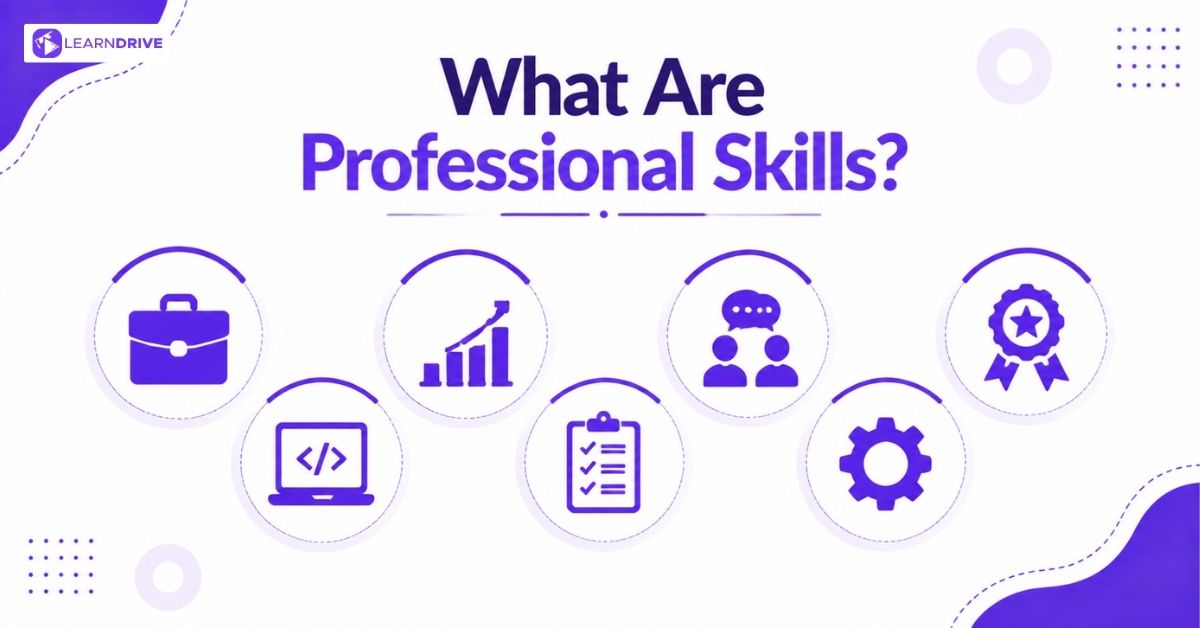
Professional skills, also called hard skills or technical skills, are the specific, job-related competencies required to execute the functional demands of a role. They are acquired through structured means: formal education, certification programs, apprenticeships, or accumulated on-the-job experience.
Defining characteristics
Professional skills share a distinct set of properties that separate them from personal skills:
Measurable. They can be assessed objectively through tests, certifications, portfolios, or demonstrated output.
Codifiable. They can be broken into a curriculum and taught systematically, step by step.
Domain-specific. A skill essential in one field (structural load calculations, for instance) may be entirely irrelevant in another (content marketing).
Verifiable. Credentials, degrees, and work samples allow a third party to confirm competence without relying on subjective judgment.
This verifiability is precisely why professional skills anchor most resumes and job postings. They reduce ambiguity for both the candidate and the employer.
Some Categories and examples of Professional Skills
Professional skills are job-specific competencies that are measurable, codifiable, and verifiable, making them essential for meeting functional job requirements. These skills are often grouped by industry-specific demands, and understanding their distinct categories is key to building a competitive professional profile.
Technical and IT skills
Programming languages such as Python, Java, or JavaScript
Data analysis, including statistical modeling and spreadsheet-based analytics
Cloud infrastructure and systems administration
Cybersecurity protocols and data governance
Finance and accounting skills
Financial modeling and forecasting
Regulatory and tax compliance
Budget planning and variance analysis
Marketing skills
SEO strategy and technical content optimization
Paid media and campaign management across platforms
Marketing automation and CRM tools
Analytics interpretation, including attribution modeling
Writing and content skills
Persuasive and commercial copywriting
Technical and process documentation
Structural editing and proofreading
Editorial planning and content strategy
Engineering and construction skills
Structural and load-bearing analysis
Regulatory safety inspection
Electrical and systems design
Blueprint interpretation and CAD literacy
Project management skills
Critical path scheduling and milestone tracking
Budget and resource allocation across departments
Risk assessment and mitigation planning
Proficiency with platforms like Asana, Jira, or Microsoft Project
This is a representative sample, not an exhaustive list. Every industry maintains its own technical taxonomy, and that taxonomy evolves. According to the World Economic Forum’s Future of Jobs Report 2025, employers expect 39% of the core skills required in the workplace to change by 2030, with AI, big data, and cybersecurity capabilities topping the list of fastest-growing technical demands.
That figure is actually a modest improvement compared to previous editions of the same report, which found skill instability as high as 57% in 2020, largely attributed to pandemic-driven disruption. The decline suggests organizations are getting somewhat better at anticipating which technical skills will hold value over time, though the underlying churn remains significant.
This volatility has a direct practical consequence: professional skills carry a built-in depreciation rate that personal skills largely don’t. A certification in a specific software platform can lose relevance within a few years if that platform is displaced by a newer tool.
This doesn’t make technical skills less worth acquiring; it simply means they require ongoing renewal rather than a one-time investment, a point worth keeping in mind when allocating long-term development time.
Why professional skills dominate the first filter
Most mid-size and large organizations rely on Applicant Tracking Systems (ATS) to screen resumes before a human recruiter ever reviews them. These systems parse resumes for keyword matches tied directly to the technical requirements listed in the job posting.
If a resume lacks the specific technical vocabulary the ATS is scanning for, it can be filtered out automatically, regardless of the candidate’s actual capability. This is why professional skills largely determine who gets past the first gate. What they do not determine, however, is who ultimately receives the offer. That decision increasingly hinges on something else entirely.
What Are Personal Skills?
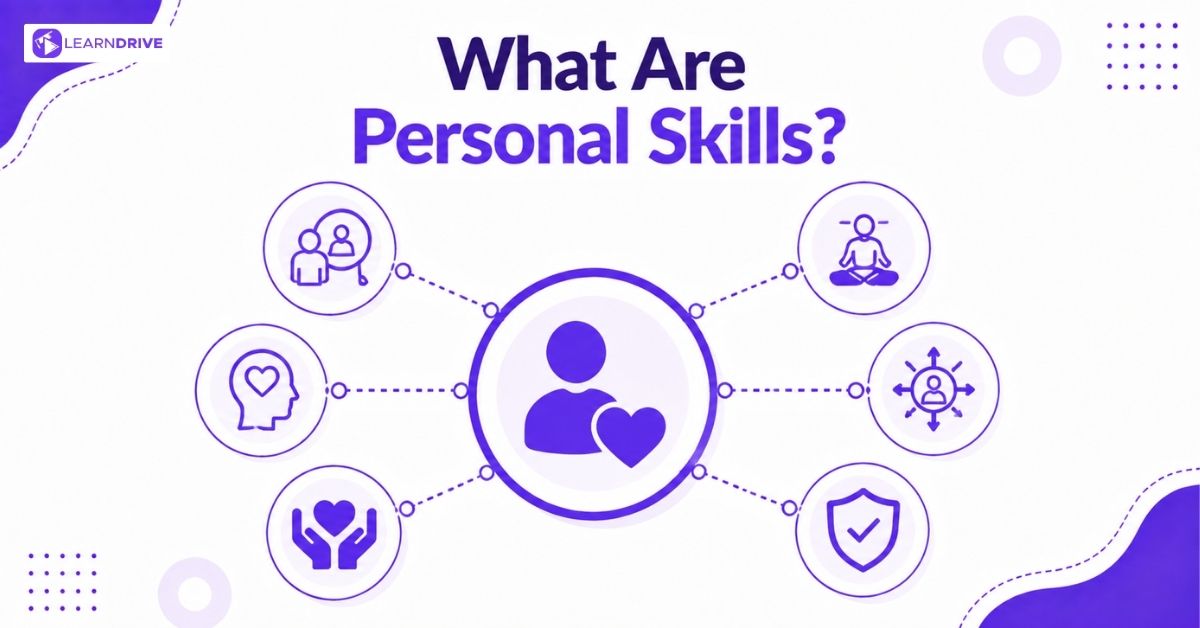
Personal skills, often labeled soft skills, interpersonal skills, or human skills, describe how a person behaves, communicates, and interacts under real conditions. They are not about task competence; they are about conduct, judgment, and relational capacity.
Defining characteristics
These core attributes establish the fundamental nature of these skills, differentiating them from other capabilities by how they are measured, acquired, and validated. Understanding these specific properties is essential for accurately identifying your own strengths and planning your professional development.
Transferable. They apply across industries, roles, and seniority levels without modification.
Difficult to standardize. There is no universal certification for empathy or composure under pressure.
Developed experientially. They are built through repeated exposure to real situations, feedback, and reflection, not through a syllabus.
Rooted in disposition. They correlate with personality and temperament, though research consistently shows they are trainable with deliberate practice.
Core examples of personal skills
Personal skills frequently referred to as soft or interpersonal skills describe the behavioral traits that determine how effectively you communicate, collaborate, and manage yourself in any environment. These core competencies are foundational to professional success, serving as the primary drivers of influence and long-term team effectiveness.
Communication. The ability to convey ideas with clarity and precision, whether in writing, speech, or informal exchange.
Adaptability. Maintaining functional performance amid disruption or ambiguity.
Empathy. Accurately reading and responding to the emotional state of others.
Resilience. Recovering from setbacks without a lasting drop in performance or morale.
Time management. Structuring work to meet deadlines without relying on last-minute effort.
Conflict mitigation. De-escalating disagreement without letting it damage working relationships.
Leadership. Directing and motivating others toward a shared outcome, with or without formal authority.
Dependability. Consistently meeting commitments others rely on.
None of these are industry-bound. A surgeon, a software engineer, and a retail manager all depend on communication and resilience in roughly equal measure, even though their technical skill sets share almost nothing in common.
Why personal skills were historically undervalued, and why that’s reversing
For decades, hiring and promotion decisions weighted technical ability far more heavily than interpersonal capacity. If someone could execute the core task, that was often considered sufficient.
That calculus has shifted measurably. According to LinkedIn’s 2025 Workplace Learning Report, 91% of learning and development professionals now say human skills are more valuable than ever.
Separately, LinkedIn’s “Skills on the Rise 2025” report found that seven of the top ten in-demand skills on its platform were soft skills, with conflict mitigation ranking first, largely attributed to rising workplace friction and generational divides post-pandemic.
The driver behind this shift is structural, not sentimental. Modern work is overwhelmingly collaborative. Most meaningful outcomes, from product launches to client retention, depend on cross-functional coordination rather than isolated individual output. A technically excellent employee who cannot collaborate effectively creates friction that measurably slows down everyone around them.
There’s also a second, less obvious driver: automation. As AI systems absorb more routine technical and analytical tasks, the remaining human value increasingly concentrates in judgment, persuasion, and relationship management, precisely the domain of personal skills.
How to Identify Your Own Skill Gaps: 4 Quick Steps
A structured self-audit is more reliable than intuition when identifying where your development effort should actually go.
Step one: Inventory your current skills
List every skill you currently hold across two columns: professional and personal. Be exhaustive and honest. This document isn’t for external use; its only function is to give you an accurate baseline.
Step two: Benchmark against a target role
Pull a real job posting for the role you want next, whether that’s a promotion internally or a move to a new organization. Extract every skill referenced in the listing and compare it directly against your inventory from step one.
Identify the specific nature of each gap. Is it a missing technical certification or tool proficiency? Or is it a behavioral gap, such as underdeveloped delegation or conflict management?
Step three: Solicit structured feedback
Self-assessment has inherent blind spots. Ask people with direct visibility into your work:
A current or former manager
A trusted colleague who has observed you under pressure
A mentor with broader perspective on your industry
Frame the question directly: “What’s one skill you think would meaningfully improve my performance?” Specific, direct questions tend to produce more useful answers than vague requests for general feedback.
Step four: Analyze past friction points
Revisit a specific setback: a missed promotion, a stalled project, a difficult professional relationship. Diagnose whether the root cause was a knowledge gap or a behavioral one. This distinction usually points precisely to which category, technical or interpersonal, deserves your next development cycle.
How to Develop Professional (Hard) Skills: 6 Guideline
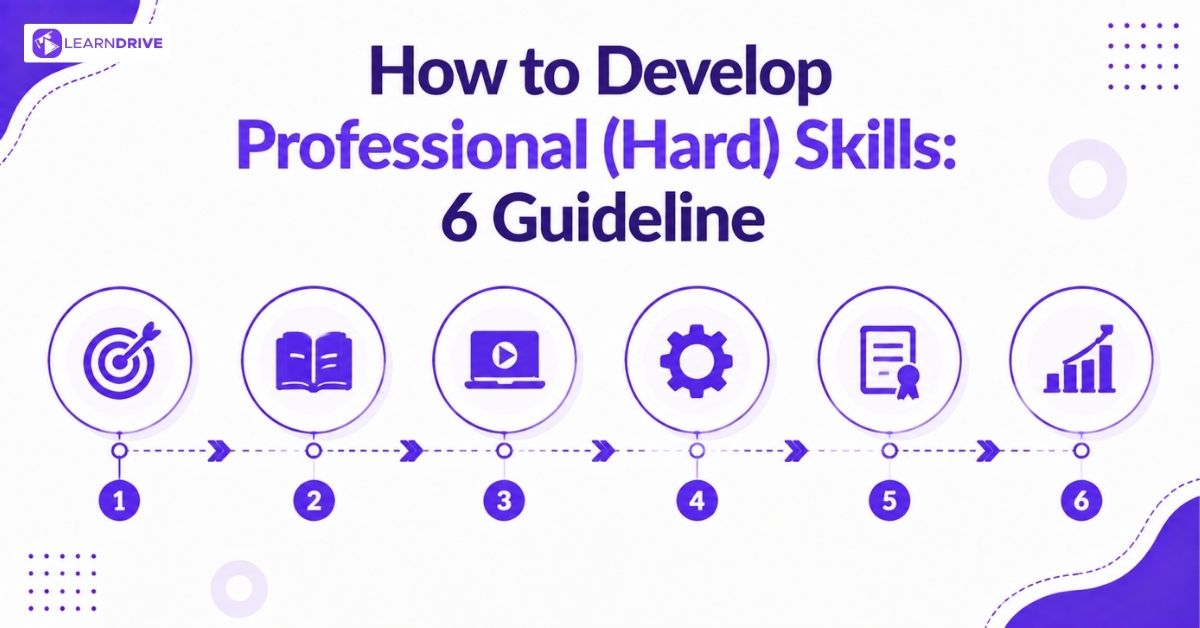
Developing professional skills requires more than just passive experience; it demands a deliberate, structured approach to building verifiable competence.
By combining formal education, targeted training, and direct application, you can establish a robust technical foundation that meets current industry standards and adapts to ongoing shifts in your field.
1. Formal education and certification
Structured credentialing remains one of the most reliable ways to build a verifiable technical base. Degrees, diplomas, and industry-recognized certifications provide third-party validation that carries weight with employers and recruiters alike.
2. Focused online courses
Formal, multi-year education isn’t always necessary to close a specific skill gap. Short, targeted online courses can bring a professional up to functional proficiency in a specific tool or discipline within weeks.
This has become one of the fastest and most cost-effective ways to close a defined technical gap, particularly for software or platform-specific skills tied to a job description. Structured, career-focused course platforms such as LearnDrive are built specifically for this kind of targeted upskilling.
3. Applied, on-the-job learning
Some of the most durable technical learning happens through direct application rather than passive instruction. Volunteering for stretch assignments, tasks slightly beyond current comfort level, accelerates competence far faster than theoretical study alone.
4. Shadowing and structured mentorship
Direct observation of a more experienced practitioner exposes shortcuts, habits, and judgment calls that formal training rarely covers. Even a single day of structured shadowing can surface practical knowledge that would otherwise take months to acquire independently.
5. Continuous monitoring of industry shifts
Technical fields, particularly those touched by AI and automation, are evolving quickly enough that skills considered advanced only a few years ago are now baseline expectations. Building a habit of monthly industry review, through trade publications, professional communities, or structured newsletters, keeps a technical skill set from quietly becoming obsolete.
6. Treating technical learning as a renewal cycle, not a one-time event
Given the depreciation rate discussed earlier, it helps to treat professional skill development as a recurring cycle rather than a box to check once. Reviewing your technical skill inventory every six to twelve months, and comparing it against current job postings in your field, is a low-effort way to catch drift before it becomes a real gap. This is especially relevant in fields being reshaped by AI, where the specific tools considered essential can shift within a single year.
How to Develop Personal (Soft) Skills: 6 Things to Keep in Mind
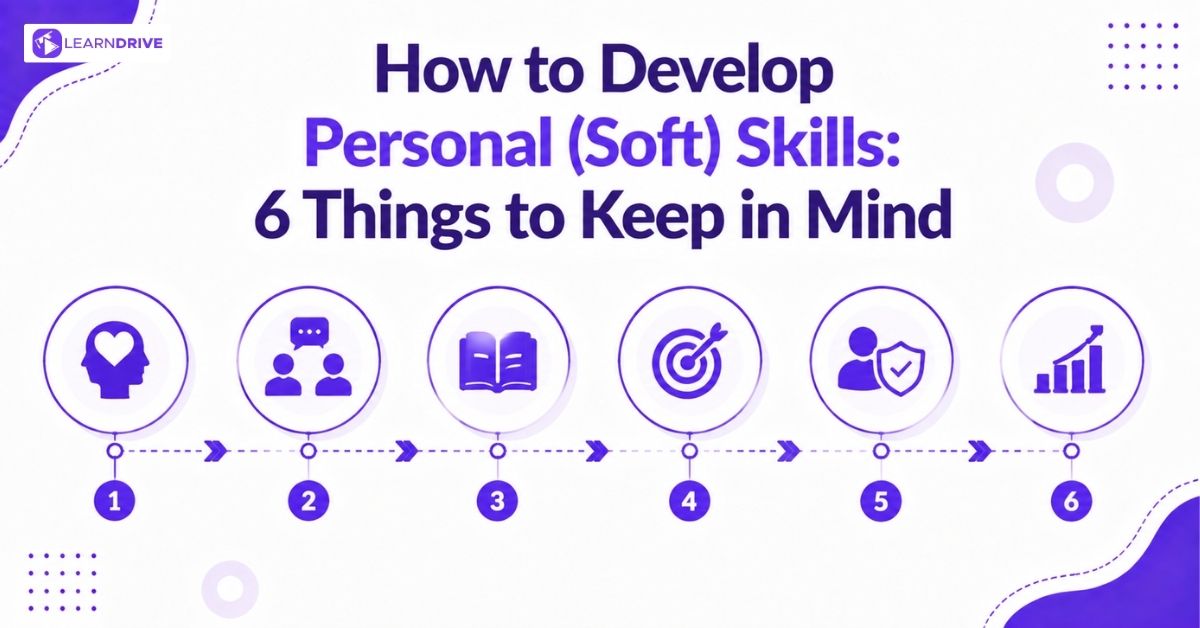
Interpersonal skills typically take longer to build because they’re anchored in habit and disposition rather than information. That does not make them immovable; research consistently shows they respond to deliberate, sustained practice.
1. Deliberate practice in real interactions
Communication skill cannot be built through passive reading alone. It requires active practice in live conversation, particularly active listening: giving full attention to the other party instead of mentally drafting a response while they’re still speaking.
2. Structured, frequent feedback loops
Requesting feedback after specific meetings, presentations, or projects, rather than relying solely on an annual review cycle, produces far more actionable and timely input for behavioral adjustment.
3. Bidirectional mentorship
Being mentored builds humility and openness to critique. Mentoring someone else builds patience and the discipline of explaining complex ideas simply. Professionals who experience both roles tend to develop a more complete interpersonal skill set than those who only experience one.
4. Systematic self-reflection
A brief, consistent end-of-day review, assessing composure under pressure, quality of listening, and handling of friction, compounds into measurable emotional intelligence gains over time, even though individual sessions feel unremarkable.
5. Intentional exposure to discomfort
Meaningful interpersonal growth tends to occur outside a person’s comfort zone. Volunteering for a presentation, joining a genuinely difficult cross-functional project, or initiating a postponed difficult conversation all function as high-leverage practice environments.
6. Modeling skilled communicators
Observing how respected colleagues handle conflict, deliver feedback, or command a room provides a practical template. Paying attention to their tone, pacing, and word choice, rather than just the content of what they say, often reveals the mechanics behind their effectiveness.
Balancing Both: A Practical Framework
Attempting to develop every skill simultaneously and without structure tends to produce diffuse, low-impact effort. A simple allocation framework solves this.
The Two-Lane Growth Model
Treat skill development as two parallel lanes rather than a sequential process.
Lane One: Technical Lane. This lane covers certifications, tools, courses, and applied technical projects.
Lane Two: Human Lane. This lane covers feedback cycles, self-reflection, communication practice, and mentorship.
The objective is not to complete one lane before starting the other. It’s to maintain steady, incremental progress in both simultaneously, on an ongoing basis.
A realistic time allocation
A reasonable starting split for early-career professionals:
Roughly 60% of development time on professional skills directly tied to the current role
Roughly 40% of development time on personal skills such as communication and leadership
This ratio typically inverts as seniority increases. Personal skill development consumes a larger share of total growth time in mid-career and leadership roles, while technical learning becomes narrower and more specialized.
Presenting both effectively
Here is how to present both effectively
On a resume. List professional skills explicitly in a dedicated skills section. Embed personal skills inside achievement statements rather than listing them as standalone terms. “Led a five-person team through a compressed deadline” demonstrates leadership more convincingly than the word “leadership” on its own.
On LinkedIn. Use the summary section to convey personal skills through brief, specific narratives or achievements. Reserve the dedicated skills section for technical terms and tools.
In interviews. Prepare distinct, specific stories for both categories in advance: one that demonstrates technical competence directly, and a separate one that demonstrates how you handled pressure, conflict, or ambiguity.
Personal vs Professional Skills Across Career Stages
The ideal ratio between personal and professional skills is not fixed. It shifts predictably as a career progresses.
Entry-level
Technical competence dominates hiring and early performance evaluation at this stage especially for first time job. Employers are primarily verifying that a candidate can execute the core functional requirements of the role before anything else is weighed seriously. Personal skills function more as a tiebreaker between similarly qualified candidates than as the primary decision driver.
Mid-career
Once technical competence has been demonstrated through track record, personal skills increasingly determine advancement. Promotions at this stage are frequently decided by communication, collaboration, and the capacity to absorb added responsibility under sustained pressure. This is also the stage where technically strong professionals commonly plateau, having under-invested in interpersonal development relative to technical growth.
Leadership and executive level
At senior levels, personal skills typically outweigh raw technical ability. Vision, influence, emotional intelligence, and the capacity to direct other people become the primary value drivers. Many executives no longer perform hands-on technical work at all; their core function becomes enabling and directing the people who do.
The strategic implication
Waiting until a new career stage arrives before developing its corresponding skill set puts a professional at a structural disadvantage. The professionals who advance fastest are typically the ones building the next stage’s required skills before that stage formally demands them.
This is sometimes described as building “one level up.” A mid-career professional aiming for a leadership role benefits from practicing delegation, conflict mediation, and stakeholder communication well before an official title change requires it.
By the time the promotion decision is actually being made, the evidence of readiness already exists, rather than needing to be built reactively under time pressure.
5 Common Myths About Personal and Professional Skills
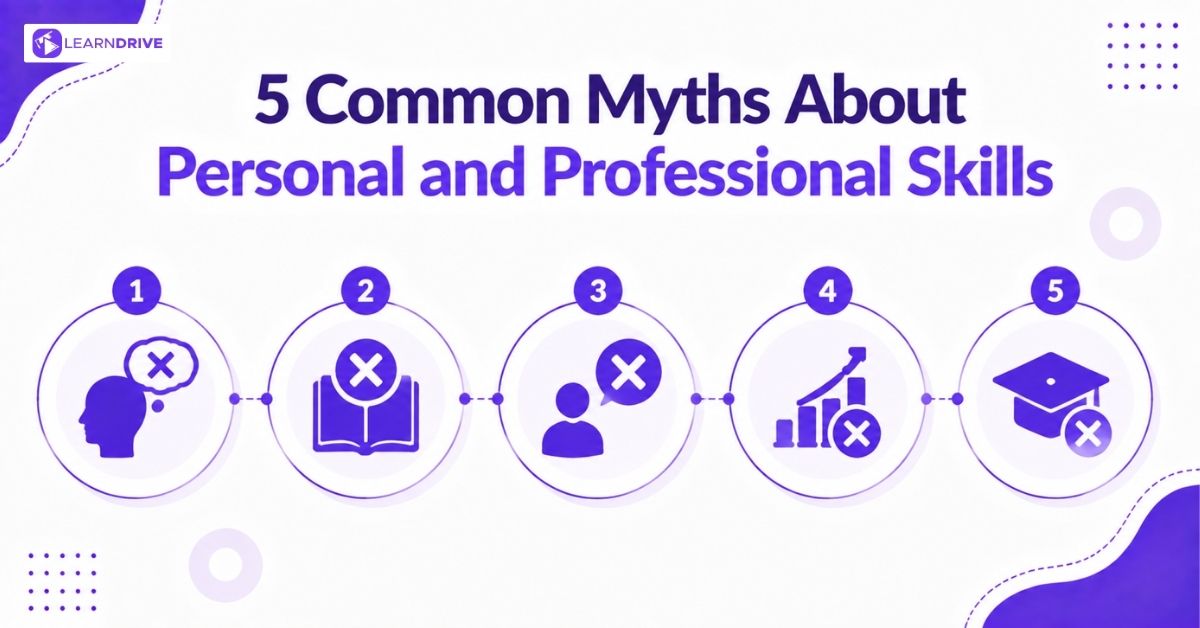
Misconceptions about how personal and professional skills function can severely limit career growth and lead to ineffective development strategies. Many professionals operate under outdated assumptions that prioritize one category over the other or view these skills as fixed traits rather than actionable capabilities.
By debunking these common myths, you can clear away the barriers preventing you from adopting a more effective, balanced approach to your own professional evolution.
Myth one: Soft skills cannot be taught
This is contradicted by substantial evidence. Personal skills such as communication and composure respond measurably to deliberate practice, structured feedback, and coaching, the same mechanisms that improve technical skill, just applied to behavior instead of information.
Myth two: Technical excellence guarantees promotion
Being the strongest technical performer on a team does not automatically translate into leadership capability. Promotion decisions typically require demonstrated evidence of managing and influencing people, not just producing high-quality individual output.
Myth three: Personal skills don’t belong on a resume
Many candidates omit personal skills entirely, assuming they lack the concreteness of technical credentials. In practice, embedding them within specific achievement statements makes a resume substantially more persuasive and memorable to a hiring manager.
Myth four: The two categories are interchangeable
Treating personal and professional skills as synonymous leads to lopsided development planning, typically overweighting whichever category feels more comfortable or familiar to build. Understanding the structural distinction is the first step toward developing both with intention.
Myth five: Once you reach a senior level, technical skills stop mattering
Even at the executive level, some baseline technical literacy remains necessary, if only to ask informed questions, evaluate recommendations critically, and avoid being misled by specialists. What changes at senior levels isn’t that technical skill becomes irrelevant; it’s that its relative weight decreases compared to influence, judgment, and the ability to lead people who hold deeper technical expertise than the leader does.