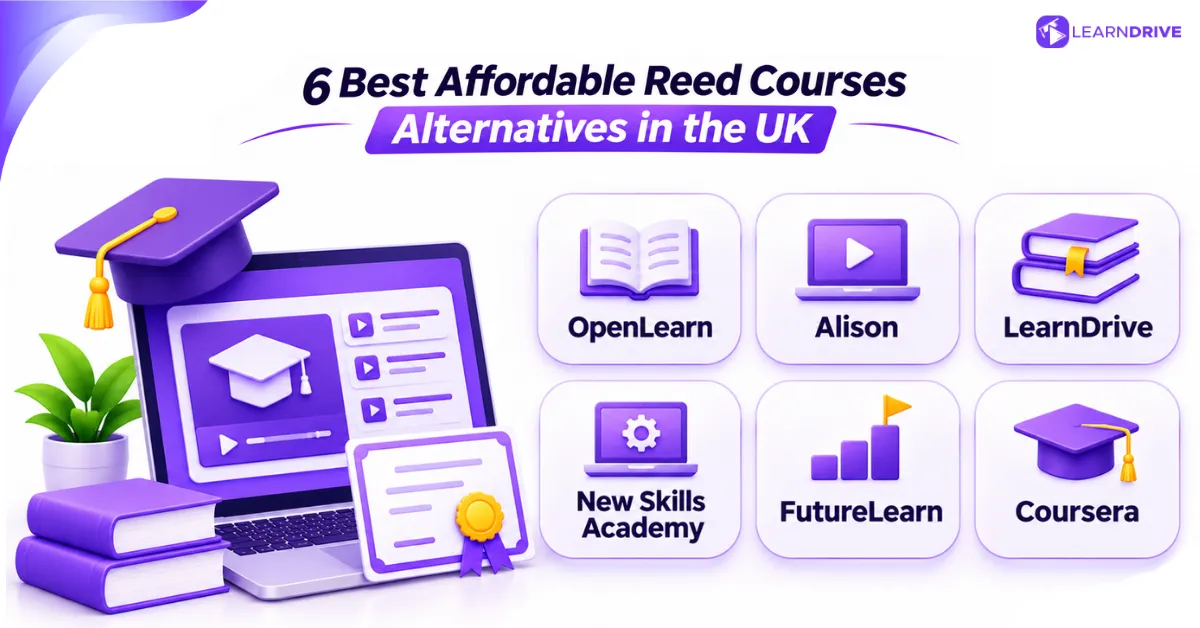
6 Best Affordable Reed Courses Alternatives in the UK
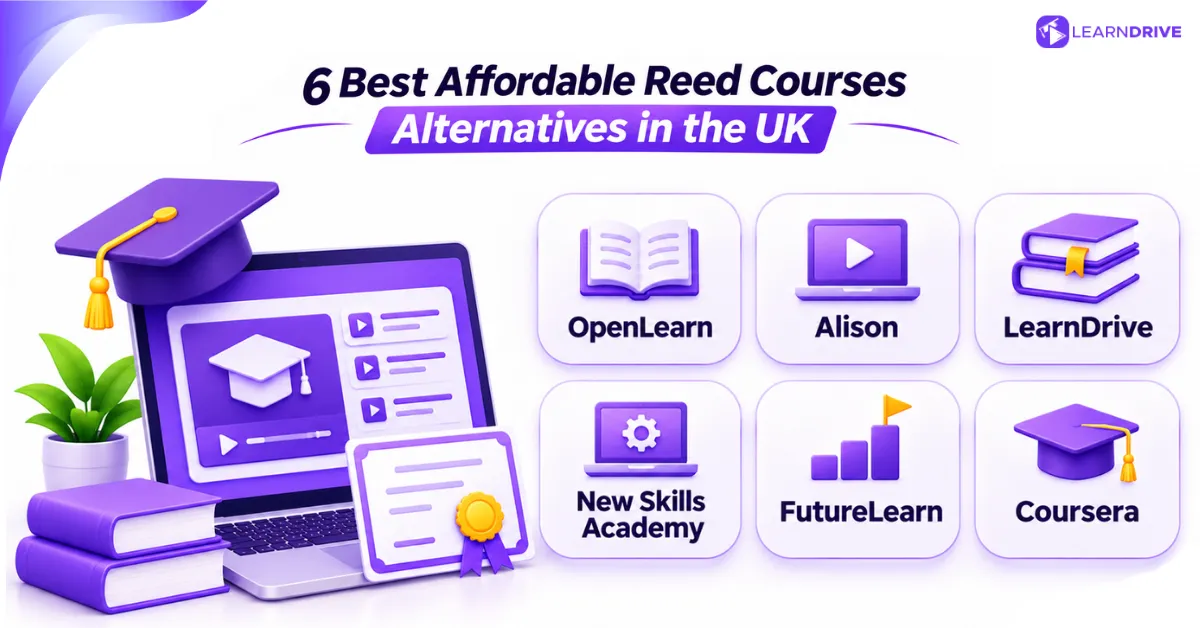
Choosing the right training platform comes down to balancing your career goals against the true checkout cost. To make comparing easy, free learning options come first below, followed by paid platforms ranked from the lowest to the highest annual plan price.
Course fees and bundle offers change often, so checking current promotions through Today’s Deals Catalogue helps keep your professional development budget on track. Always verify what each plan includes before you enrol.
1. OpenLearn: Best for Free University-Provided Learning
OpenLearn is The Open University’s open learning site, hosting nearly 1,000 courses at no cost. Every lesson is self-paced with no set start dates or time limits, and you never have to enter payment details.
Curious learners and career changers can explore academic topics without spending a penny. Subjects span from Greek history to green energy, and many lessons adapt parts of OU modules.
Why It Stands Out as a Reed Alternative
Unlike Reed Courses, where third-party sellers vary in teaching quality and often charge extra for digital certificates, OpenLearn is built entirely by Open University academics. You get consistent university-level teaching with zero paywalls or surprise checkout fees.
Passing a badged course takes around 24 hours and rewards you with a free digital badge plus a Statement of Participation at no cost.
Advantages and Disadvantages of OpenLearn
OpenLearn gives you university lessons for free. Still, its casual style will not fit every career goal. Comparing its flexible study options with the lack of official credit will help you see if it suits your needs.
Pros
Every course, quiz and digital statement is completely free.
Academic content comes straight from Open University modules.
Study whenever you like with zero deadlines or cohort schedules.
Select 24-hour courses award a shareable digital badge once you pass the quizzes.
Cons
Statements and badges carry no formal university credit.
Courses build general knowledge rather than regulated job qualifications.
Tutor feedback is not available since study is fully self-directed.
Before you start
Create a free account and sign in before opening your course. Downloading lessons as a PDF or Word file stops the system from tracking your progress, which means you will not get a Statement of Participation.
2. Alison: Best for Free Skills-Based Online Learning
Alison is an Irish online learning platform hosting over 6,000 self-paced courses across certificate and diploma levels. Anyone can study lessons and take assessments for free across the entire library.
Budget-conscious learners and jobseekers use it to pick up practical workplace, tech, language, and care skills without upfront tuition fees. Short certificate courses take two to three hours, while fuller diploma courses take eight to fifteen hours.
Why It Stands Out as a Reed Alternative
While many low-cost Reed listings lock quizzes behind a paywall or charge before you see the material, Alison lets you finish every lesson and pass the final test without paying. If you do not need a framed certificate, you can download a free Learner Record to prove what you completed.
Advantages and Disadvantages of Alison
Alison removes upfront tuition barriers for practical skill building, though optional certificate fees and ad-supported lessons are worth weighing before you start.
Pros
Study across more than 6,000 courses with free access to lessons and final assessments.
Download a free Learner Record to prove completion without purchasing a certificate.
Choose between quick two-hour certificate courses and deeper fifteen-hour diplomas.
Decide after passing your final exam whether buying an official certificate makes sense.
Cons
Adverts appear throughout free lessons to keep tuition free.
Depth varies across self-published and partner courses compared with university-built programmes.
Before you pay
Decide upfront whether a free Learner Record satisfies your CV or employer requirements. Because Alison prices certificates in euros, check the exact pound total at checkout before buying.
3. LearnDrive: Best for Affordable CPD Courses and Flexible Learning
LearnDrive is a UK training platform offering over 1,100 online CPD courses across workplace, business, care, safeguarding, and AI topics. Busy workers and career-focused jobseekers use it to build practical skills around their day jobs.
Why It Stands Out as a Reed Alternative
Instead of paying separate providers and hidden certificate fees on every Reed listing, LearnDrive brings a wide range of CPD courses together under one transparent membership or single-course checkout.
A jobseeker can pair a mandatory safety course with practical AI or office training without juggling multiple accounts.
Advantages and Disadvantages of LearnDrive
LearnDrive gives you broad, flexible access to workplace CPD courses under one roof, though self-directed study requires steady personal motivation.
Pros
Fit self-paced lessons easily around shift patterns or family commitments.
Access digital CPD certificates, assessments, study guides, and tutor support on eligible membership plans.
Combine over 1,100 workplace, care, and digital topics under a single account.
Cons
Our tutors provide such detailed guidance that learners may find themselves spending extra time exploring topics beyond the course requirements.
Before you pay
Compare single-course prices against an annual or lifetime membership if you plan to take more than two courses. Check the course page to confirm what your chosen plan includes before checkout.
4. New Skills Academy: Best for Career and Personal Development Courses
New Skills Academy is a UK-based provider of self-paced, CPD-approved online courses covering business, finance, career skills, and personal development. Individual courses retail around £100 (£180 for three-course bundles) unless purchased during a promotion or via its £99 annual plan.
Why It Stands Out as a Reed Alternative
Rather than hunting through dozens of unrelated sellers on Reed for hobby or entry-level career topics, New Skills Academy brings hundreds of vocational and lifestyle courses into one mobile-friendly portal.
An Unlimited Learning subscription at £99 for 12 months lets frequent learners sample multiple subjects under one flat fee.
Advantages and Disadvantages of New Skills Academy
New Skills Academy makes it easy to explore diverse beginner and lifestyle subjects on any device, though standard single-course list prices are steep outside sales or annual plans.
Pros
Explore a broad mix of beginner-friendly vocational, lifestyle, and business topics.
Study smoothly on phones, tablets, and laptops through a mobile-friendly browser interface.
Unlock a free digital PDF certificate upon passing the final test, with printed copies available for £15.
Cons
Lacks listing on the Ofqual register of awarding bodies, according to a third-party edtech directory, meaning awards are CPD only.
Coaching courses do not carry ICF accreditation, per a coaching-industry review.
Standard single-course fees of £100 (or £120 for languages) add up quickly unless bought on sale or under the £99 annual plan.
Before you pay
Verify the named accreditor on the course page to confirm your target sector accepts CPD certificates. Check whether the annual membership renews automatically and compare voucher deals against the yearly subscription.
5. FutureLearn: Best for University-Backed Short Courses
FutureLearn is an online learning platform partnering with UK and international universities and specialist organisations to run structured short courses. Learners can join free with Limited Access or subscribe to Unlimited for CV-ready certificates.
Unlimited Annual costs around £249.99 a year at standard rates (with periodic discounts), while Unlimited Monthly costs around £45 a month. Both subscriptions renew automatically.
Why It Stands Out as a Reed Alternative
While Reed focuses heavily on independent commercial training providers, FutureLearn connects you directly with accredited universities and cultural institutions.
Trying a course free with Limited Access removes financial risk, and Unlimited subscribers retain permanent access to course materials for every certificate earned.
Advantages and Disadvantages of FutureLearn
FutureLearn delivers structured, university-designed weekly study with free trial access, though free learners lose access once a course run finishes.
Pros
Sample over 1,400 university-backed short courses for free using Limited Access.
Receive digital certificates across all eligible short courses included in Unlimited plans.
Follow manageable weekly study steps designed to fit around full-time work.
Cover multiple academic and career subjects under one annual subscription.
Cons
Free Limited Access excludes certificates, graded tests, and post-course material access.
Unlimited subscriptions renew automatically unless cancelled before the renewal date.
ExpertTracks and full degrees sit outside the Unlimited plan and carry separate fees.
Before you pay
FutureLearn is a UK-based platform, but its subscription prices may be displayed in US dollars depending on your location. UK learners should confirm the final GBP price and any applicable currency conversion charges before subscribing.
Check that your chosen course is included in Unlimited, and remember that Certificates of Achievement demonstrate short-course learning rather than automatically providing formal degree credit.
6. Coursera: Best for Career-Focused Professional Certificates
Coursera is an online learning platform offering short courses and industry-recognised professional certificates created with leading universities and tech companies. Learners study online at their own pace, paying from £36 per month per certificate track or £43 per month (£296 per year) via Coursera Plus.
Why It Stands Out as a Reed Alternative
Unlike Reed’s marketplace of independent UK training firms, Coursera partners directly with global universities and employers like Google, IBM, and Meta. That makes it a stronger option when you want a structured, portfolio-building pathway into data, IT support, project management, or business.
Advantages and Disadvantages of Coursera
Coursera combines employer-branded career pathways with free lesson auditing, though monthly subscription costs climb if you study at a slower pace.
Pros
Learn from curricula co-created by top global universities and major technology employers.
Follow structured career pathways in high-demand fields such as data analytics, IT support, and project management.
Audit video lessons and reading materials for free via free audit access before paying.
Apply for financial aid on eligible courses if tuition costs present a barrier.
Cons
Monthly billing becomes expensive if you take six months instead of three to finish a track.
Free auditing excludes graded assignments and verified completion certificates.
Professional certificates are not regulated UK Ofqual qualifications, so employer recognition varies by sector.
Before you pay
Estimate how many months you realistically need before starting a monthly plan. Scan UK job adverts in your field to confirm employers value the specific certificate, and apply for financial aid first if cost is a concern.
Are Affordable Online Course Certificates Recognised in the UK?
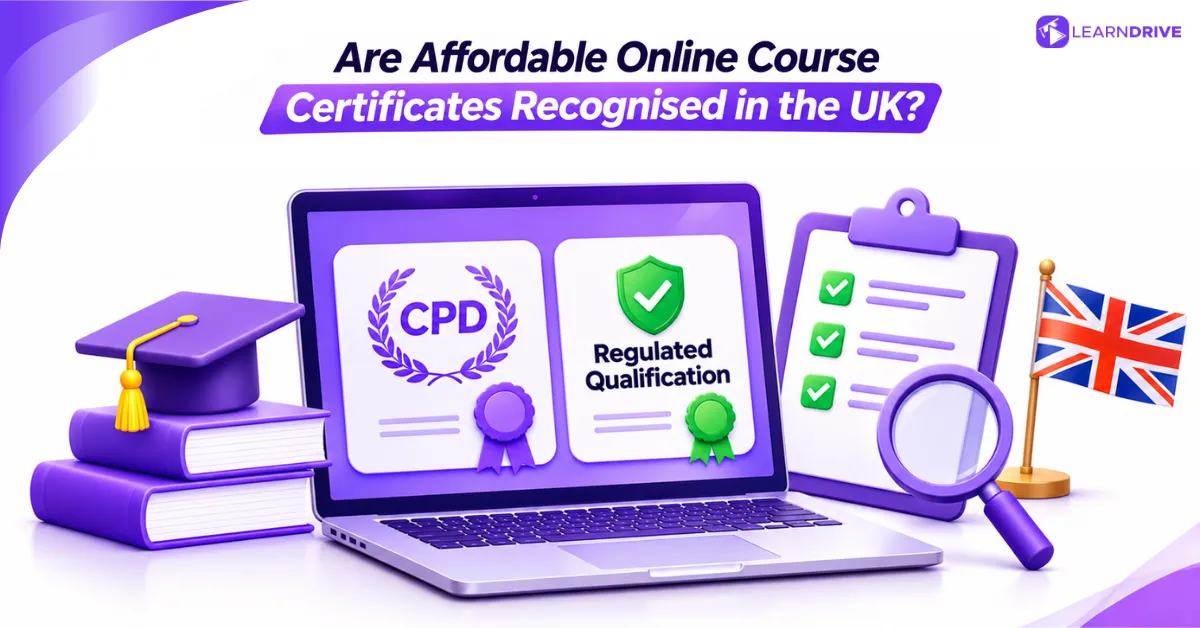
Most low-cost online certificates are completion or CPD certificates. They show that you studied, but they are not regulated qualifications.
CPD-Accredited Courses vs Regulated Qualifications
CPD stands for continuing professional development. It means training that keeps your work skills sharp. The CPD Standards Office calls its approval independent quality recognition, not a regulated qualification. A regulated qualification is different. It is awarded by an Ofqual-recognised awarding organisation.
When checking qualification frameworks, use GOV.UK’s Find a regulated qualification service, keeping in mind that it applies to England and Northern Ireland, whereas Scotland uses the SCQF (Scottish Credit and Qualifications Framework) and Wales uses Qualifications Wales.
How to Check If an Online Certificate Is Credible?
Words like “accredited” or “Level 3” prove very little on their own. Follow these six steps in about ten minutes.
Find the awarding body named on the course page. Every regulated qualification has one.
Search GOV.UK’s Find a regulated qualification service for England and Northern Ireland, or check SCQF for Scotland and Qualifications Wales for Wales.
For Wales or Scotland, check the regulator lists on GOV.UK’s awarding organisation checker.
Match the course title, level and awarding body on the register to the course advert.
For a CPD course, check that the named CPD body is real and see what it reviewed.
Check how you are tested. A graded exam proves more than a certificate for watching videos.
Do Employers Value Affordable CPD Certificates?
CPD certificates help you talk about your skills in interviews. They show what you studied and when, which helps if you are changing careers or returning to work.
Many professionals naturally wonder whether CPD certifications carry real value with employers when getting ready for job interviews or performance reviews.
While CPD certificates do not automatically guarantee a new job, promotion, or salary increase, they demonstrate your commitment to professional growth and upskilling.
However, if a job listing specifically requires a formal Level 2 qualification, a CPD certificate will likely not suffice. Be sure to check employer and industry requirements carefully before enrolling.
8 Things to Consider When Choosing an Affordable Online Course for Your Career
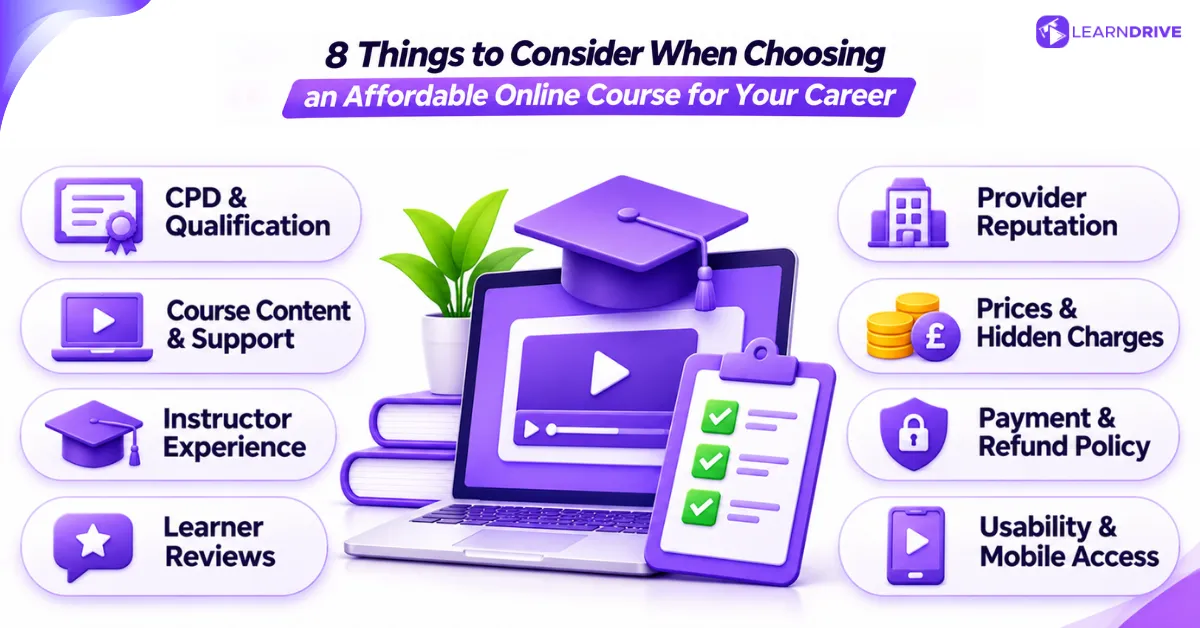
A quick checklist saves you from wasting money. Check these eight points before you pay.
1. Check CPD Accreditation and Qualification Status
Check who approved the course and whether it is a regulated qualification. If your boss or trade body sets rules, check them first.
2. Review Course Content, Learning Access and Support
Read the lesson list, test format and time limit. Check if tutor help is included and how long you can keep the study notes.
3. Evaluate the Instructor’s Qualifications and Experience
Look for named teachers with real work experience. Unnamed authors make course quality hard to judge. Real experience matters most in technical areas like finance or health.
4. Read Genuine Learner Reviews and Ratings
Read recent reviews on outside review sites, not just quotes on the seller’s page. Look for comments about certificate fees, support and refunds.
5. Check the Training Provider’s Reputation
Look for a company number, a real street address and clear certificate rules. You can check Companies House to see if a UK business is real. Recent reviews also flag refund or certificate problems fast.
6. Compare Course Prices and Hidden Charges
Add certificate, test, postage and renewal fees to the starting price. Check if any membership renews on its own.
7. Review Payment Security and Refund Policies
Pick sites with safe checkout pages and clear refund rules. Cancellation rules for digital courses differ from physical items, so read them before you buy.
8. Assess Platform Usability and Mobile Accessibility
Try a free sample lesson if the site offers one. Check that the course works well on your phone or tablet, especially if you study on the bus or train. Applying insights gained from a structured CV Writing Masterclass ensures your newly acquired skills are displayed effectively to prospective employers.
What Are the Cheapest Alternatives to Reed Courses in the UK?
Are There Free Online Courses With Certificates in the UK?
Do Reed Courses Charge Extra for Certificates?
Are CPD Certificates Recognised by UK Employers?
Is It Cheaper to Buy Online Courses Directly From Training Providers?