Understanding How Chronic Fatigue Affects Work
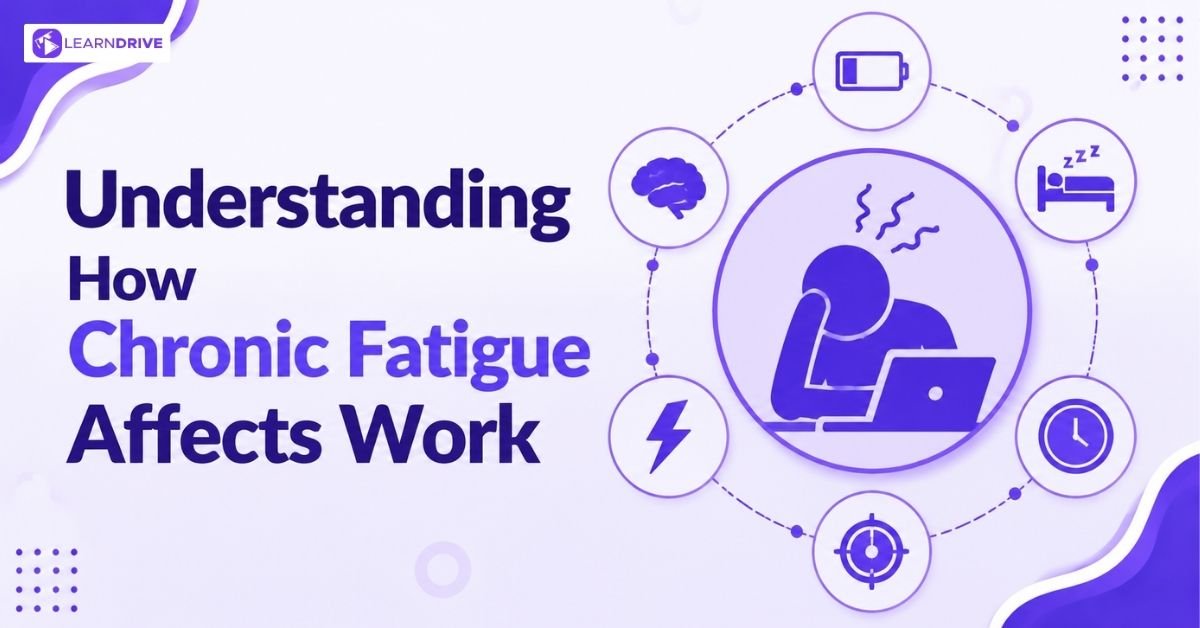
Chronic fatigue isn’t simple tiredness. It comes with a specific set of symptoms that clash directly with how most workplaces are built to operate.
Common symptoms that intersect with work
Post-exertional malaise is one of the most disruptive symptoms for working life. It means pushing too hard today can crash your energy for days afterward, sometimes with a delay that makes the connection hard to see at first.
This isn’t a matter of willpower. It’s a real physiological response, and it means the usual advice to just “push through” often backfires badly.
Brain fog is common too. Thinking clearly, finding the right words, and holding focus can all get harder without much warning. A task that felt simple last week might suddenly feel much heavier.
Flare days add another layer of unpredictability. You might feel completely fine in the morning and find yourself drained by early afternoon, often with very little notice. This makes rigid daily schedules especially difficult to sustain over time.
On top of all this, sleep is frequently disrupted. Many people sleep for long stretches and still wake up exhausted, which removes one of the usual tools people rely on to recover.
Why a standard 9-to-5 can be uniquely hard
A typical office job assumes steady energy, five days a week, without much variation. It assumes a commute at a fixed time. It assumes long meetings and constant availability throughout the day. None of that lines up well with chronic fatigue.
Even a short commute can drain meaningful energy before the workday has properly started. Open-plan offices add constant noise and bright lighting, both of which wear down focus and stamina faster than a quieter, more controlled space would.
Back-to-back meetings compound the problem further, since they leave no real room to rest and recover between demands on your attention.
None of these features are fixed requirements of work itself. They’re just common defaults, built around the assumption of a body that doesn’t run out of energy in unpredictable ways.
The energy budget concept
Many people with chronic illness use an idea called the energy budget, sometimes known as spoon theory. You start each day with a limited amount of energy. Every task spends some of it, whether that task is physical, mental, or emotional. Once the budget is gone, it’s gone, and pushing past that point usually means paying for it later, often in the form of a flare or a crash.
This concept is a genuinely useful lens for picking a job. Ask yourself one simple question about any role you’re considering. Does it let you control how you spend your energy across the day? Or does it demand energy strictly on its own schedule, regardless of where you’re actually at?
This is different from simply working fewer hours. Two people can work the exact same number of hours in a week and have very different experiences, depending on whether those hours are spent in a way they control, or dictated entirely by someone else’s calendar. Control over timing often matters as much as total workload.
Keep that single question in mind as you read through the rest of this guide. It will come up again and again as a way to quickly judge whether a role is worth pursuing.
It’s also worth saying clearly that none of this is a personal failing. Chronic fatigue is a real physical condition, not a matter of motivation or effort. Building a career around it isn’t a compromise or a lesser path. It’s simply a practical response to real physical limits, the same way anyone would plan around any other significant constraint in their life.
What to Look For in a Job (Criteria Checklist)

Not every job needs to check every item on this list. But the more boxes a role checks, the more sustainable it’s likely to be over the long run, not just for the first few weeks.
Start by looking for remote or hybrid flexibility. Working from home removes the commute entirely, which saves real, measurable energy before the workday even begins. It also lets you shape your environment, from lighting to seating, in ways a shared office rarely allows.
Flexible hours matter just as much as location. Fixed schedules can be brutal on bad days, when you simply don’t have the same capacity you had yesterday. Roles that let you shift your hours, or that lean on asynchronous work instead of constant live calls, let you follow your actual energy instead of fighting against a clock that doesn’t know how you feel.
Low physical exertion is another key factor worth checking early. Seated work is generally far easier to sustain than roles that require standing for long periods, walking, or lifting. Physical strain adds up quickly when your baseline energy is already limited.
Workload style matters too. A predictable, low-stress pace beats high-pressure sales targets or nonstop live customer service almost every time. Predictability lets you plan your energy in advance, instead of constantly reacting to sudden spikes in demand.
Structure counts for a lot as well. Task-based or freelance roles that let you work in short bursts, then rest, then return, are far easier to pace than jobs demanding long, unbroken stretches of focus. This kind of structure fits naturally with how energy fluctuates throughout a day with chronic fatigue.
Finally, look closely at the social and meeting load a role expects. Some interaction is completely fine, and even welcome. Constant, back-to-back meetings are a different story, since they leave no space to recover between conversations. Favor roles where meeting time is minimal, or at least something you have real control over.
Use these six points as a quick filter whenever you’re reviewing a job posting. If a role fails most of them, it’s probably worth skipping, no matter how appealing the title or salary might look on the surface.
Over time, running new postings through this same checklist gets faster, and you’ll start to notice patterns in which companies and industries tend to offer this kind of flexibility more consistently than others.
Best Job Categories and Specific Roles
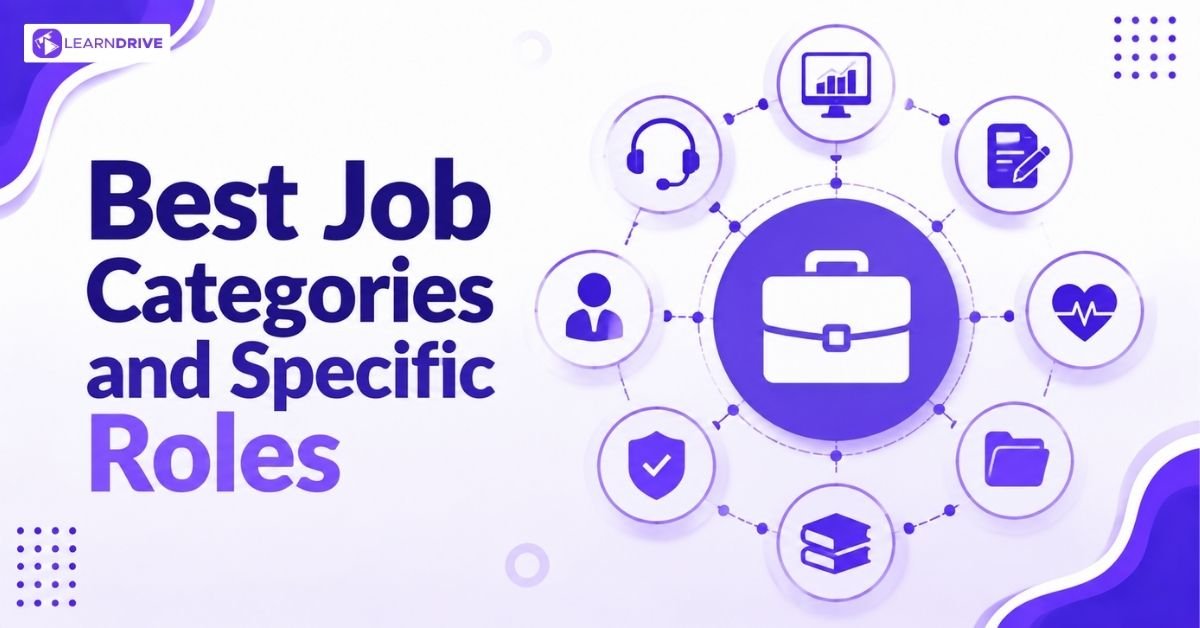
Here are specific job categories worth exploring, along with why each one tends to fit, how much flexibility to expect, and rough pay where reliable numbers exist.
Remote administrative and virtual assistant work
Virtual assistants handle admin tasks like email management, scheduling, and file organization for businesses and individual clients. Most of the work is asynchronous by nature, so you can process it in short bursts and rest in between without falling behind.
Many roles are fully remote, with average pay in the U.S. sitting around $24 an hour. Experienced assistants who specialize in a niche, like calendar management or client communication, often earn noticeably more.
This role works particularly well because the tasks are usually broken into small, discrete items. You can clear a handful of emails, update a calendar, then step away to rest before returning to the next batch. On a lower-energy day, you simply handle what’s urgent and let the rest wait, since most VA work isn’t time-critical minute to minute.
Writing, editing, and content creation
Freelance and in-house writing roles are among the most flexible careers available for people managing fluctuating energy. Deadlines are usually set days or even weeks ahead, which gives you real room to work in short sessions rather than long, forced stretches.
Editing work follows a similar pattern, often with even more schedule flexibility, since the work is typically project-based rather than tied to a daily clock.
Content creation roles, including blog writing, website copy, and social captions, tend to reward consistency over raw speed. This makes them a strong fit if you can produce steady, smaller amounts of work rather than large bursts under pressure.
Many writers build a portfolio slowly over time, picking up new clients only as their energy and schedule allow.
Data entry, transcription, and light data analysis
These roles involve clear, well-defined tasks. Enter a number here. Update a field there. Transcribe a short recording. The mental demand is generally lighter than tasks requiring constant creative decision-making, and the work is usually remote and easy to complete in small, manageable chunks throughout the day.
Light data analysis, such as cleaning up spreadsheets or checking data for errors, follows a similar rhythm. The tasks are repeatable and well-defined, which makes them easier to plan around than open-ended, ambiguous work that requires constant judgment calls.
Customer service, chat and email based
Phone-heavy customer service roles can be draining, since live calls demand instant energy on someone else’s timeline, with no room to pause and think.
Chat and email support work quite differently. You can take a moment before replying, and you can pace your responses across the day. This version of customer service is far more manageable for someone working with a limited, unpredictable energy supply.
Many companies now offer fully remote, chat-based support positions, often with flexible or staggered shift options. Look specifically for postings that mention chat or email support, rather than general “customer service” listings that may still involve heavy phone work behind the scenes.
Social media management
This role involves creating and scheduling posts, then responding to comments and messages as they come in. Much of the actual content creation can be planned well in advance.
You can batch a week’s worth of posts in one sitting, when your energy happens to be higher, then let scheduling tools handle the rest automatically. Many social media managers also work freelance or part-time, which adds another useful layer of flexibility on top of the role itself.
Community management, responding to comments and messages, is the least predictable part of this role. If that feels like too much unpredictability, some social media roles focus purely on content creation and scheduling, leaving live interaction to someone else on the team.
Graphic design, photography editing, and creative freelance work
Freelance design work lets you set your own deadlines with clients and choose how many projects to take on at once. Photography and photo editing follow a similar pattern. Both types of work can usually be done entirely remotely, on your own schedule, without needing to be present anywhere in particular during specific hours.
This category also includes smaller, task-based creative work, like logo design or simple video editing. Many freelance platforms let you list specific services with fixed turnaround times, which makes it easier to plan your workload around your energy rather than a client’s constant real-time expectations.
Tutoring and teaching online
Online tutoring lets you set your own hours and teach in relatively short sessions, which fits well with limited or unpredictable energy. You can teach one student at a time, or a small group, depending on what feels manageable.
Course creation takes this even further. Record a set of lessons once, and students can access them whenever it suits them, which removes the need for live sessions altogether.
If live teaching still feels like too much some weeks, course creation offers a useful middle ground. The upfront work of recording lessons takes real effort, but once it’s done, the income can continue with very little ongoing energy required.
Bookkeeping and virtual accounting
Bookkeeping is detail-focused work that usually doesn’t require constant social interaction throughout the day. Many bookkeepers work remotely, managing several clients at once on a schedule they largely control themselves. The work tends to follow predictable monthly or weekly rhythms, which makes it easier to plan around.
Because bookkeeping tasks are often cyclical, tied to monthly close-outs or quarterly filings, you can often anticipate busier and quieter periods well in advance, and plan your rest accordingly.
Web and software development
Development work is often structured around individual projects rather than a strict daily clock. Complete a defined task, submit it, then move on to the next one. Many developers, especially freelancers and independent contractors, work remotely and set their own hours around their own energy patterns.
This path usually requires some technical training upfront, but it can offer strong flexibility and solid pay once you’ve built up real skill in the area.
Smaller, well-scoped projects tend to suit fluctuating energy better than large, open-ended ones with tight, fixed deadlines. Look for freelance platforms that let you filter by project size and timeline, so you can choose work that matches your current capacity.
Librarian and archival or desk-based roles
If working from home isn’t realistic for your situation, a desk-based role like a librarian or archival position can still be a good fit. These jobs are typically indoors, seated for most of the day, and run on predictable, structured hours.
They involve far less physical strain than most other in-person jobs, which makes them worth considering if remote work simply isn’t an option right now.
These roles also tend to have clearly defined shifts, without the unpredictable overtime or rush periods common in many customer-facing jobs.
That predictability alone can make a significant difference for someone managing chronic fatigue. Many library and archive positions also offer part-time schedules, which can be a useful way to ease into paid work without committing to a full workweek right away.
Freelance and Self-Employment as a Flexibility Strategy
Freelance and contract work often suits fluctuating energy better than a standard salaried role. As a freelancer, you choose your clients, your workload, and your working hours. That level of control matters enormously when your energy shifts noticeably from day to day, in ways that don’t follow any fixed pattern.
There are real trade-offs worth understanding before you commit to this path. Income can be unpredictable, and some months will simply be better than others, regardless of how much effort you put in.
You also won’t have built-in benefits like paid sick leave or employer-sponsored health insurance, which means freelancing works best when you plan for that gap well in advance, rather than discovering it after the fact. Self-discipline matters more too, since there’s no manager setting your schedule or checking in on your progress.
A good starting point is to begin small rather than diving in all at once. Freelance part-time, alongside other income, before committing fully to self-employment.
This approach lets you test how your energy actually holds up under real client work and real deadlines, with far lower financial risk than quitting a stable job outright. If it goes well, you can grow the freelance side gradually. If it doesn’t suit you, you haven’t burned every bridge in the process.
Many people find a long-term balance somewhere in between full employment and full freelancing. A part-time job for steady income, paired with a small freelance client base for flexibility, can offer a reasonable middle ground while you figure out what actually works for your specific energy levels and financial needs.
There’s no rule that says you have to pick one path permanently. Many people shift the balance back and forth over the years, depending on how their condition and circumstances change.
Where to Find These Jobs
A few specific places are worth checking first, rather than relying on general job boards alone. Disability and chronic-illness-specific job boards, like Chronically Capable, connect people managing chronic conditions directly with remote and flexible openings that are already vetted for this kind of need.
General remote-work platforms are also useful, and worth bookmarking. Many of these let you filter listings by schedule type or flexibility level, so you can search specifically for flexible or part-time roles across a wide range of industries, instead of sorting through postings that clearly won’t fit.
Government and nonprofit resources are worth knowing about too, even if they’re not job boards themselves. The Job Accommodation Network, known as JAN, is a free U.S. resource that offers practical guidance on workplace accommodations. It’s useful to review even before you start applying anywhere, since it helps you understand what’s realistic to ask for later.
Finally, don’t overlook chronic illness communities. Online groups and forums for people with ME/CFS or long COVID often share job leads directly with each other, along with honest information about which companies are genuinely flexible versus which ones only claim to be during the hiring process.
Networking within these communities can also lead to referrals you wouldn’t find through a public job listing at all. Someone who already works somewhere flexible is often willing to pass your resume along directly, which can carry more weight than a cold application submitted through a general careers page.
Know Your Rights: Accommodations and Disclosure
This section is general information, not legal advice. Laws vary by country, and even by state within the same country, so it’s worth confirming your specific rights with a legal professional if your situation calls for it.
In the United States, the Americans with Disabilities Act requires many employers to provide reasonable accommodations to qualifying employees. Chronic fatigue syndrome can qualify under this law, along with related conditions like long COVID and fibromyalgia, depending on how significantly the condition affects daily functioning.
A reasonable accommodation is simply a change that helps you do your job effectively, without creating major difficulty or major expense for the employer providing it.
Common accommodations for chronic fatigue include flexible start and end times, the option to work from home either fully or part of the week, extra rest breaks built into the day, written instructions instead of only verbal ones, a reduced meeting load, and an ergonomic workspace setup that reduces unnecessary physical strain.
Some employees also request permission to work in short blocks throughout the day rather than one continuous shift, which can make a meaningful difference on lower-energy days.
Disclosure is a deeply personal decision, and there’s no single right answer that applies to everyone. Some people disclose early on, so accommodations can be set up from day one, before problems have a chance to build up.
Others wait until they’ve built some trust with an employer first. Some choose not to disclose at all, especially if their specific role doesn’t require any formal accommodations to manage well. Think carefully about what you actually need in order to succeed in the role, and let that genuine need guide when, and how much, you choose to share with your employer.
If you need help figuring out exactly what to ask for, JAN offers free consultations specifically on accommodation requests, and can help you phrase your request clearly and reasonably before you bring it to an employer.
It also helps to think of accommodations as a starting conversation rather than a one-time fix. What works well in your first month might need small adjustments a few months later, as you learn more about your own patterns in that specific role.
Most reasonable employers expect this kind of check-in, especially if you frame it as fine-tuning something that’s already working, rather than a sign that the original accommodation failed.
If you’re new to this process, it can also help to write down exactly what a typical bad day looks like for you before requesting anything. Being specific about how a flare actually affects your work, rather than describing it in vague terms, usually makes the conversation easier for both sides.
Energy Management Strategies Once You’re Working

Getting the right job is only the first step in this process. Managing your energy well, once you’re actually working day to day, matters just as much for staying in that role long term.
Pacing is the core strategy most people rely on. Break big tasks into smaller pieces. Complete one piece, rest briefly, then continue with the next.
Batching helps in a similar way. Group similar tasks together, like answering all your emails in one focused sitting, instead of letting them interrupt you throughout the entire day in small, draining bursts.
It also helps enormously to structure a backup plan specifically for low-energy days. Decide in advance which tasks are truly urgent and which ones can reasonably wait until tomorrow. Having this plan ready means a sudden bad day doesn’t turn into a stressful scramble, since you already know what to prioritize.
Communicate proactively with managers or clients about your capacity, rather than waiting until a deadline is already at risk. A short, honest message about a shifted timeline is usually received far better than silence followed by a missed deadline. Most people respond constructively to clear, early communication, even when the news itself isn’t ideal.
This kind of communication also builds trust over time. Managers and clients who see you flag issues early, rather than disappearing when things get hard, tend to extend more flexibility going forward. It becomes a track record you can point to, rather than something you have to explain from scratch each time.
Finally, lean on tools that genuinely support this kind of rhythm. Async communication tools reduce the pressure to respond instantly to every message. Calendar blocking helps protect your rest time the same way it protects a meeting.
Task management apps let you track what’s done and what’s left without having to hold it all in your head, which is its own small but meaningful form of energy conservation.
Common Mistakes to Avoid
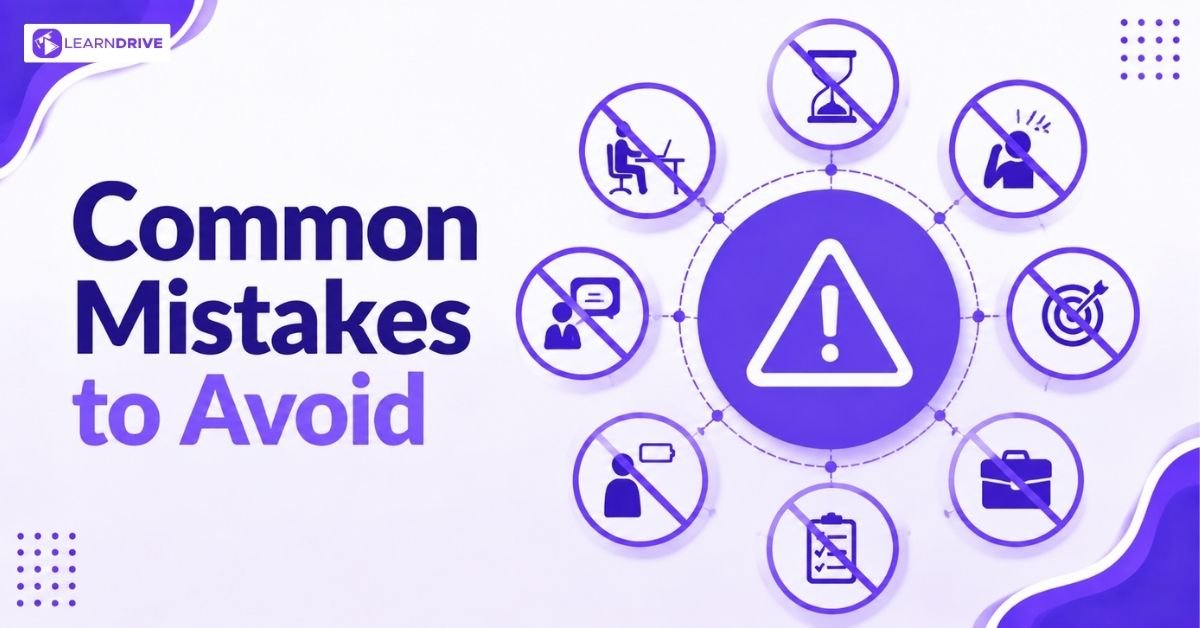
A few mistakes come up again and again for people navigating this process, and avoiding them can save a real amount of stress down the line.
Don’t choose a job based on prestige or pay alone, without weighing whether it’s actually sustainable for your energy levels. A high-paying role that drains you completely isn’t a good long-term trade, no matter how impressive it looks on paper or how it sounds when you describe it to others. A lower-paying role you can actually sustain for years usually outperforms a high-paying one you burn out of within months.
Don’t overcommit on good days, tempting as it can be. It’s natural to want to push hard when you’re feeling relatively well, but doing too much on a good day often leads directly to a crash a day or two later. Try to pace even your best days, rather than treating them as a free pass to ignore your usual limits. A good day is best spent slightly under your perceived capacity, not at the very edge of it.
Don’t wait too long to ask for accommodations once you know you need them. Many people wait until they’re already struggling significantly before raising the issue.
Asking earlier, before things reach a breaking point, almost always leads to a smoother, less stressful process for everyone involved. Delaying the conversation rarely makes it easier. It usually just means having the same conversation later, under more pressure and with less goodwill built up.
Finally, don’t isolate yourself during this search. Chronic illness communities exist for a real reason, and connecting with people who understand your specific situation can make the entire job search feel far less overwhelming than trying to navigate it entirely on your own.
It’s also worth avoiding the trap of comparing your current capacity to what you could once do before your condition started. That comparison rarely helps, and it often adds guilt on top of an already difficult situation.
Focus instead on what works for you right now, and build forward from there. A career built around your present reality will always serve you better than one built around a version of yourself that no longer exists.