20 Proven Ways for How to Improve Employee Experience

Enhancing employee experience (EX) is a dynamic process that requires tailoring strategies to fit your unique workplace culture.
By focusing on actionable initiatives, you can create a thriving work environment that supports engagement, satisfaction, and productivity.
Below, we explore 20 approaches to enhance EX.
1. Focus on Employee Engagement
Employee engagement and EX are deeply intertwined. Engagement, as defined by William Kahn, includes three dimensions:
-
Physical Engagement: How effectively employees use their mental and physical abilities in their roles.
-
Cognitive Engagement: Employees’ understanding of organisational goals and how their work aligns with these objectives.
-
Emotional Engagement: Employees’ emotional investment in the company’s mission and culture.
2. Prioritize EX in Internal Communications
Effective internal communication is vital for fostering a positive EX. It keeps employees informed, connected, and engaged with the organisation’s goals. Strategies include:
-
Share Key Updates: Use newsletters, emails, and videos to communicate events, benefits programs, and milestones like work anniversaries or birthdays.
-
Leverage Multiple Channels: Ensure that employees across all departments are reached through varied channels, such as mobile alerts or video announcements.
-
Integrate Tools: Platforms with integrated tools simplify internal communications, allowing HR teams to navigate channels and monitor engagement metrics seamlessly.
3. Provide Incentives that Motivate Employees
Employees who feel valued and appreciated are more likely to remain engaged. Offer meaningful incentives that go beyond compensation :
-
Competitive Salaries and Benefits: Demonstrate that you value employees’ contributions by offering competitive pay, health plans, and personal development opportunities.
-
Career Development Opportunities: Outline promotion pathways in your employee handbook and provide mentorship programs to connect employees’ current roles to future growth.
-
Stock Options and Profit Sharing: Enable employees to directly benefit from company success, fostering a sense of ownership.
These initiatives show employees that their efforts contribute to their professional success, creating a more motivated workforce.
6 Benefits of a Good Employee Experience

Investing in EX yields significant benefits across an organisation. Here are six key advantages:
1. Improved Employee Engagement
Employees who feel connected to the organisation are more motivated and productive. Engaged employees actively contribute to the company’s success and go the extra mile.
2. Reduced Employee Turnover
A positive EX fosters satisfaction, reducing the likelihood of employees leaving. Lower turnover means fewer costs associated with hiring and training new staff.
3. Positive Workplace Culture
A supportive, collaborative culture attracts and retains top talent. When employees feel valued, recognised, and included, they are more likely to thrive.
4. Better Customer Experience
Happy employees deliver better service to customers. Their enthusiasm and positivity enhance customer satisfaction, loyalty, and ultimately sales.
5. Enhanced Brand Advocacy
Employees serve as credible ambassadors for your organisation. When they feel good about their workplace, they naturally promote your brand to others.
6. Higher Employee Satisfaction
Regular feedback through surveys or one-on-one meetings provides actionable insights into employee needs. Addressing these insights boosts satisfaction and strengthens internal relationships.
How to Measure Employee Experience?
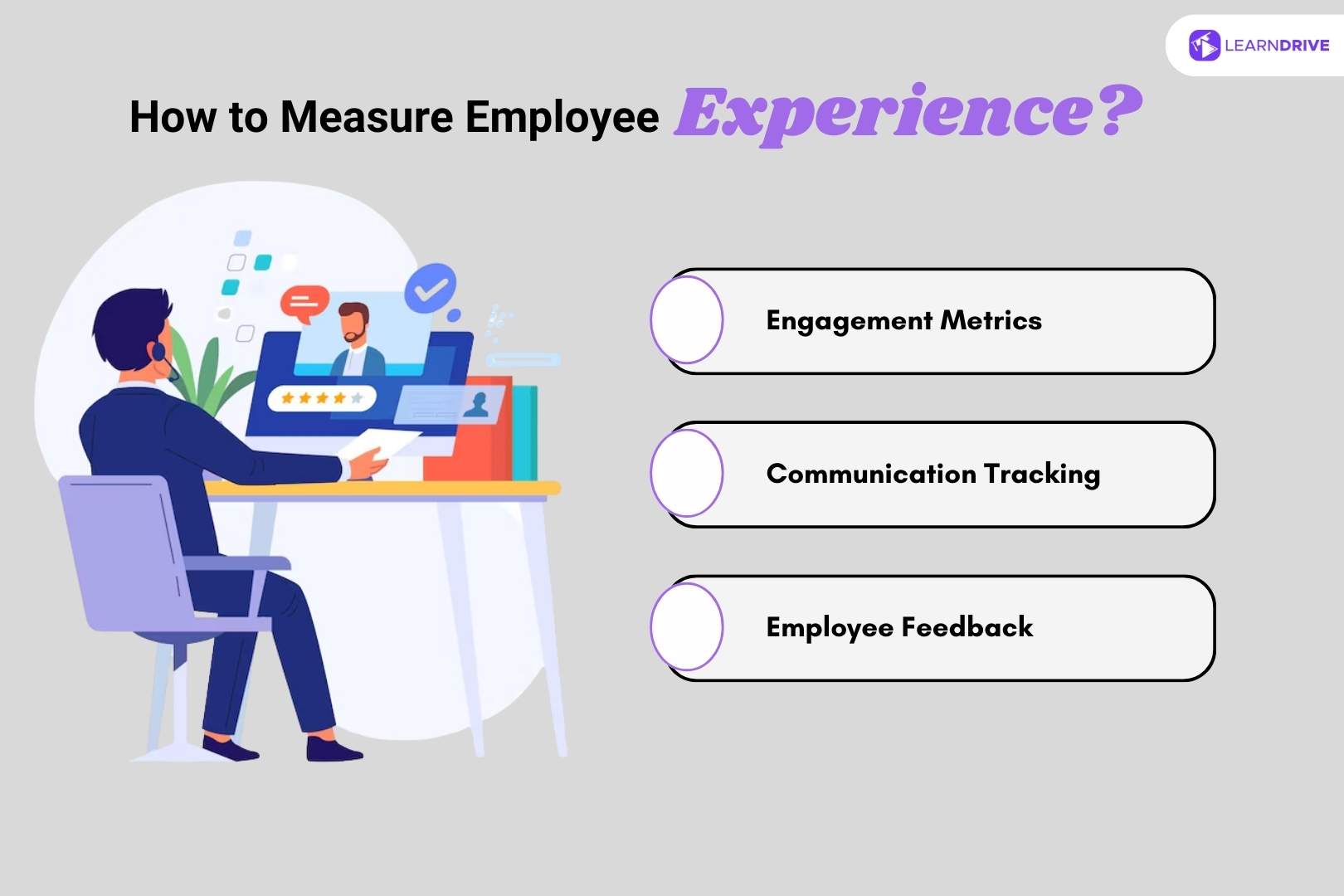
Measuring EX is essential for understanding its effectiveness and replicating successful initiatives.
Follow these steps to track and evaluate EX efforts:
1. Engagement Metrics
Compare engagement data before and after introducing new EX programs. Metrics such as retention rates, absenteeism, and productivity provide valuable insights.
2. Communication Tracking
Use effective tools to measure the effectiveness of internal communications. Metrics such as open rates, click-through rates, and read times can help gauge employee interest in specific initiatives.
3. Employee Feedback Regularly collect feedback to assess the reception of EX efforts. This not only identifies areas for improvement but also uncovers innovative ideas directly from employees.
What is the Difference Between Employee Engagement and Employee Experience?

While employee engagement and employee experience (EX) are interconnected, they serve distinct purposes in shaping organisational success.
Employee Experience
Employee experience encompasses the entire journey employees undergo within an organisation, from their first interaction during recruitment to their departure. It includes every touchpoint and interaction employees have with their employer, such as:
Cultural dynamics with colleagues and leaders.
Technological tools that enable their work.
Physical environments where they operate.
EX focuses on creating a supportive and enriching environment that prioritises satisfaction, well-being, and productivity. Its ultimate aim is to make employees feel valued and motivated by addressing all facets of their work life.
Employee Engagement
Employee engagement, on the other hand, measures the emotional and psychological commitment employees have toward their work and organisation. It reflects how motivated employees are to contribute to organisational goals and how aligned they feel with the company’s mission.
For example, a highly engaged employee is enthusiastic about their work and strives to go above and beyond in their role. Engagement is often fueled by initiatives like recognition programs, career growth opportunities, and clear communication channels.
Why Are Both Important?
While a positive EX can drive higher engagement, these concepts are not interchangeable. A well-structured employee experience forms the foundation for engagement by addressing the day-to-day factors that influence happiness.
However, engagement strategies are equally vital for maintaining enthusiasm, innovation, and retention among employees.
4 Pillars of Employee Experience

To build a world-class employee experience, organisations must focus on these four key pillars:
1. Culture
Company culture is the heartbeat of employee experience. It includes the values, beliefs, and behaviours that define how work is done and how employees interact. A positive culture fosters:
A sense of belonging.
Transparency and trust.
Alignment with the organisation’s mission.
2. Technology
Modern technology is indispensable for enhancing EX. Providing user-friendly tools and platforms ensures employees can work efficiently. Key considerations include:
Investing in seamless collaboration tools.
Ensuring technology aligns with employee workflows.
Offering consistent tech support to resolve challenges quickly.
3. Physical Environment
A well-designed physical workspace plays a critical role in employee well-being. organisations should:
Focus on ergonomics and comfort.
Create spaces that accommodate various work styles, including collaboration and individual focus.
Design environments that reduce stress and boost productivity.
4. People
The relationships employees form with colleagues and leaders are central to EX. Building strong interpersonal connections involves:
Encouraging teamwork and collaboration.
Offering mentorship opportunities.
Promoting transparent communication and inclusivity.
3 Employee Experience Challenges in 2025

As EX continues to evolve, organisations face significant challenges. Here are three key hurdles to address:
1. Lack of Investment
Despite increasing awareness of EX’s importance, many organisations lag in dedicating resources to it. According to EX Trends:
Over half of EX decision-makers believe their organisations underinvest in EX initiatives. This lack of funding hinders efforts to create impactful changes in the workplace.
2. Remote and Hybrid Work
The rise of remote and hybrid work has introduced complexities in maintaining EX. Challenges include:
Monitoring employee performance effectively in distributed teams.
Sustaining productivity and collaboration across remote environments.
3. Artificial Intelligence (AI) Integration
AI is reshaping EX, presenting both opportunities and challenges. According to research:
81% of respondents believe AI helps employees manage complex tasks.
79% agree it enhances work quality.
76% find it allows employees to take on new responsibilities.
However, companies must integrate AI thoughtfully to avoid overwhelming employees and ensure it complements their workflows.
5 Key Components of Employee Experience
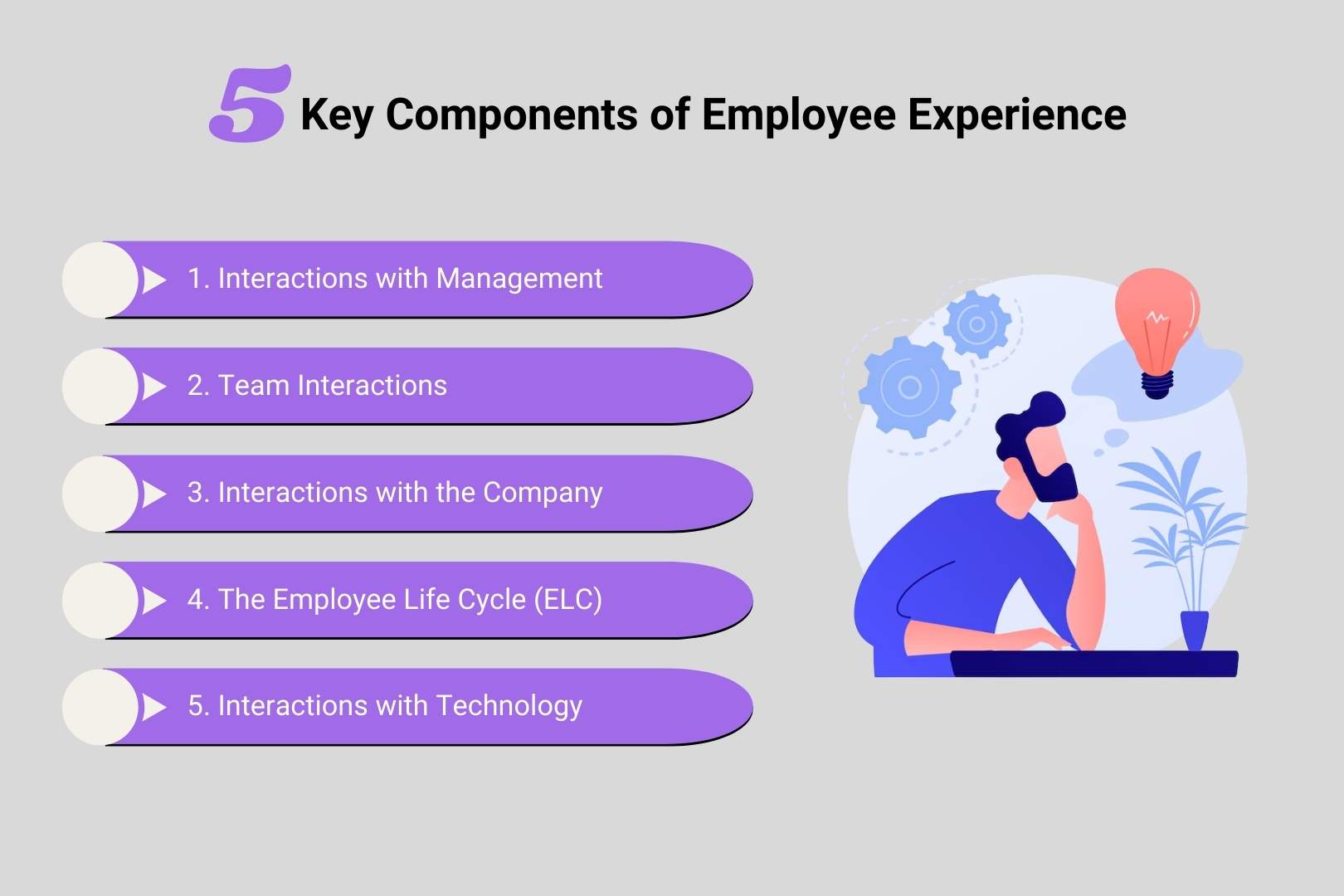
Creating a positive employee experience (EX) requires a deep understanding of the interactions, systems, and frameworks that impact an employee’s journey. Let’s explore the core components that shape EX and how they influence engagement and satisfaction.
1. Interactions with Management
Managers play a pivotal role in determining employee engagement and satisfaction. According to the 2024 Gallup Q12 poll, managers account for 70% of the variance in employee engagement. Effective leaders act as mentors, inspire passion, and drive productivity within their teams.
Great managers foster trust, provide constructive feedback, and create opportunities for professional growth, ensuring that employees feel supported and valued. By adopting leadership styles that prioritise empathy and clear communication, organisations can significantly enhance the overall EX.
2. Team Interactions
A team’s dynamics profoundly influence an employee’s daily work life. High-performing teams thrive on trust and psychological safety, enabling better collaboration and creativity.
Research by Gallup shows that teams with strong engagement are 21% more productive and experience 59% lower turnover rates. Creating spaces where teams can openly communicate, share ideas, and collaborate is key to building a robust EX.
3. Interactions with the Company
Interactions with organisational leadership, such as CEO town halls or HR-led initiatives, contribute significantly to EX. Open and transparent communication fosters a sense of belonging and value among employees.
Employees who feel their voices are heard are more likely to remain loyal and committed to the company. Regular two-way communication ensures employees are informed and engaged while reinforcing their role in driving the organisation’s success.
4. The Employee Life Cycle (ELC)
The employee life cycle—or employee journey—maps out the sequential milestones employees experience within an organisation. These stages include recruitment, onboarding, engagement, performance, development, and exit.
By aligning the ELC with organisational goals, companies can design experiences that cater to employees’ evolving needs. Viewing employees as internal customers and creating tailored touchpoints at each stage ensures that their journey is enriching and memorable.
5. Interactions with Technology
The digital employee experience (DEX) refers to how employees interact with software, systems, and applications. According to a 2024 report, employees satisfied with workplace technology are more likely to remain with their organisations.
Seamless integration of tools through HRIS systems and providing user-friendly platforms help reduce friction and improve productivity. Investing in technology that aligns with workflows and simplifies day-to-day tasks directly impacts EX and engagement levels.
5 Factors That Make for a Great Employee Experience

To unlock EX’s full potential, organisations must focus on these five critical drivers:
1. Mutual Trust
Trust between employees and the organisation fosters empowerment and collaboration. Employees who feel trusted are more likely to take initiative, innovate, and remain loyal.
For example, Apple and Ritz-Carlton empower their employees to solve customer problems without managerial approval, showcasing trust and enabling autonomy. Such practices motivate employees while improving overall efficiency.
2. C-Suite Accountability
Leadership accountability is essential for maintaining alignment between employee needs and organisational goals. Leaders must actively listen to employees, act on their feedback, and model transparency.
Many companies have implemented cross-functional teams to regularly evaluate and enhance EX. These initiatives demonstrate that leadership values employee input, fostering trust and engagement.
3. Alignment of Employee Values and Company Vision
Employees want to feel aligned with their company’s mission and values. Clear goals and consistent actions strengthen this alignment, enabling employees to connect their contributions to the company’s success.
For instance, Airbnb integrates its core values into the hiring process, ensuring employees align with its mission before they join. Such efforts promote a shared purpose and improve workplace cohesion.
4. Recognising Success
Recognition is a cost-effective way to boost morale and engagement. Beyond praise, it involves nurturing potential and providing growth opportunities.
5. Seamless Technology
Technology must reduce friction and streamline workflows. However, research shows fewer than one in three employees believe their workplace technology is effective.
Ensuring systems are integrated and intuitive can drastically improve EX. For example, reducing the number of applications employees need to navigate can save time and alleviate frustration, creating a more satisfying digital experience.
Enhancing Employee Experience: Digital vs. Physical Dimensions
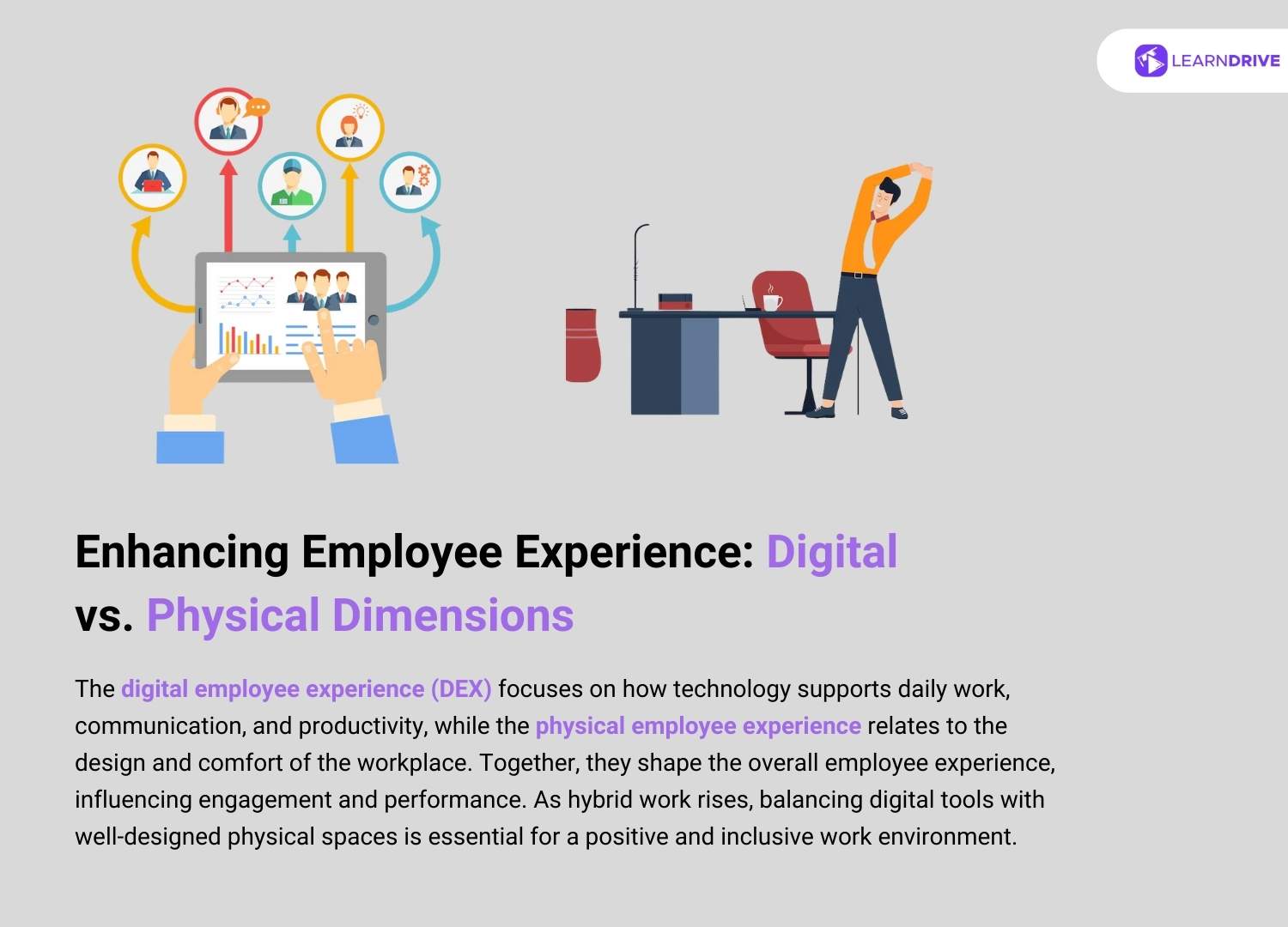
The digital employee experience (DEX) focuses on how technology shapes daily workflows,
communication, and productivity, while the physical employee experience emphasises the design, comfort, and functionality of work environments. Together, these dimensions create a holistic experience that directly impacts employee engagement, satisfaction, and overall performance.
The modern workforce operates in a dynamic environment where both digital and physical elements significantly influence employee experience (EX).
As organisations adapt to hybrid and remote work models, it has become crucial to balance the tangible, in-person aspects of workspaces with the efficiency and connectivity provided by digital tools.
Digital Employee Experience
The digital employee experience (DEX) refers to how employees interact with the technology and tools provided by their organisation. Different roles within the workplace face unique challenges when it comes to digital engagement :
-
Desk Workers: Overwhelmed by emails, notifications, and pings, desk workers often face the burden of constant context-switching—up to 400 times a day. This can lead to frustration and reduced productivity.
A recent study revealed that 45% of desk workers felt these interruptions hindered their job performance. Additionally, logging into multiple systems to retrieve information creates inefficiencies.
-
Deskless Workers: On the other hand, deskless workers often lack access to essential engagement tools. According to a survey of IT professionals, 72% of deskless employees do not have access to the same digital resources as their desk-bound counterparts, leaving them disconnected from organisational initiatives.
Addressing Digital Experience Challenges
Improving DEX requires organisations to adopt intelligent communication platforms that leverage automation and AI to enhance engagement and productivity. Solutions like AI-powered platforms can help:
-
Streamline communication by reducing the clutter of emails and notifications.
-
Offer integrated tools that centralise workflows, minimising the need for multiple logins.
-
Empower deskless workers with mobile-friendly platforms to ensure equitable access to tools.
By addressing these challenges, organisations can create a more inclusive and productive digital environment.
Physical Employee Experience
The physical employee experience encompasses the tangible aspects of the workplace, such as office design, temperature, air quality, lighting, and noise levels. Research highlights that these factors significantly affect employee behaviour, perceptions, and productivity.
Key Insights:
-
According to Jacob Morgan, author and founder of Future of Work University, the physical environment constitutes 30% of the overall employee experience.
-
Studies published in Science Direct emphasise that characteristics like air quality and noise conditions directly impact employees’ ability to concentrate and perform tasks effectively.
Challenges in a Hybrid Work Era
The shift to remote work during the pandemic has made managing the physical work environment more complex. Hybrid and remote employees now operate in varied settings, beyond the direct influence of their employers.
Suggestions for Improvement
For employees working on-site, organisations can enhance the physical experience by:
-
Redesigning Spaces: Invest in comfortable common areas with improved ventilation, ergonomic furniture, and thoughtfully designed breakrooms.
-
Supportive Services: Provide unique benefits such as meal services for employees’ families or wellness programs to show appreciation.
-
Development Opportunities: Create a sense of value and growth through professional development initiatives, like training programs or mentoring opportunities.
The 5 Questions Every Onboarding Program Must Answer
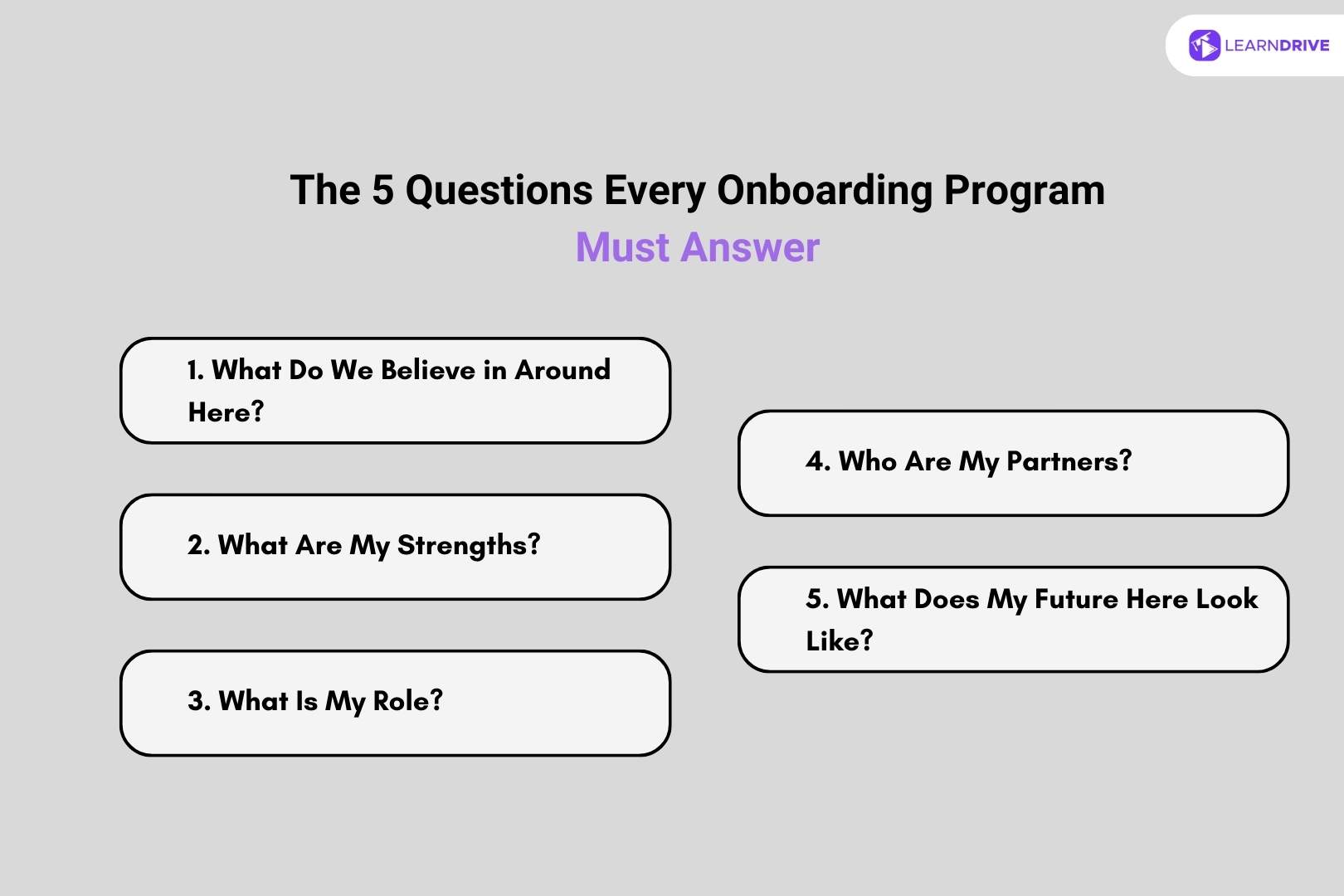
Onboarding is the cornerstone of a successful employee experience. An exceptional onboarding process not only sets employees up for success but also strengthens their engagement and commitment to the organisation.
To achieve this, every onboarding program must address the following five critical questions:
1. What Do We Believe in Around Here?
Why It Matters
Company culture shapes how decisions are made, problems are solved, and employees interact. A clear understanding of the organisation’s beliefs, values, mission, and purpose helps new employees integrate seamlessly.
How to Deliver
-
Show, Don’t Just Tell: Demonstrate your culture through real-life examples and stories during onboarding sessions.
-
Set Clear Expectations: Clarify how values translate into daily behaviours, such as how meetings are run or feedback is given.
-
Highlight Cultural Champions: Introduce employees to team members who embody the organisation’s values.
Employees who strongly agree they understand “how we do things at this organisation” are 4.7 times more likely to say their onboarding process was exceptional.
2. What Are My Strengths?
Why It Matters
Employees thrive when they can apply their strengths daily. Recognising and developing these strengths early leads to sustained engagement and exceptional performance.
How to Deliver
-
Assess Strengths: Use tools like personality or skills assessments to identify each new hire’s strengths.
-
Provide Tailored Opportunities: Match employees with projects that align with their strengths from the start.
-
Offer Ongoing Feedback: Encourage managers to have regular check-ins to nurture and refine these strengths.
Employees who strongly agree they can use their strengths every day at work are 3.5 times more likely to rate their onboarding experience as exceptional.
3. What Is My Role?
Why It Matters
Clarity around job expectations ensures employees understand their responsibilities and how their contributions align with team and organisational goals.
How to Deliver
-
Define Roles Clearly: Provide detailed job descriptions and specific objectives during onboarding.
-
Involve Managers: Encourage managers to explain how the new hire’s role fits into the bigger picture.
-
Set Milestones: Establish short- and long-term goals to build confidence and momentum.
Employees who strongly agree they are confident in their ability to excel in their role are 1.8 times more likely to report an exceptional onboarding experience.
4. Who Are My Partners?
Why It Matters
Collaboration thrives when employees trust and respect their colleagues. Building relationships early fosters teamwork and trust.
How to Deliver
-
Introduce Key Contacts: Facilitate meetings with teammates, managers, and cross-functional partners.
-
Encourage Collaboration: Assign group projects or buddy programs to create initial connections.
-
Promote Transparency: Share team goals and performance metrics to build mutual accountability.
Employees who strongly agree they have partners they can rely on are 1.9 times more likely to describe their onboarding as exceptional.
5. What Does My Future Here Look Like?
Why It Matters
Employees start their roles with aspirations for growth. Failing to outline a clear development path can diminish their enthusiasm and long-term commitment.
How to Deliver
-
Discuss Career Growth: Highlight potential career trajectories and development opportunities during onboarding.
-
Provide Learning Opportunities: Offer access to training programs, mentorships, and certifications.
-
Create Individual Development Plans (IDPs): Work with employees to establish a roadmap for their professional growth.
Employees who strongly agree they have a clear plan for their professional development are 3.5 times more likely to rate their onboarding as exceptional.