What Is AI? The Technology Already Inside Your Classroom
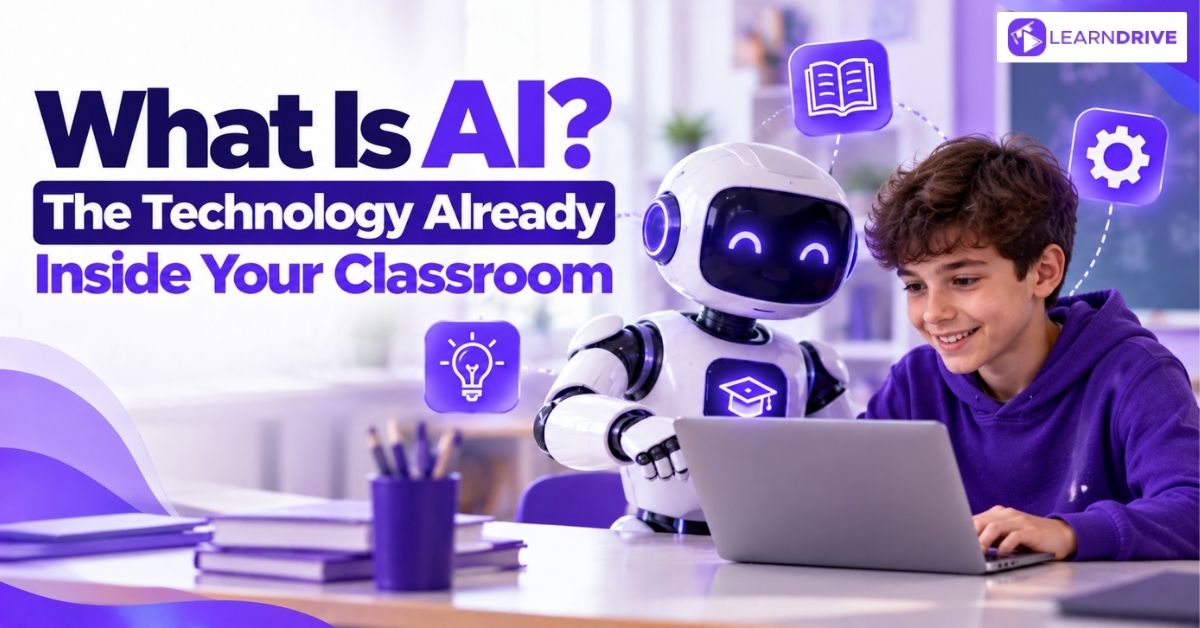
Artificial Intelligence today is what researchers call Artificial Narrow Intelligence, or ANI. Narrow is the key word. These systems are built for one job, or a small cluster of related jobs. They do that job well. They cannot step outside it.
Think of a voice assistant that sets your alarm. Think of a streaming app that predicts your next show. Both are AI. Both are also useless outside their narrow function. A chess engine can beat a grandmaster. It cannot hold a conversation. A translation tool can convert English to French. It cannot summarize a novel or grade an essay.
This is exactly where today’s classroom tools fall, no matter how impressive they seem. Adaptive learning platforms adjust reading difficulty to a student’s level. That is ANI. AI grading tools scan essays for structure and grammar.
That is ANI too. Plagiarism detectors, scheduling assistants, and chatbot tutors all belong here. They are excellent at pattern recognition inside a defined scope. They do not understand what they are doing the way a human does.
Large language models like GPT-4, GPT-5, GPT-6 Astra, and Gemini often get called “close to AGI.” They can write, code, and answer questions across many topics. But most researchers still classify them as ANI. They are broad narrow systems.
They are trained on huge datasets. They handle many tasks. But they still lack real reasoning. They lack a body in the physical world. They cannot learn a brand-new skill the way a human child does.
The core limitation is always the same. These systems perform beautifully inside their trained domain. They fail, sometimes badly, the moment a task falls outside it.
A model trained to grade five-paragraph essays will struggle with an unfamiliar format. A bot trained on high school algebra will not handle a graduate-level proof.
This is the technology already shaping classrooms today. It is also the baseline every AGI and ASI claim should be measured against.
What Is AGI? The Next Leap Toward Human-Level Machines
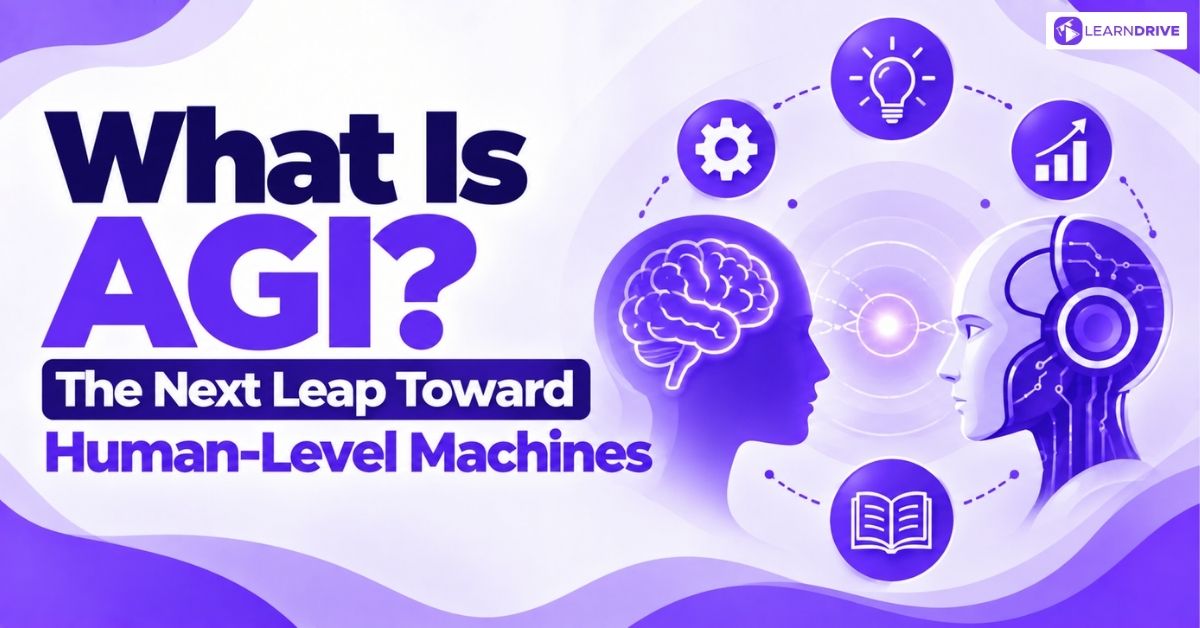
Artificial General Intelligence describes a system that can learn and reason across almost any domain. It would do this the way a human can. Instead of being built for one job, an AGI system could pick up a new task on its own. It could understand the context. It could apply judgment without needing retraining for every new situation.
The difference between AI and AGI comes down to scope and autonomy. Current AI systems are specialists. AGI would be a generalist. It could transfer what it learns in one context into a completely different one.
A true AGI could, in theory, learn to cook a new cuisine. It could debug software. It could comfort a grieving friend. It could write a legal brief. It would do all of this without separate training for each task.
This is also where hype tends to outrun reality. Rumors keep surfacing that some lab has secretly built AGI. Other claims suggest a new model release hides a quiet breakthrough. Some executives have made bold predictions.
A few suggest AGI could arrive within just a few years. But most independent researchers disagree. Their consensus is that true AGI does not exist yet. Today’s systems, however impressive, still lack real cross-domain adaptability.
What would it actually take to cross that line? Researchers point to a few clear markers. A system should learn a brand-new skill from very few examples. It should reason through ambiguous or incomplete information, the way humans do.
It should transfer understanding from one domain into a completely unrelated one. Current models can mimic pieces of this. But they still lean heavily on patterns from their training data. They are not yet reasoning independently.
The stakes of getting this right matter a lot in education. Real AGI would not just mean a smarter chatbot. It would mean a system that reasons through a student’s specific confusion. It could adapt a lesson mid-conversation. It could understand nuance the way a skilled human tutor does. That is a very different capability from anything in classrooms today. And we are not there yet.
What Is ASI? When Machines Outthink Humanity
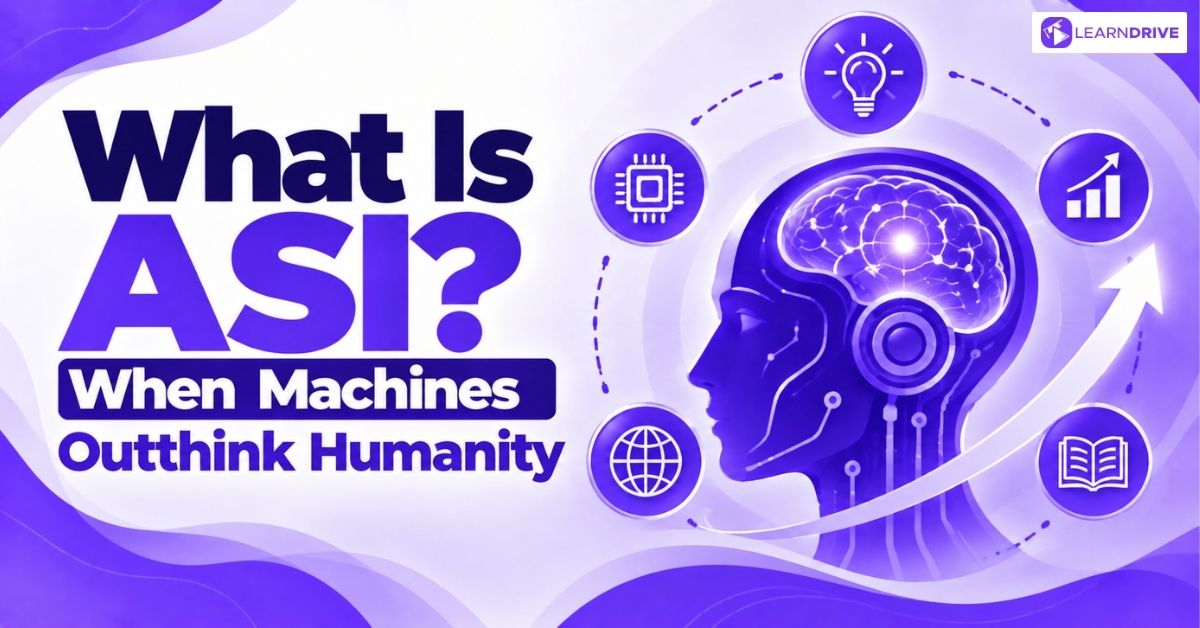
Artificial Superintelligence is something completely different from AI and AGI. It is not just a bigger, faster AGI. ASI would exceed human ability across every domain at once. That includes science, creativity, emotional understanding, and strategy.
The theory behind reaching ASI centers on recursive self-improvement. Once a system reaches human-level general intelligence, it could start improving its own design. Each improvement would make the next one easier and faster.
This creates a feedback loop. Some researchers believe this loop could compress decades of progress into a few months. This is often called a “fast takeoff.” It is one reason ASI is treated as a different risk category than AGI.
This idea is not new. Philosopher Nick Bostrom explored it in his book “Superintelligence: Paths, Dangers, Strategies.” It remains one of the most cited works on the topic. Prominent technologists have gone further. Elon Musk has warned that unchecked superintelligence could pose existential risks. He argues its goals must be carefully aligned with human values.
It is worth being direct here: ASI is entirely theoretical. No lab and no credible expert claims anything like ASI exists today. It sits at the far end of a hierarchy.
And AGI itself has not even been reached yet. Discussing ASI is useful for thinking through long-term risk. But it should never be confused with where technology stands right now.
For education, ASI raises questions beyond classroom logistics. These questions edge into philosophy. If a system could out-teach and out-research every human expert combined, what would formal schooling even become? We will return to that question later. For now, hold onto this distinction. ASI is a serious thought experiment. It is not a near-term classroom reality.
What ASI Could Mean for Schools, Universities, and Learning Itself
AGI raises practical questions about curriculum and teacher roles. ASI raises something closer to a philosophical one. What happens to the entire institution of school if a superintelligent system exists?
Some researchers sketch genuinely radical scenarios. One vision imagines every person with access to a personal, near-omniscient tutor. It would understand a student’s learning style, emotional state, and knowledge gaps with total precision. In this scenario, the traditional structure of school starts to look outdated. Fixed schedules, standard grade levels, and one teacher for dozens of students all start to feel like relics of a pre-ASI world.
This raises an uncomfortable question. Could formal schooling become obsolete? If a superintelligent tutor teaches more effectively than any classroom, schools in their current form may no longer be needed. Universities could face pressure too. If degrees mainly signal competence to employers, and ASI can verify competence directly, the multi-year degree model could look outdated fast.
There is a deeper layer here as well. If ASI already knows more than any human expert, what is education even for? Is it purely about acquiring information and skills? If so, ASI might make traditional education less necessary. Or is education about something else? Judgment, character, resilience, and the ability to live and work alongside others. A superintelligent tutor cannot simply transfer those qualities into a student’s mind.
It is worth repeating: everything in this section is speculation. It is grounded in serious theory, but it remains unproven. ASI does not exist. These scenarios are useful for long-term thinking and policy discussion today. But they are not a forecast for how schools will change next year, or even next decade.
AI vs AGI vs ASI The Risks: Equity, Privacy, and Academic Integrity Concerns
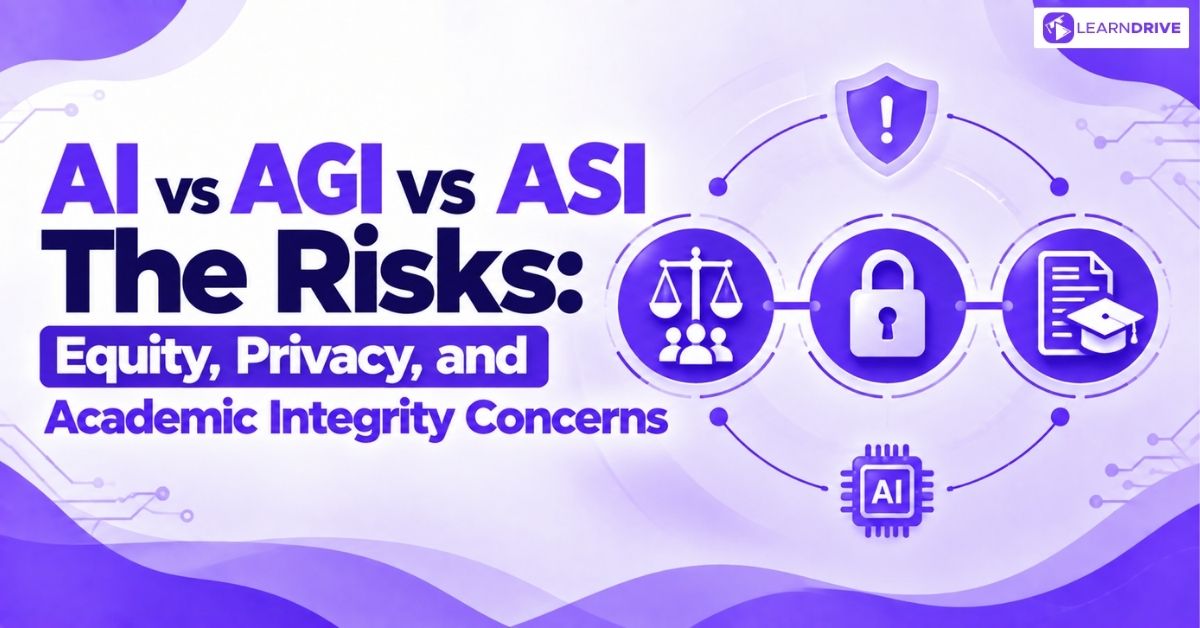
Every stage of this technology carries real risks. This applies to today’s AI and to the AGI and ASI scenarios above. These risks deserve as much attention as the benefits.
Data privacy is one of the most immediate concerns. AI-powered classroom tools, especially personalized learning systems, collect detailed information. They track how students learn and where they struggle.
Some even track behavioral or emotional data. Federal guidance on AI in education flags data privacy as a core safety requirement. It notes that these systems need careful oversight, given how much sensitive data they can access. Who owns that data? How long is it kept? These questions remain open in many school systems.
Equity is a second major concern. It runs through nearly every stage of this technology. Personalization that closes achievement gaps could just as easily widen them. This happens if only wealthy families or well-funded schools can afford the best tools. Higher education researchers have flagged this exact tension. AI can improve learning outcomes and school reputation. But without careful management, it can also deepen existing inequality.
Academic integrity is the third major pressure point. This is already a live issue, not a future one. As AI writing tools improve, it gets harder to tell a student’s own work from AI-assisted work. This creates a cycle. Schools build detection tools. Students find ways around them. The cycle repeats without a clear end. Researchers describe this as a balancing loop. Left unaddressed, it threatens the core value of a university credential.
A fourth risk is algorithmic bias. Personalized learning and AI-driven assessment tools train on real-world data. That data can reflect existing biases, related to language, culture, or prior access to education. Left unchecked, these systems risk reinforcing the same gaps they are supposed to solve. None of these risks mean schools should reject AI outright. They are reasons to move carefully, with strong oversight and teacher involvement.
Will AI, AGI, or ASI Replace Teachers? Separating Hype From Reality
This question comes up in nearly every AI-in-education conversation. It deserves a direct answer, not a vague one.
Start with the current reality. AI has not replaced teachers, despite roughly a decade of predictions that it would. Researchers point to a consistent reason. Today’s narrow AI cannot recreate the full educational experience at scale.
It can grade papers. It can personalize practice problems. But it cannot build the trust and motivation that drives real learning. This matters most for younger students, who need mentorship as much as instruction.
What changes with AGI? This is where claims get more serious, and uncertainty grows. If AGI achieves real human-level reasoning and emotional understanding, it could replicate more of what makes a good teacher effective.
That includes responsiveness, patience, and adaptive judgment, not just knowledge delivery. Even so, most researchers who study this closely lean toward augmentation, not replacement. Teachers would still guide and supervise. They would add human judgment and relational trust that a machine may still lack, at least for a meaningful transition period.
ASI is where honest uncertainty takes over completely. If a system truly exceeded human ability in every domain, including emotional intelligence, the case for teachers being irreplaceable gets harder to make with full confidence. This is exactly why the ASI section of this blog stayed speculative. Nobody, not even the researchers closest to this question, can say for certain what real superintelligence would mean for human mentorship.
The most reasonable synthesis looks like this. AI today is a tool that supports teachers. AGI, if it arrives, will likely still keep teachers essential. But it will demand new skills: supervising AI tools, focusing on mentorship, and modeling judgment a machine cannot yet replicate. ASI remains too uncertain and too far from reality for confident claims. Treating any current ASI prediction as settled fact would be a mistake.
Skills Students Need to Thrive From the AI Age to the ASI Age
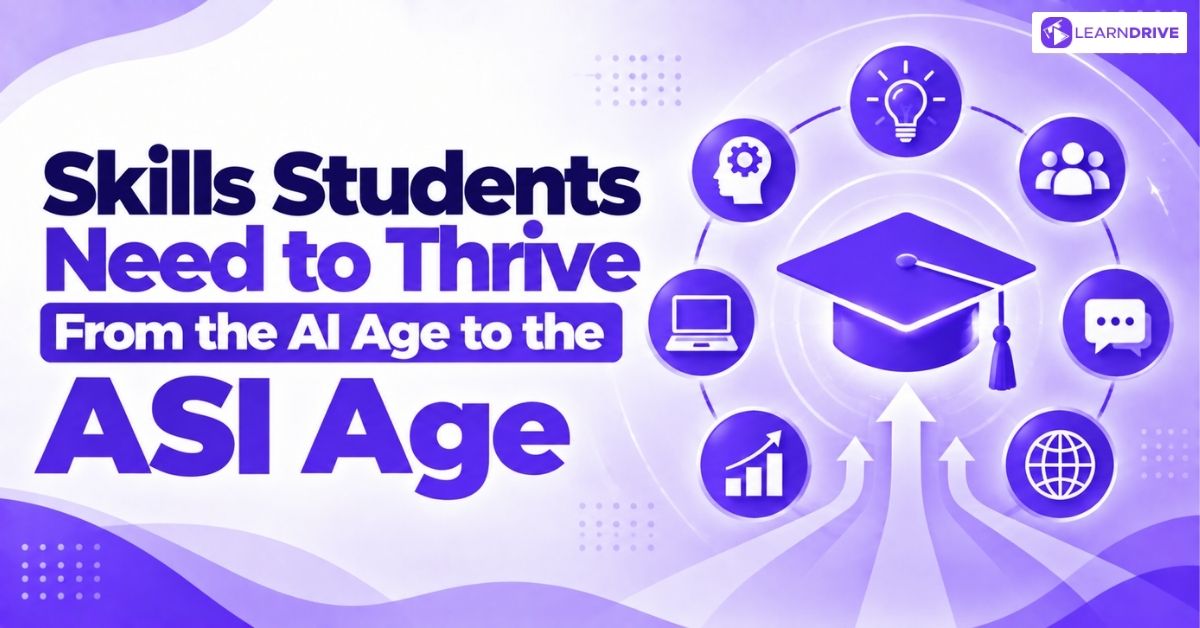
The technology itself stays uncertain. But the skills students need are becoming much clearer. A consistent set of “durable skills” keeps appearing across almost every study on this topic.
Critical thinking sits at the top of nearly every list. AI tools generate confident-sounding answers more easily every year. The ability to check whether those answers are actually correct becomes more valuable, not less. Researchers studying technical education have raised a specific warning. Students tend to trust AI outputs too much. Appropriate skepticism needs to be actively taught, not assumed.
Creativity and adaptability follow close behind. AI systems, even very capable ones, generate outputs based on patterns in existing data. Genuinely novel thinking is different. Connecting unrelated ideas, or trying something nobody has tried before, remains a distinctly human strength, at least for now. Frameworks like the Durable Skills approach build creativity and adaptability directly into their recommendations for schools.
Ethical reasoning and emotional intelligence round out the list. AI takes on more decision-support roles in daily life every year. The ability to weigh ethical tradeoffs and communicate with empathy becomes a real differentiator. Several researchers frame this simply. Only humans can answer the deeper question of what is actually worth optimizing for. No amount of AI capability can resolve that question on its own.
Technical literacy still matters, but it looks different today. The goal is not just learning to code or use a specific tool. The more durable skill is understanding how to work with AI responsibly. That means knowing its limitations. It means checking its outputs. It means using AI to extend human judgment, not replace it. This includes a growing focus on probability, statistics, and basic data literacy.
Finally, memorization is losing ground as a core educational goal. A student can recall almost any fact within seconds using AI. The real differentiator becomes something else: knowing what to ask, how to interpret an answer, and how to apply it to a real problem. Many educators frame this as the central shift schools need to make. Move away from rewarding recall. Move toward rewarding real understanding.
How to Prepare Now?
None of the shifts in this blog require waiting for AGI or ASI to arrive. Schools, teachers, and families can start preparing today, using what we already know.
For schools, the starting point is teacher training. Educators need structured support to understand what current AI tools can and cannot do. They need guidance on integrating AI responsibly.
They need to supervise AI-assisted instruction without losing the human elements only they can provide. Updated curricula should teach AI literacy directly. This means not just how to use a tool, but how to evaluate its output critically. This should be a standard part of instruction, not an optional add-on.
Policy has a role too. Government reports on AI in education call for safety, ethics, and effectiveness as core principles. They highlight data privacy specifically. They stress keeping educators at the center of instructional decisions, not sidelined by automated systems. Schools that build clear policies now, covering data use, integrity, and equitable access, will be far better prepared than schools that wait until problems appear.
For families, preparation looks a little different. Encourage children to focus on understanding concepts, not just memorizing facts. Teach them to treat mistakes as part of learning, not failures to avoid. Encourage “why” and “how” questions instead of surface-level answers. These habits build the exact durable skills covered earlier in this blog. None of this requires waiting on a school policy change. It can start at home today.