NOTICEWe're upgrading our learning platform. You may notice temporary changes or brief interruptions while the migration is completed. Thank you for your patience! For any urgent query, contact info@learndrive.org
NEWThe Complete AI Skills Bundle 2026 — 9 courses, 9 CPD certificates, one price. Explore the bundle →
15 Jobs for Blind and Visually Impaired People

15 Jobs for Blind and Visually Impaired People

A vacancy matches your experience, but its application form will not work with your screen reader. Should you abandon the opportunity? An inaccessible recruitment process can obscure a job you could perform well with the right adjustments.

Jobs for blind and visually impaired people span software development, customer service, law, finance, counselling and administration. Your skills, interests and access requirements should guide the search.


It compares career options, published UK salary estimates and realistic ways into employment. It also explains remote work, assistive technology and support when your eyesight changes. Start with the tasks you want to do, then investigate what makes them accessible.

Table of Contents

What Vision Impairment Means at Work

Vision impairment describes difficulties with sight that can affect activities such as reading, recognising objects or navigating unfamiliar places. People experience different levels and patterns of sight loss. Someone with low vision may use magnification, while another person relies on speech or braille.

Blindness does not always mean having no sight at all. Equally, two people with the same diagnosis may need different working arrangements.

RNIB estimates that more than two million people live with sight loss in the UK. Its statistics page, consulted in September 2026, includes people with different conditions and registration statuses. This population estimate is not an employment rate or a measure of working capacity.

Can Blind and Visually Impaired People Get Jobs? 

Yes, blind and partially sighted people can work in many occupations, including professional and managerial roles. Access depends on the duties, equipment, environment and available support. Some occupations have specific visual standards, so check their requirements individually.

Technology enables employees to read digital documents, communicate with colleagues and work with data without relying entirely on visual displays.

However, buying a screen reader cannot fix every inaccessible system. Employers must also consider how their software, training and everyday processes work together.


When assessing a vacancy, separate essential duties from the employer’s usual method of completing them. For example, reviewing a report need not mean reading printed pages. An accessible electronic document may let you perform the same task independently.

Only £1  £249
All-Access Course Bundle
Unlock 100+ CPD-accredited courses for just £1. Industry-recognised certificates. Learn at your own pace.

15 Best jobs for Blind and Visually Impaired People

15 Best Careers for Blind and Visually Impaired People

The options below are starting points for investigation, not a ranking of occupations by suitability. Accessibility questions are practical suggestions based on the tasks. Discuss them with employers and assess the actual systems you would use.

1. Software Developer

Software developers create, test and maintain computer programmes, websites and digital applications. They write code, fix technical issues and improve software based on user needs and business requirements.

The work involves planning solutions, debugging problems and collaborating with other professionals. Developers may specialise in areas such as web applications, mobile software, cloud platforms or business systems.

Why This Job Might Fit You

Software development can be a strong option for blind and visually impaired professionals because many tasks are completed through digital environments. Screen readers, keyboard navigation and accessible coding tools can help developers write, review and manage code.

The career depends mainly on technical knowledge, logical thinking and problem-solving rather than visual ability. With suitable accessibility support, developers can contribute to software projects, test applications and build digital solutions.

Salary

£30,000 to £75,000 a year (National Careers Service)

Requirements

  • Knowledge of programming languages and software development concepts

  • Understanding of testing and debugging processes

  • Strong analytical and problem-solving skills

  • Ability to use accessible development tools

  • Routes through university, apprenticeships or independent learning


2. Customer Service Assistant

Customer service assistants support customers by answering questions, handling complaints and providing information about products or services. They communicate through phone calls, emails, online platforms and other support channels.

The position requires patience, clear communication and the ability to understand customer concerns. Many roles involve updating records and using customer management systems.

Why This Job Might Fit You

Customer service is based heavily on communication and listening skills, making it possible for blind and visually impaired employees to perform effectively with accessible systems. Phone-based support and digital communication tools can often be adapted using assistive technology.

Screen readers, accessible customer databases and workplace adjustments can help manage information independently. The ability to explain solutions clearly and build positive customer relationships plays an important role in success.

Salary

£20,000 to £30,000 a year (National Careers Service)

Requirements

  • Strong verbal and written communication skills

  • Confidence using computer systems

  • Ability to handle customer enquiries professionally

  • Problem-solving ability

  • Training may be available through apprenticeships


3. Customer Services Manager

Customer services managers lead teams responsible for supporting customers and maintaining service standards. They monitor performance, handle complex issues, train staff and improve customer service processes.

The role combines leadership, organisation and communication. Managers often analyse feedback, review service results and develop strategies to improve customer experiences.

Why This Job Might Fit You

Leadership roles in customer service rely on communication, decision-making and team management rather than visual tasks. Blind and visually impaired professionals can manage teams by using accessible reporting systems, screen readers and adapted workplace software.

The main consideration is ensuring that performance dashboards, documents and internal systems are accessible. With the right tools, managers can guide teams, solve problems and improve service quality.

Salary

£27,000 to £50,000 a year (National Careers Service)

Requirements

  • Experience in customer service environments

  • Leadership and team management skills

  • Ability to analyse service information

  • Strong communication abilities

  • Understanding of customer experience processes


4. Human Resources Officer

Human resources officers support organisations with recruitment, employee records, workplace policies and staff development. They help manage processes that affect employees throughout their working life.

Daily responsibilities may include reviewing applications, supporting employees, preparing documents and advising managers on workplace procedures.

Why This Job Might Fit You

HR involves communication, organisation and supporting people, which can be completed effectively with accessible workplace systems. Blind and visually impaired professionals can manage interviews, employee conversations and digital records using suitable technology.

Accessible HR platforms, documents and meeting tools are important factors when choosing an employer. Strong interpersonal skills and attention to confidentiality are central to this profession.

Salary

£24,000 to £40,000 a year (National Careers Service)

Requirements

  • Good communication and organisational skills

  • Understanding of workplace policies

  • Ability to manage confidential information

  • Knowledge of HR processes

  • Entry through qualifications, apprenticeships or administration experience


5. Counsellor

Counsellors help people explore personal challenges, emotions and difficult experiences through professional conversations. They provide a confidential environment where clients can discuss concerns and develop coping strategies.

The work involves listening carefully, maintaining professional boundaries and keeping accurate records. Counsellors may work in healthcare, education, charities or private practice.

Why This Job Might Fit You

Counselling relies on empathy, communication and understanding rather than visual information. Blind and visually impaired professionals can support clients through conversations, active listening and structured sessions.

Accessible appointment systems and digital record-keeping tools can support administrative tasks. Professional training, ethical practice and the ability to build trust are the foundations of effective counselling.

Salary

£25,000 to £48,000 a year (National Careers Service)

Requirements

  • Recognised counselling qualification

  • Strong listening and communication skills

  • Understanding of confidentiality and ethics

  • Emotional resilience

  • Supervised practical experience

6. Paralegal

Paralegals support solicitors by researching legal information, preparing documents and assisting with casework. They may work in areas such as property, family law, criminal law or commercial law.

The role involves reviewing information, organising files and supporting legal processes. Accuracy and strong research skills are important throughout the working day.

Why This Job Might Fit You

Legal work can be accessible for blind and visually impaired professionals when documents, databases and research platforms are compatible with assistive technology. Screen readers and accessible document formats can help with legal research and case preparation.

Success depends on analytical thinking, organisation and attention to detail. Employers that provide accessible systems allow professionals to manage information and contribute effectively to legal teams.

Salary

£20,000 to £40,000 a year (National Careers Service)

Requirements

  • Strong research and written communication skills

  • Understanding of legal processes

  • Ability to organise documents accurately

  • Attention to detail

  • Legal qualifications or relevant experience


7. Solicitor

Solicitors provide legal advice, represent clients and handle legal matters across different areas of law. They research cases, prepare documents, negotiate agreements and guide clients through legal processes.

The career requires extensive training and professional qualification. Solicitors may work in private practices, companies, government organisations or charities.

Why This Job Might Fit You

Legal careers focus on analysis, communication and decision-making. Blind and visually impaired solicitors can work effectively using accessible legal databases, screen readers and adapted document systems.

The important considerations are access to legal information, court documents and communication platforms. With appropriate adjustments, vision impairment does not prevent someone from advising clients or building a legal career.

Salary

£30,000 to £80,000 a year (National Careers Service)

Requirements

  • Completion of solicitor qualification route

  • Strong analytical and communication skills

  • Ability to research and interpret legal information

  • Professional legal knowledge

  • Commitment to continuing development


8. Legal Secretary

Legal secretaries provide administrative support to legal professionals. They organise appointments, prepare correspondence, manage documents and assist with daily office operations.

The role combines organisation, accuracy and communication. Legal secretaries often work with case management systems and confidential information.

Why This Job Might Fit You

Administrative and communication skills are highly valuable in this position. Blind and visually impaired professionals can complete many tasks using accessible document software, screen readers and adapted office technology.

Checking accessibility of templates, case management systems and digital files before joining an organisation can help create an effective working environment.

Salary

£24,000 to £40,000 a year (National Careers Service)

Requirements

  • Strong organisational skills

  • Good written communication

  • Ability to manage confidential information

  • Knowledge of office software

  • Legal administration training or experience


9. Payroll Administrator

Payroll administrators process employee payments, maintain payroll records and ensure salaries are calculated correctly. They work with financial information, employee details and payroll systems.

The role requires accuracy, confidentiality and strong organisational skills. Payroll professionals often work with spreadsheets and specialist software.

Why This Job Might Fit You

Payroll work involves structured processes and clear responsibilities, which can be managed effectively using accessible financial software. Blind and visually impaired professionals can use screen readers and adapted tools to review information and complete calculations.

Attention to detail and reliability are more important than visual ability. Employers should ensure payroll systems and reporting tools are compatible with assistive technology.

Salary

£22,000 to £35,000 a year (National Careers Service)

Requirements

  • Good numerical skills

  • Ability to manage confidential information

  • Understanding of payroll systems

  • Attention to accuracy

  • Administrative or finance experience


10. Pensions Administrator

Pensions administrators manage pension records, respond to customer enquiries and process information related to retirement plans. They support individuals and organisations with pension administration.

The work combines customer communication, record management and financial accuracy. Administrators often use specialist databases and digital systems.

Why This Job Might Fit You

This career involves organised processes, communication and information management. Blind and visually impaired professionals can handle pension enquiries and records when workplace systems, documents and software are accessible.

A structured environment with clear procedures can make responsibilities easier to manage. Employers should provide accessible platforms and information formats to support independent working.

Salary

£23,000 to £38,000 a year (National Careers Service)

Requirements


  • Strong administrative skills

  • Ability to manage detailed information

  • Good communication skills

  • Understanding of financial processes

  • Training through workplace experience or relevant qualifications

11. Financial Services Customer Adviser

Financial services customer advisers help people with banking products, accounts and financial enquiries. They explain options, answer questions and guide customers through processes while maintaining accurate records.

The role combines communication, problem-solving and attention to detail. Advisers often use digital banking systems, customer databases and secure communication platforms throughout the working day.

Why This Job Might Fit You

Financial advice support relies heavily on communication and customer care rather than visual tasks. Blind and visually impaired professionals can handle customer conversations, explain information clearly and manage enquiries using accessible banking systems.

The key consideration is whether customer platforms, digital documents and security processes work with assistive technology. Strong listening skills and the ability to build customer trust are valuable strengths in this role.

Salary

£25,000 to £31,000 a year (National Careers Service)

Requirements

  • Strong communication and customer service skills

  • Ability to explain financial information clearly

  • Confidence using computer systems

  • Attention to accuracy and confidentiality

  • Relevant training or workplace experience


12. IT Trainer

IT trainers teach individuals and organisations how to use software, systems and digital tools. They create learning materials, deliver training sessions and support users who need help developing technical skills.

The role involves explaining complex information in simple ways. Trainers may work in companies, education providers or technology departments, helping employees improve their digital abilities.

Why This Job Might Fit You

IT training can combine technical knowledge with communication skills, making it suitable for professionals who enjoy teaching others. Blind and visually impaired trainers can demonstrate software, explain processes and guide learners using accessible training methods.

Accessible presentation materials, screen reader compatibility and inclusive learning platforms are important factors. A strong understanding of technology can help trainers support others while also advocating for accessible solutions.

Salary

£24,000 to £40,000 a year (National Careers Service)

Requirements

  • Good understanding of IT systems and software

  • Ability to explain technical concepts clearly

  • Presentation and communication skills

  • Patience and teaching ability

  • Relevant IT experience or qualifications


13. Money Adviser

Money advisers support individuals with budgeting, debt management and financial decisions. They help people understand their options, manage financial difficulties and access appropriate support services.

The work involves reviewing financial information, explaining complex topics and maintaining accurate client records. Advisers may work for charities, local authorities or financial support organisations.

Why This Job Might Fit You

Money advice focuses on listening, analysis and communication rather than visual ability. Blind and visually impaired professionals can support clients by discussing financial situations, explaining guidance and using accessible case management systems.

The role requires careful handling of information and accurate record keeping. Accessible documents and digital systems allow advisers to work independently while providing valuable support to clients.

Salary

£24,000 to £32,000 a year (National Careers Service)

Requirements

  • Strong communication skills

  • Ability to explain financial information

  • Understanding of budgeting and debt support

  • Good organisation skills

  • Relevant advice experience or training

14. Welfare Rights Adviser

Welfare rights advisers help people understand benefits, financial support and available services. They explain eligibility rules, assist with applications and support clients who need help accessing essential resources.

The role involves researching regulations, preparing information and communicating complex guidance in a clear way. Advisers may work for charities, local authorities or advice organisations.

Why This Job Might Fit You

Welfare advice is built around communication, research and helping people solve practical problems. Blind and visually impaired professionals can provide guidance, explain processes and manage client information using accessible databases and digital tools.

Strong listening skills and the ability to understand individual situations are valuable in this profession. Accessible case management systems and documents allow advisers to work effectively while supporting people through important decisions.

Salary

£23,000 to £42,000 a year (National Careers Service)

Requirements

  • Strong communication skills

  • Ability to understand and explain regulations

  • Research and problem-solving abilities

  • Good organisation skills

  • Experience in advice, support or community services


15. Financial Adviser

Financial advisers help clients make decisions about savings, investments, pensions and financial planning. They assess individual circumstances, explain available options and recommend suitable financial products.

The role requires a combination of financial knowledge, communication and relationship-building skills. Advisers often meet clients, review information and maintain detailed records while following professional regulations.

Why This Job Might Fit You

Financial advising relies on analysis, communication and trust-building rather than visual ability. Blind and visually impaired professionals can support clients by discussing financial goals, explaining options and using accessible research and customer management systems.

Technology plays an important role in modern financial services. With compatible software, secure digital platforms and suitable workplace arrangements, professionals can analyse information, manage client relationships and provide effective advice.

Salary

£27,000 to £67,000 a year (National Careers Service)

Requirements


  • Strong communication and interpersonal skills

  • Understanding of financial products and regulations

  • Ability to analyse customer needs

  • Relevant financial qualifications

  • Confidence using digital financial systems

Learndrive.org
100+ Free
Courses
Enhance your skills — no spending required. CPDQE Accredited.

Remote Jobs for Blind People Starting Without Experience 


Remote Jobs for Blind People Starting Without Experience


Remote work has created new opportunities for blind and visually impaired people to use their skills from an accessible working environment. Many entry-level roles focus on communication, organisation and digital skills rather than previous experience.

The following jobs show how different careers can be started with the right training, assistive technology and workplace support.

1. Customer Service Assistant

Customer service assistants help customers by answering questions, resolving issues and providing information about products or services. They communicate through different channels, including telephone, email, online chat and face-to-face support.

The role involves understanding customer needs, updating records and finding suitable solutions. Many positions require the use of customer databases and communication systems to manage enquiries efficiently.

Why This Job Might Fit You

Customer service relies strongly on communication, patience and problem-solving rather than visual tasks. Blind and visually impaired professionals can support customers effectively by using accessible communication platforms and assistive technology.

Screen readers, keyboard shortcuts and compatible customer management systems can help manage enquiries and update information. Strong listening skills and the ability to explain solutions clearly are valuable in this type of work.

Salary

£20,000 to £30,000 a year (National Careers Service)

Requirements

  • Strong communication skills

  • Ability to handle customer enquiries professionally

  • Confidence using digital systems

  • Problem-solving ability

  • Customer service training or workplace experience

2. Admin Assistant

Admin assistants support organisations by managing records, arranging appointments, preparing documents and completing everyday office tasks. They help teams stay organised by handling information and coordinating administrative processes.

The role involves using email systems, spreadsheets, databases and office software. Some positions may include working remotely, depending on the employer and responsibilities.

Why This Job Might Fit You

Administrative work often depends on organisation, communication and accurate information management. Blind and visually impaired professionals can complete many administrative tasks using accessible office software, screen readers and adapted digital tools.

The important factor is access to documents, systems and workplace platforms. Employers that provide accessible technology allow employees to manage schedules, records and communications independently.

Salary

£21,000 to £28,000 a year (National Careers Service)

Requirements

  • Good organisational skills

  • Ability to manage documents and records

  • Basic computer skills

  • Strong written communication

  • Attention to detail

3. Financial Services Customer Adviser

Financial services customer advisers help customers with banking products, accounts and financial enquiries. They explain services, answer questions and guide customers through financial processes.

The position requires accurate record keeping, clear communication and confidence using secure digital systems. Advisers often work with customer accounts and financial information.

Why This Job Might Fit You

This role focuses on communication and customer support, making it possible to perform effectively without relying heavily on visual tasks. Blind and visually impaired professionals can assist customers through accessible banking platforms and communication tools.

A suitable workplace should provide compatible systems for managing customer information securely. Listening skills, attention to detail and the ability to explain information clearly are important strengths.

Salary

£25,000 to £31,000 a year (National Careers Service)

Requirements

  • Strong customer service skills

  • Ability to explain financial information

  • Good communication abilities

  • Confidence using computer systems

  • Understanding of financial products

4. Payroll Administrator

Payroll administrators process employee salaries, maintain payroll records and ensure payments are completed accurately. They manage financial information, check records and work with payroll software.

The role requires confidentiality, accuracy and strong organisation. Payroll professionals often work with spreadsheets, databases and specialist systems to complete calculations and reports.

Why This Job Might Fit You

Payroll involves structured processes and clear procedures, which can be managed effectively with accessible financial software. Blind and visually impaired professionals can use screen readers and adapted tools to review information and maintain records.

Accuracy and reliability are central to the role. With accessible payroll systems and suitable workplace arrangements, employees can manage calculations, reports and employee information effectively.

Salary

£22,000 to £35,000 a year (National Careers Service)

Requirements

  • Good numerical skills

  • Ability to handle confidential information

  • Understanding of payroll processes

  • Attention to accuracy

  • Administrative or finance experience

5. Pensions Administrator

Pensions administrators manage pension records, respond to customer enquiries and process information related to retirement schemes. They help maintain accurate records and support members with pension-related questions.

The role combines administration, communication and financial knowledge. Administrators often use specialist databases and digital systems to manage information.

Why This Job Might Fit You

Pension administration involves organised processes and information management rather than physical tasks. Blind and visually impaired professionals can work with accessible databases, communication tools and digital records.

Clear procedures and structured responsibilities can help create a manageable workflow. Employers should ensure pension systems and documents are compatible with assistive technology.

Salary

£23,000 to £38,000 a year (National Careers Service)

Requirements

  • Strong administrative skills

  • Ability to manage detailed information

  • Good communication skills

  • Understanding of financial processes

  • Attention to accuracy

6. Credit Controller

Credit controllers manage outstanding payments, contact customers about unpaid invoices and help organisations maintain healthy cash flow. They communicate with clients, update financial records and monitor payment arrangements.

The work combines financial administration with customer communication. Many organisations provide workplace training and use digital systems to manage accounts.

Why This Job Might Fit You

Credit control involves conversations, analysis and record management rather than visual activities. Blind and visually impaired professionals can communicate with customers and manage accounts using accessible finance systems.

The availability of compatible accounting software and customer databases is important. Strong organisation and communication skills can support effective performance in this role.

Salary

£21,000 to £32,000 a year (National Careers Service)

Requirements

  • Good communication skills

  • Ability to manage financial records

  • Confidence handling customer conversations

  • Organisation skills

  • Basic understanding of finance processes

7. Money Adviser

Money advisers help individuals manage budgets, understand financial options and deal with issues such as debt. They provide guidance, explain available support and help clients make informed decisions.

The role requires research, communication and accurate record keeping. Money advisers often work for charities, advice services or community organisations.

Why This Job Might Fit You

Helping people with financial challenges depends on listening, explaining and problem-solving skills. Blind and visually impaired professionals can provide advice using accessible case management systems and digital resources.

The ability to understand individual situations is important in this profession. Accessible documents and online tools can support advisers when reviewing information and preparing recommendations.

Salary

£24,000 to £32,000 a year (National Careers Service)

Requirements

  • Strong communication skills

  • Understanding of financial guidance

  • Ability to explain complex information

  • Good organisation skills

  • Relevant advice training or experience

8. Legal Secretary

Legal secretaries provide administrative support to solicitors and legal teams. They organise documents, manage appointments, prepare correspondence and maintain case information.

The role requires accuracy, confidentiality and strong organisation. Legal secretaries often work with document management systems and legal databases.

Why This Job Might Fit You

Legal administration can be completed by blind and visually impaired professionals when digital documents and case management systems are accessible. Screen readers and adapted office tools can support tasks such as document preparation and communication.

Attention to detail, organisation and written communication are valuable skills in this profession. Workplace accessibility planning can help employees manage legal information effectively.

Salary

£24,000 to £40,000 a year (National Careers Service)

Requirements

  • Strong organisational skills

  • Good written communication

  • Ability to manage confidential information

  • Knowledge of office software

  • Legal administration experience or training

9. Medical Secretary


Medical secretaries support healthcare professionals by managing appointments, maintaining patient records and handling administrative tasks. They communicate with patients, healthcare teams and other departments.

The role requires accuracy, confidentiality and knowledge of healthcare procedures. Medical secretaries often use specialist healthcare systems and digital records.

Why This Job Might Fit You

Healthcare administration focuses on communication and information management. Blind and visually impaired professionals can handle appointments, records and patient communication using accessible healthcare software.

Confidential information must be managed carefully, making reliable systems and workplace support important. Strong organisation and communication skills are key parts of the role.

Salary

£23,000 to £30,000 a year (National Careers Service)

Requirements

  • Good organisational skills

  • Ability to manage confidential records

  • Strong communication skills

  • Computer and administrative abilities

  • Understanding of healthcare procedures

10. Bookkeeper

Bookkeepers maintain financial records, record transactions and help organisations keep accurate accounts. They process invoices, monitor payments and prepare financial information.

The role requires numerical accuracy, organisation and confidence using accounting software. Bookkeepers may work for businesses, accountancy firms or independently.

Why This Job Might Fit You

Bookkeeping involves structured financial tasks that can often be completed using accessible accounting software. Blind and visually impaired professionals can manage records, review transactions and maintain accounts with suitable digital tools.

The most important skills are accuracy, organisation and financial understanding. Employers should provide accounting platforms and documents that work effectively with assistive technology.

Salary

£24,000 to £35,000 a year (National Careers Service)

Requirements

  • Good numerical skills

  • Understanding of accounting principles

  • Ability to use bookkeeping software

  • Attention to detail

  • Relevant training or finance experience

Check the Employer Before Sharing Information

When looking for legitimate work from home jobs, confirm the vacancy through the employer’s own website.

Establish who will employ you, how payment works and what equipment they provide. Avoid offers requiring you to transfer money, receive unexplained payments or buy access to a guaranteed job.

Audio transcription and voiceover work also need careful evaluation. Transcription requires accuracy and suitable editing tools; medical transcription adds specialist terminology. 

Voiceover requires performance skills, recording quality and clients, while audio description work may involve duties beyond narrating a prepared script.


Assistive Technology for Blind Employees 
 

Assistive Technology for Blind Employees


Choose technology around real tasks, then test it with the employer’s systems. Training, technical support and accessible documents are as important as the device itself. A useful assessment covers the complete working process, including login and security checks.

Screen Readers and Voice Technology for Workplace Tasks 

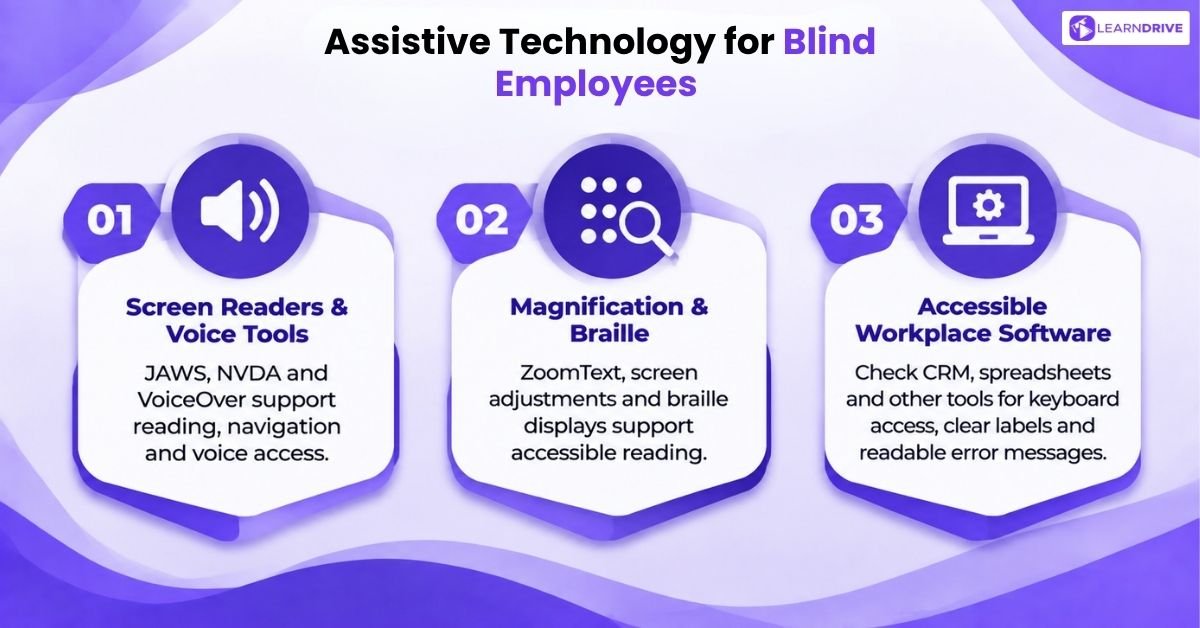
JAWS and NVDA provide speech and braille access to compatible Windows content. VoiceOver provides a screen reader across Apple devices. These tools support navigation as well as reading text aloud.

Voice dictation serves a different purpose by helping people enter text or issue commands. It does not replace a screen reader for every task. Test whether using speech suits the workspace and the confidentiality of the material.

Magnification and Braille Displays

ZoomText offers magnification features for people with low vision. Other adjustments might include larger text, contrast changes or a different monitor arrangement. Select settings through practical testing rather than assuming that maximum enlargement is always helpful.

Refreshable braille displays present digital text through changing tactile cells. They can support detailed reading where appropriate to the person’s skills and preferences.

Accessible Workplace Software

Check customer relationship management systems, spreadsheets, meeting platforms and document tools with the assistive technology you use. Keyboard access, meaningful labels and readable error messages all matter. A familiar software brand does not guarantee that every configured form or extension will work.

Request accessible documents and verbal descriptions. Include software updates in the support plan, since changes can disrupt a previously workable process.

Qualifications That Can Strengthen Applications

Choose training that addresses a skill required by your target vacancy. Our article on online courses that help develop job-relevant skills can support that initial comparison. Before enrolling, request an accessible sample lesson and check assessment arrangements.

Digital accessibility is another field to investigate if you enjoy testing and documenting problems. Search for accessibility tester jobs, manual accessibility tester or digital accessibility analyst vacancies. Personal screen reader experience can contribute useful insight, alongside technical knowledge and an understanding of different access needs.

IAAP’s CPACC preparation information describes a foundational certification covering broad accessibility concepts. Its Web Accessibility Specialist credential focuses on web accessibility. Compare current eligibility and assessment requirements with your experience before choosing a certification.

The DHS Trusted Tester programme concerns a US federal accessibility testing process. It may be relevant to particular employers, but it is not a general UK employment requirement. No certification guarantees a job or proves competence across every accessibility discipline.


 

Workplace Support for Blind and Visually Impaired Employees 

An inaccessible application form, poorly labelled software or documents supplied only as images can create avoidable barriers. Recruitment assumptions can also restrict opportunities before employers understand an applicant’s skills. Identify the specific obstacle so the discussion can focus on a workable solution.

RNIB’s employment research published in 2020 investigated experiences through telephone interviews, focus groups and a YouGov poll. Its scope included employer attitudes and inaccessible recruitment. These findings support examining the recruitment process alongside the job itself.

Reasonable Adjustments

GOV.UK explains employers’ duty to make reasonable adjustments so disabled workers are not substantially disadvantaged. Possible changes include accessible equipment, recruitment arrangements and different ways of completing tasks. Agree adjustments around individual needs and review whether they work.

The Equality Act framework applies in Great Britain; Northern Ireland has separate disability legislation. US searches mentioning ADA reasonable accommodations refer to a different legal system. Use guidance relevant to where you work.

Access to Work Support in the UK 

Access to Work may fund practical support such as specialist software, support workers or eligible travel costs. The scheme can include home working, but it does not replace adjustments employers must legally make.

Eligibility guidance covers England, Scotland and Wales and links to Northern Ireland’s separate system. Check benefit implications with a qualified adviser when your earnings change. US programmes such as Ticket to Work, SSI, SSDI and PASS do not replace UK support arrangements.

Government Jobs and Public Sector Careers for Blind Applicants 

Public sector vacancies can include administration, customer service, digital work and professional roles. Search for occupations matching your skills through government departments, councils and other public employers. A government job title does not automatically guarantee accessible recruitment or workplace systems.

The Civil Service explains how candidates can request reasonable adjustments. Contact the recruitment team early about tests, documents or interview arrangements. Describe the barrier and what would help you demonstrate the required skills.

Changing Careers After Vision Loss

Before leaving a profession, explore whether adjustments could make your existing role workable. Industry knowledge, professional relationships and judgement may remain valuable even when your working methods change. Occupational health advice and specialist employment support can help assess options.

For a career change after vision loss, identify transferable skills through specific examples. Someone who resolved customer complaints may bring negotiation and record-keeping experience to another sector. Match those abilities against real vacancies before choosing retraining.


RNIB’s jobseeking services offer specialist guidance and can signpost assistive technology or local support. Ask about services relevant to your location and stage of employment. You do not need to solve every access issue before seeking advice.

How to Choose Your Next Role

Shortlist two occupations and compare the everyday duties, training requirements and advertised pay. Then discuss access with the employer using concrete tasks. A trial of the software or an accessible work sample can expose questions worth resolving early.

· Which essential tasks match your existing skills and interests?

· Can you use the main systems with your preferred technology?

· What training, equipment and ongoing support will be available?

· Are travel, meetings and documents accessible in practice?

· Who will resolve access problems after you start?


Record the answers and revisit anything uncertain before accepting an offer. An inclusive statement is useful, but a clear implementation plan helps turn it into practical support.

Frequently Asked Questions

1. Where Can I Get a Job If I Am Blind

Explore mainstream vacancies with private employers, charities and public organisations. Search by your skills and preferred occupation, then investigate adjustments. Specialist employment services can help you approach access questions and prepare applications.

2. What Jobs Can Totally Blind People Do

Possibilities include software development, customer service, legal work, counselling and administration. Suitability depends on training, essential duties and accessible working methods. Total blindness alone does not establish a complete list of appropriate careers.

3. Can Blind People Work From Home

Yes, when the role and its systems support remote working. Check equipment, accessible onboarding and technical assistance before accepting. Home working can reduce travel demands while still requiring reliable communication and an appropriate workspace.

4. What Are Good Jobs for People With Low Vision

Start with your interests and qualifications rather than a diagnosis-based shortlist. Compare reading demands, lighting, magnification and opportunities to change working methods. The same occupation can feel very different across employers.

5. How Do Blind People Work on Computers

Many use screen readers, keyboard commands or refreshable braille displays. Others combine speech with magnification or remaining vision. Accessible software and training help these methods work effectively across everyday tasks.

6. Can Someone Losing Their Sight Change Careers

Yes, although changing careers is not always necessary. First review adjustments and transferable skills with appropriate support. If retraining is useful, check course accessibility and the actual requirements of your intended role.

7. What Workplace Support Is Available for Blind Employees

Support can include reasonable adjustments, assistive technology, accessible training and specialist employment advice. Access to Work may provide additional practical help where eligible. The relevant arrangements depend on your location and circumstances.

8. Building a Career With Vision Loss


Choose one vacancy that interests you and identify the access questions it raises. Speak to the employer or a specialist adviser about those tasks. A realistic next step connects your abilities with training and working conditions that let you use them.

Conclusion 

Vision impairment should not define the careers available to you. The right opportunity comes from understanding your skills, interests and the working environment where you can perform at your best.

From technology and customer service to finance, law and administration, many careers can be accessible with suitable tools and workplace support. Assistive technology, flexible working options and reasonable adjustments can help remove barriers and allow professionals to focus on their abilities.

When exploring your next career move, look beyond job titles and consider the everyday tasks, employer support and accessibility of workplace systems. Take time to research roles, build relevant skills and ask the right questions before applying.

A successful career is not about finding a job without challenges. It is about finding a role where your skills are valued, your working style is supported and you have the opportunity to continue growing.


Our popular blogs


Our popular courses

Picture of John Paul
John Paul
[social_share_buttons]

Sensational Offer!

Sign up and get access to 49

Premium Short Course just for £1