Differences Between an Accident and an Incident
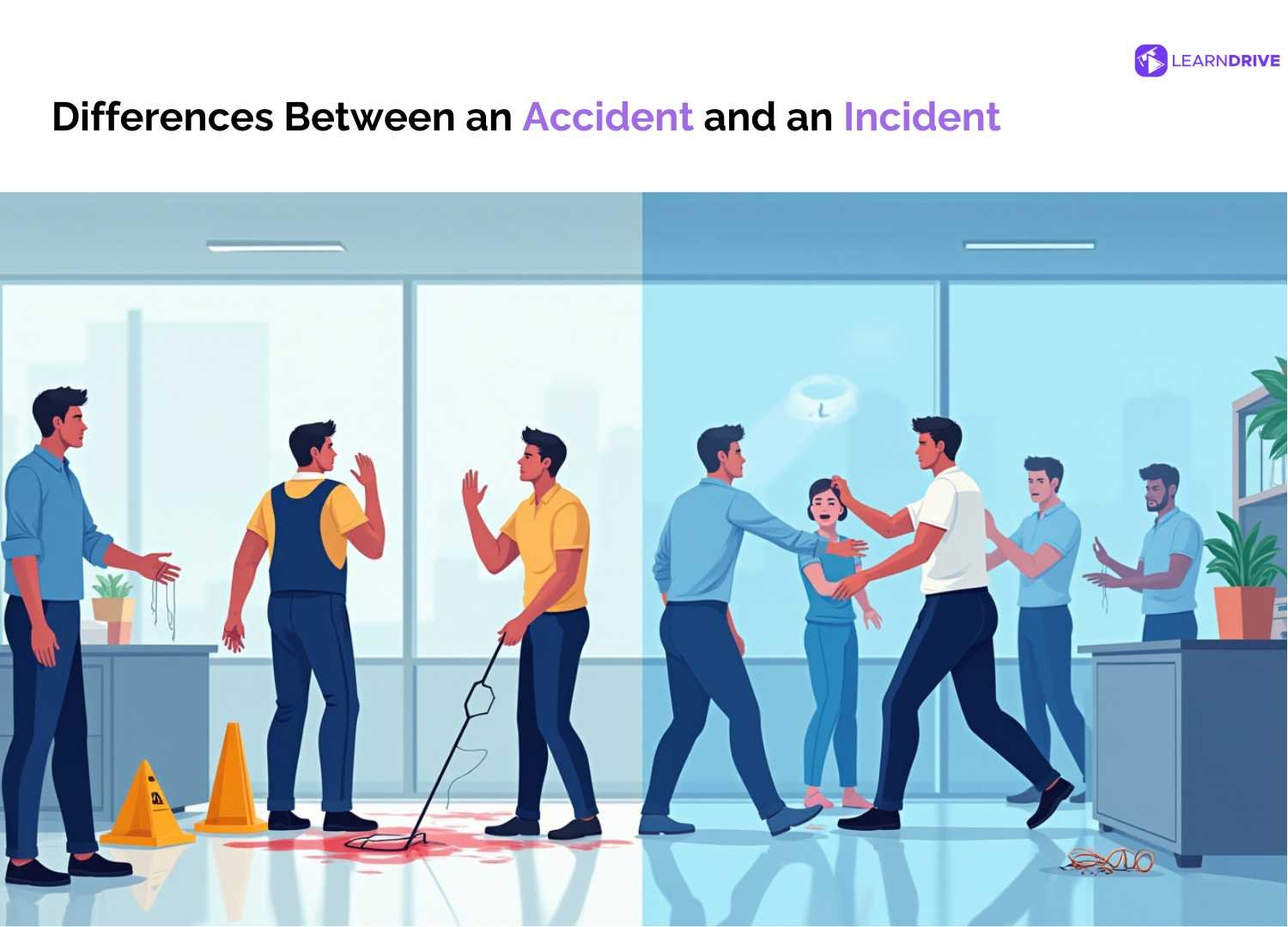
The primary differences between a workplace accident and an incident can be summarised as follows:
1. Outcome
The most significant difference is that a workplace accident results in physical harm or injury, whereas an incident may not. An incident could be a near miss where no injury occurred but could have under different circumstances.
2. Reporting Requirements
In the UK, certain workplace accidents must be reported under the Reporting of Injuries, Diseases, and Dangerous Occurrences Regulations 2013 (RIDDOR). These include fatalities, major injuries, and injuries that result in more than seven days of absence from work.
Incidents, particularly near misses or dangerous occurrences, may also need to be reported under RIDDOR, but the criteria are different and are based on the potential severity rather than actual harm.
3. Preventive Measures
Both accidents and incidents are critical for improving workplace safety, but they are treated differently in terms of preventive measures.
Accidents often lead to immediate corrective actions to address the specific hazard that caused the injury. Incidents, however, are valuable for identifying potential risks before they result in harm, allowing for broader preventive strategies.
4. Legal Implications
Accidents can lead to legal consequences, such as claims for compensation if the injury was due to employer negligence. Incidents, while they may not involve immediate legal action, can still have legal implications if they reveal ongoing safety violations or contribute to a pattern of negligence.
Examples of Common Workplace Accidents
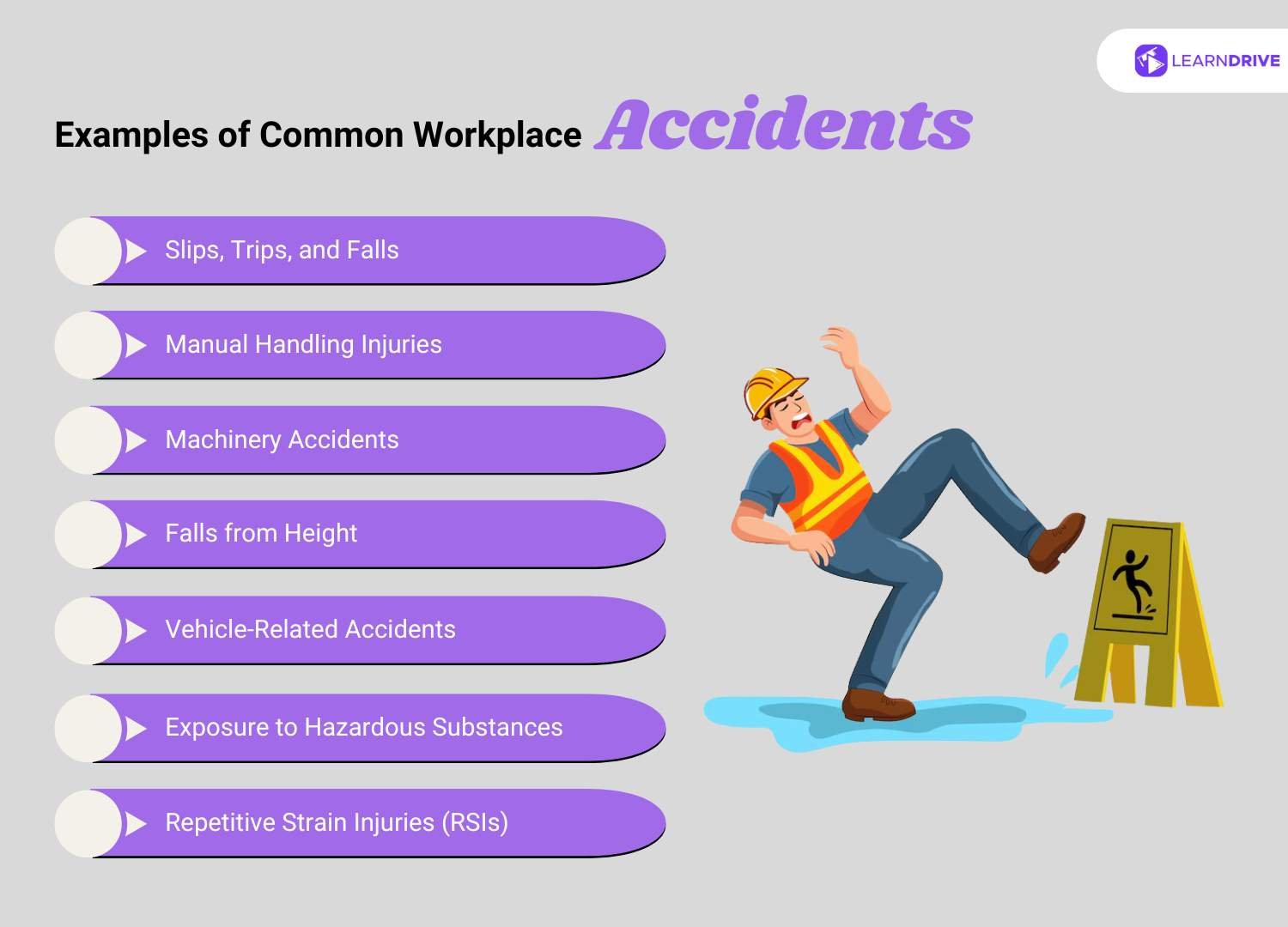
Here are some examples of typical workplace accidents in the UK:
1. Slips, Trips, and Falls
One of the most common workplace accidents, slips, trips, and falls often occur due to wet floors, uneven surfaces, or obstacles left in walkways. These incidents can result in injuries ranging from minor bruises to serious fractures or head injuries.
For example, a worker in a warehouse might slip on a wet floor that was not marked with a warning sign, leading to a fall.
2. Manual Handling Injuries
Manual handling tasks, such as lifting, carrying, or pushing heavy objects, can result in musculoskeletal injuries if not done correctly. Back injuries are particularly common in jobs that require frequent lifting, such as in construction or warehousing.
For instance, a warehouse worker might suffer a back injury from lifting a heavy box without proper technique or assistance.
3. Machinery Accidents
In industrial and manufacturing settings, machinery accidents can occur if equipment is not properly maintained or if safety guards are not in place. These accidents can result in severe injuries such as cuts, amputations, or crush injuries.
An example might include a factory worker who loses a finger due to a malfunctioning machine that was not regularly inspected.
4. Falls from Height
Working at height, such as on ladders, scaffolding, or rooftops, presents significant risks. Falls from height are one of the leading causes of workplace fatalities in the UK.
For example, a construction worker might fall from scaffolding that was not securely erected, resulting in serious injury or death.
5. Vehicle-Related Accidents
Workplace accidents involving vehicles, such as forklifts, trucks, or company cars, are common in industries like logistics, construction, and agriculture. These accidents can occur due to poor vehicle maintenance, inadequate training, or hazardous working conditions.
An example might include a forklift operator colliding with a pedestrian worker in a busy warehouse due to poor visibility and lack of proper training.
6. Exposure to Hazardous Substances
Employees working with chemicals, gases, or other hazardous substances are at risk of exposure if proper safety protocols are not followed.
This can lead to illnesses such as respiratory problems, skin conditions, or even long-term health issues like cancer. An example might be a laboratory worker who suffers chemical burns due to improper handling of corrosive substances.
7. Repetitive Strain Injuries (RSIs)
RSIs are caused by repetitive movements, often in office settings where employees spend long hours typing or using a computer mouse. Over time, these movements can lead to conditions such as carpal tunnel syndrome.
For instance, an office worker might develop RSI from continuous typing without taking regular breaks or using ergonomically designed equipment.
Legal Responsibility of Employees
In the UK, employers hold the primary legal responsibility for ensuring the safety and well-being of their employees while at work. This responsibility is enshrined in several key pieces of legislation, most notably:
The Health and Safety at Work Act 1974 (HSWA): The cornerstone of UK health and safety law, the HSWA places a duty of care on employers to protect the health, safety, and welfare of their employees and others who may be affected by their operations.
This includes implementing safety measures, providing adequate training, and maintaining a safe working environment.
Management of Health and Safety at Work Regulations 1999: These regulations require employers to conduct regular risk assessments, identify potential hazards, and take appropriate steps to mitigate these risks.
Employers must also appoint competent persons to manage health and safety and ensure that employees are informed and trained on safety procedures.
The Reporting of Injuries, Diseases and Dangerous Occurrences Regulations 2013 (RIDDOR): Under RIDDOR, employers are legally required to report certain workplace accidents, occupational diseases, and dangerous occurrences to the Health and Safety Executive (HSE).
This reporting ensures that accidents are properly investigated and that any necessary corrective actions are taken.
Employer’s Liability (Compulsory Insurance) Act 1969: This act requires employers to have insurance that covers them against claims for injury or disease sustained by employees in the course of their employment.
This ensures that compensation is available to employees who suffer work-related injuries or illnesses.
Do Employees Get Sick Pay After an Accident at Work in the UK?
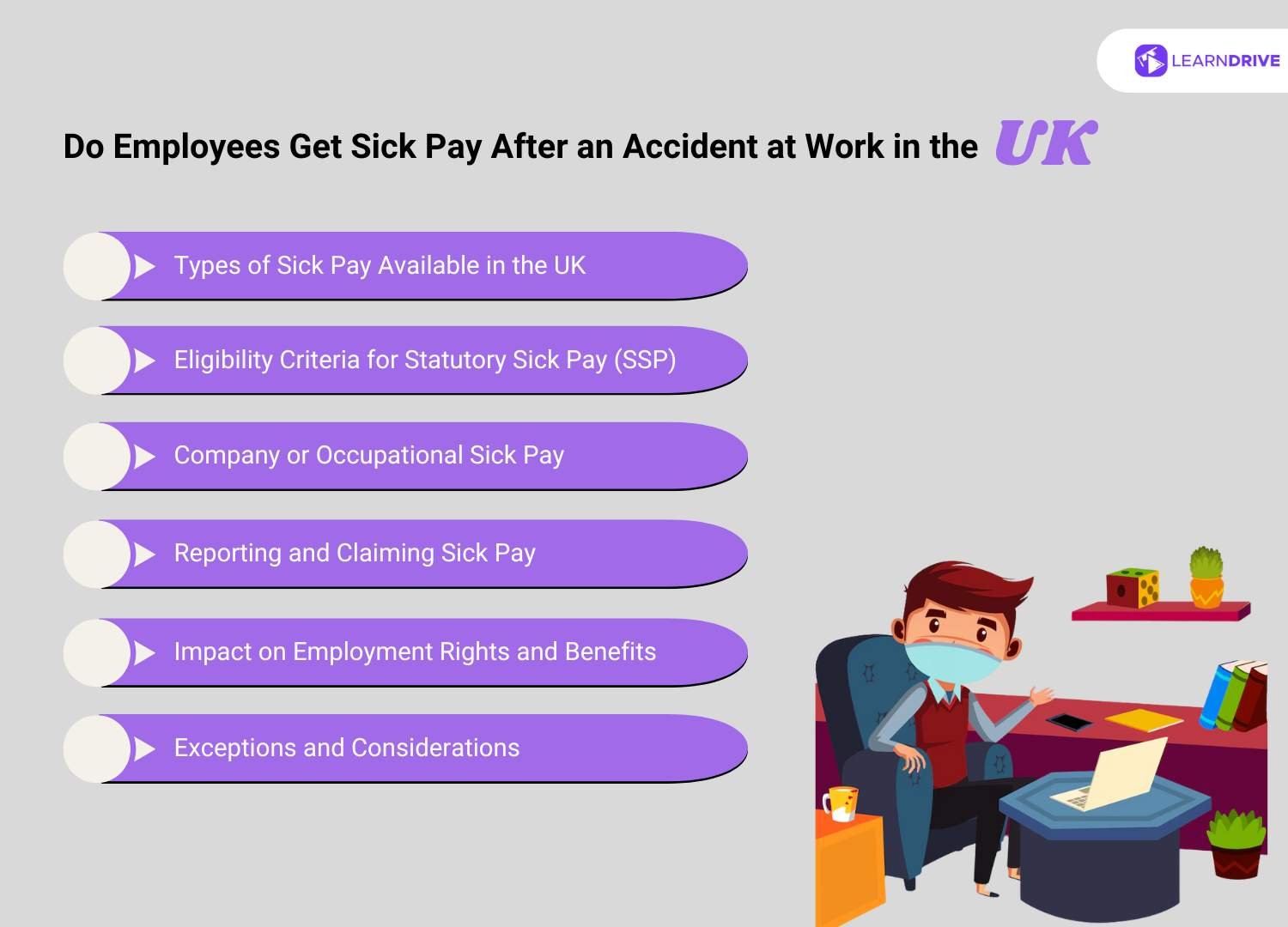
Now, we will delve into the types of sick pay available to employees after a workplace accident, the eligibility criteria, and the steps employees should take to secure their entitlements.
1. Types of Sick Pay Available in the UK
In the UK, employees may be eligible for two types of sick pay after an accident at work:
Statutory Sick Pay (SSP): This is the minimum level of sick pay that employers are legally required to provide to eligible employees. SSP is paid by the employer for up to 28 weeks if an employee is unable to work due to illness or injury, including injuries sustained in a workplace accident.
Company or Occupational Sick Pay: In addition to SSP, many employers offer enhanced sick pay schemes, often referred to as company or occupational sick pay.
These schemes are typically outlined in an employee’s contract or in the company’s employee handbook. They may provide higher levels of pay for a longer duration than SSP, depending on the employer’s policy.
2. Eligibility Criteria for Statutory Sick Pay (SSP)
To qualify for SSP after a workplace accident, an employee must meet the following criteria:
Employment Status: The employee must be classified as an employee and not a self-employed contractor. SSP does not apply to those who are self-employed.
Earnings Threshold: The employee must earn at least £123 per week (as of the 2023/2024 tax year) before tax. If an employee earns less than this amount, they are not eligible for SSP.
Absence Duration: SSP is payable from the fourth day of absence due to illness or injury. The first three days are considered waiting days and are unpaid unless the employer’s policy states otherwise.
Notification Requirements: Employees must inform their employer of their illness or injury according to the employer’s notification procedures. This is usually within seven days of the accident or illness, although employers may require notification sooner.
Sick Note: For absences lasting more than seven days, employees are typically required to provide a “fit note” or “sick note” from a doctor to confirm their inability to work.
3. Company or Occupational Sick Pay
Many employers in the UK offer their own sick pay schemes, which may provide more generous benefits than SSP. These schemes vary widely between employers but typically include:
Full Pay: Some employers offer full pay for a certain number of weeks or months, depending on the employee’s length of service and the terms of the sick pay scheme.
Partial Pay: After an initial period of full pay, the employer may reduce the sick pay to a percentage of the employee’s normal earnings.
Extended Duration: Company sick pay schemes may extend beyond the 28-week limit of SSP, providing financial support for employees recovering from long-term injuries.
4. Reporting and Claiming Sick Pay
When an accident occurs at work, employees should take the following steps to ensure they receive the sick pay they are entitled to:
Report the Accident: Immediately report the accident to your employer, following the company’s accident reporting procedures. This may involve completing an accident report form or informing a supervisor or HR representative.
Seek Medical Attention: Obtain a medical assessment to document the injury and receive appropriate treatment. Ensure that the injury is clearly linked to the workplace accident.
Obtain a Sick Note: If the injury results in an absence of more than seven days, obtain a sick note from a doctor. This will be required by the employer to process SSP or company sick pay.
Submit a Claim: Follow the employer’s procedures for claiming sick pay. This may involve submitting the sick note, completing a sick pay form, and providing any additional documentation required by the employer.
5. Impact on Employment Rights and Benefits
An employee’s entitlement to sick pay does not affect their other employment rights. Employees who are off work due to a workplace accident are still entitled to:
Job Protection: Employees cannot be dismissed simply because they are on sick leave due to a workplace accident. Any dismissal must be fair and follow proper procedures.
Holiday Accrual: Employees continue to accrue holiday entitlement while on sick leave. If the employee is unable to take their holiday due to sickness, they may be able to carry it over to the next year.
Workplace Injury Compensation: In addition to sick pay, employees who suffer a workplace injury may be entitled to claim compensation if the accident was due to employer negligence. This is separate from sick pay and can cover additional costs such as medical expenses, loss of future earnings, and compensation for pain and suffering.
6. Exceptions and Considerations
There are some situations where sick pay might not be available, or where additional considerations apply:
Zero-hours Contracts: Employees on zero-hours contracts may struggle to qualify for SSP if their earnings fluctuate below the threshold. However, they may still be entitled to SSP if their average earnings meet the criteria.
Short-Term Contracts: Employees on short-term contracts may only be entitled to SSP for the duration of their contract. If the contract ends while they are on sick leave, their entitlement to SSP may cease.
Workplace Disputes: If there is a dispute about whether the injury is work-related, it may affect the employee’s ability to claim sick pay. In such cases, legal advice may be necessary.
Manage an Accident in a High-Risk Workplace
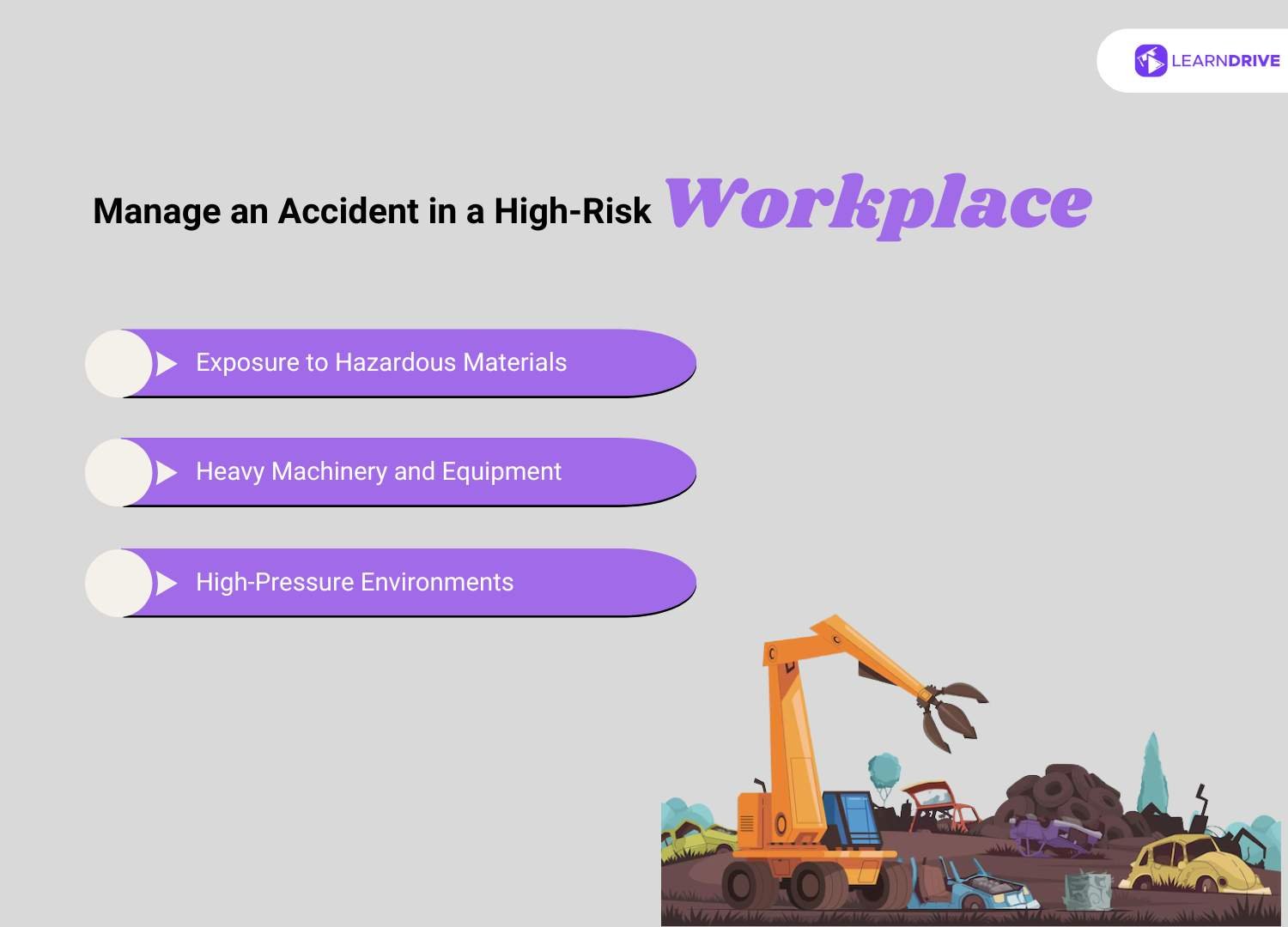
High-risk workplaces are environments where employees are exposed to greater hazards due to the nature of the work. These workplaces typically involve:
a) Exposure to Hazardous Materials: Chemicals, flammable substances, and toxic materials.
b) Heavy Machinery and Equipment: Construction machinery, manufacturing tools, and vehicles.
c) High-Pressure Environments: Work at heights, confined spaces, or underwater.
Immediate Response to an Accident
When an accident occurs in a high-risk workplace, the immediate response is critical in minimising harm and preventing further incidents. Key steps include:
The first priority is to ensure the safety of all personnel. This may involve shutting down machinery, evacuating the area, and addressing any immediate hazards (e.g., containing a chemical spill).
Trained first aiders should attend to the injured individual(s) as quickly as possible. First aid kits and equipment should be readily available, and all employees should know where to find them and should have adequate training regarding workplace first aid.
Depending on the severity of the accident, emergency services (ambulance, fire brigade, etc.) should be contacted immediately. Providing accurate information about the location, nature of the accident, and any potential hazards will help emergency responders prepare appropriately.
The accident should be reported to a supervisor or designated safety officer as soon as possible. In high-risk workplaces, having a clear chain of communication is essential to ensure that the right people are informed quickly.
Supporting Affected Employees
Accidents in high-risk workplaces can have a significant impact on the injured employee and their colleagues. Employers have a responsibility to support affected employees by:
Ensuring that injured employees receive the necessary medical care and rehabilitation. Employers may also need to make accommodations for employees returning to work after an injury.
Accidents can be traumatic, and employees may need psychological support to cope with the aftermath. Providing access to counselling services or employee assistance programs (EAPs) can be beneficial.
Keeping affected employees informed about the investigation and any changes in safety procedures. Transparency and communication can help rebuild trust and confidence in workplace safety.
Continuous Improvement and Prevention
Managing an accident in a high-risk workplace is not just about responding to the immediate crisis; it is also about preventing future incidents. Employers should adopt a proactive approach to safety management by:
Performing Expert-led Periodic safety audits can help identify potential hazards before they lead to accidents. These audits should be thorough and involve input from employees at all levels.
Employees are often the first to notice potential hazards. Encouraging them to report safety concerns and participate in safety committees can help create a safer work environment.
Health and safety regulations in the UK are subject to change. Employers should stay informed of any updates and adjust their safety protocols accordingly.
Advances in technology, such as automated safety systems, wearable devices, and real-time monitoring, can significantly enhance workplace safety in high-risk environments.
Compensation for An Accident at the Workplace
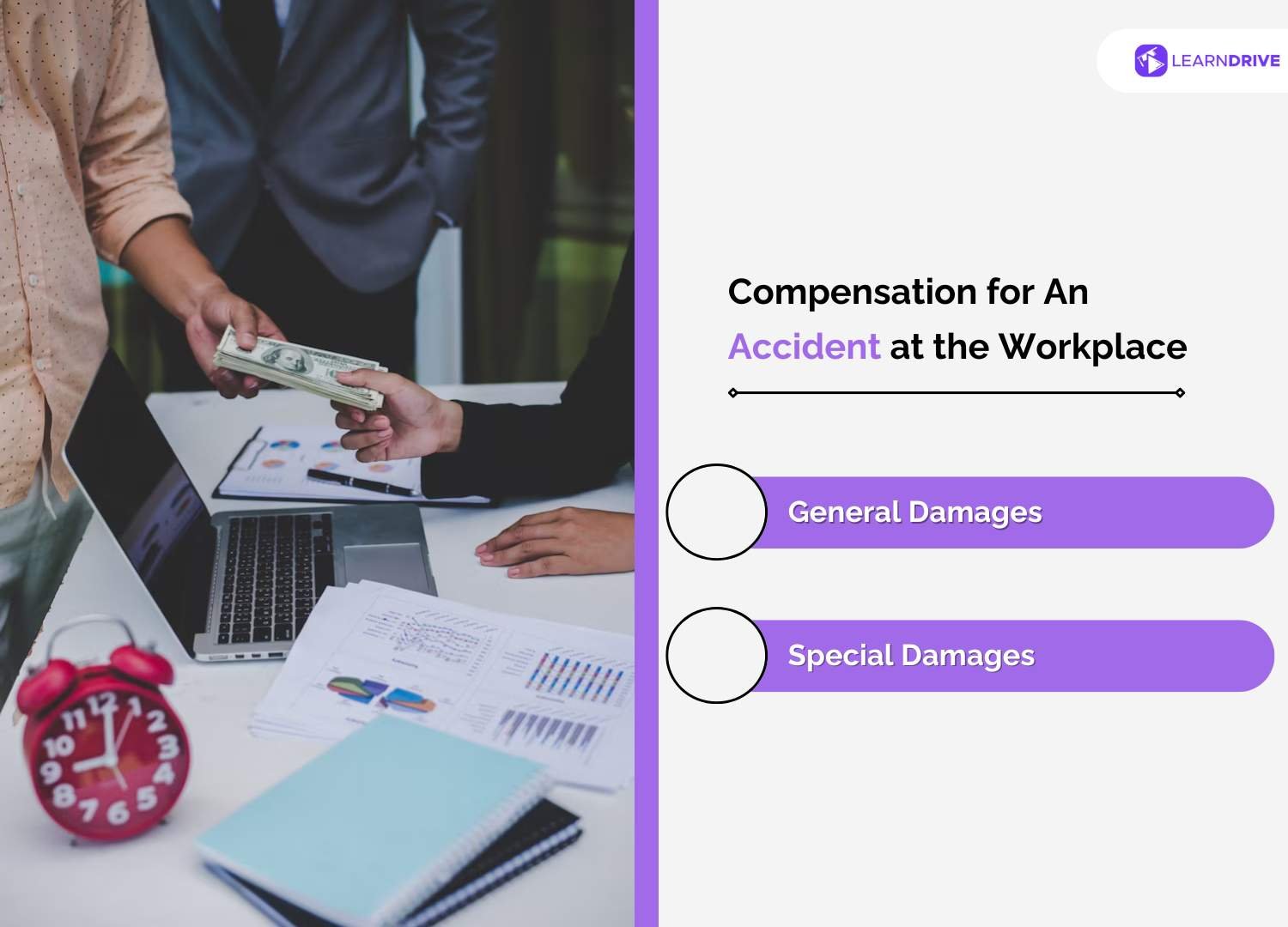
Compensation for workplace accidents in the UK is designed to cover a range of losses and expenses that the injured employee may incur. The two main types of compensation are:
General Damages: This refers to compensation for non-monetary losses, such as pain and suffering, emotional distress, and loss of quality of life. General damages are more subjective and are typically assessed based on the severity of the injury and its impact on the employee’s daily life.
Special Damages: This covers monetary losses and expenses that result directly from the accident. Special damages include medical expenses, loss of earnings, travel costs for medical appointments, and any other financial losses incurred due to the injury.
Special damages are calculated based on actual costs incurred or likely to be incurred in the future.
Factors That Influence Compensation Amounts
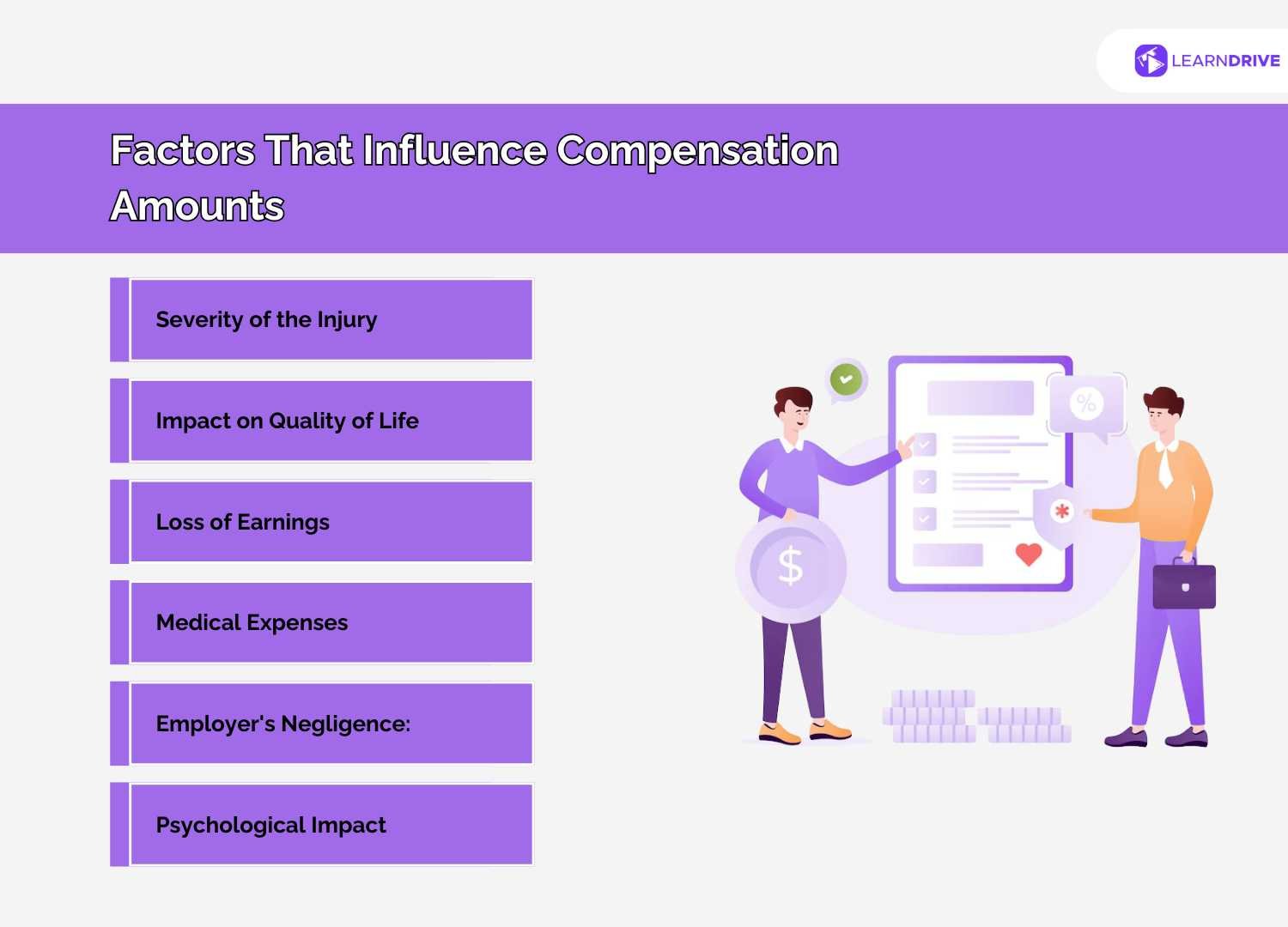
Several factors influence the amount of compensation that an employee might receive after a workplace accident in the UK:
Severity of the Injury: The more severe the injury, the higher the compensation amount is likely to be. Serious injuries that result in long-term disability, loss of function, or significant pain and suffering will attract higher compensation than minor injuries.
Impact on Quality of Life: Compensation takes into account how the injury affects the employee’s ability to lead a normal life. If the injury prevents the employee from performing daily activities, enjoying hobbies, or maintaining relationships, the compensation may be higher.
Loss of Earnings: If the injury prevents the employee from working, either temporarily or permanently, compensation will include an amount to cover lost wages. This includes both past and future loss of earnings, as well as any impact on the employee’s ability to earn in the future.
Medical Expenses: Compensation will cover the cost of medical treatment, including hospital stays, surgeries, rehabilitation, and ongoing care. If the injury requires long-term medical treatment, the compensation may also include future medical expenses.
Employer’s Negligence: The degree of the employer’s negligence can also impact the compensation amount. If the employer is found to have significantly violated health and safety regulations, the compensation may be higher.
Psychological Impact: Compensation may also consider the psychological effects of the injury, such as anxiety, depression, or post-traumatic stress disorder (PTSD), particularly if these conditions were caused or exacerbated by the accident.
The Compensation Claims Process

To claim compensation for a workplace accident, the injured employee typically follows these steps:
Report the Accident: The first step is to report the accident to the employer as soon as possible. This ensures that the accident is officially recorded and that the employer is aware of the injury.
Seek Medical Attention: Obtaining a medical assessment is crucial for both health reasons and for documenting the injury. Medical records will serve as essential evidence in the compensation claim.
Consult a Solicitor: The injured employee should seek legal advice from a solicitor who specializes in personal injury or workplace accident claims. The solicitor will assess the case, gather evidence, and provide guidance on the best course of action.
Evidence Gathering: The solicitor will collect evidence to support the claim, including medical records, witness statements, accident reports, and any other relevant documentation.
Negotiate a Settlement: In many cases, the employer’s insurance company will negotiate a settlement with the injured employee’s solicitor. The solicitor will advise on whether the settlement offer is fair or if it should be contested.
Court Proceedings (if necessary): If a settlement cannot be reached, the case may proceed to court, where a judge will determine the appropriate compensation amount. Most cases, however, are settled out of court.
Time Limits for Making a Claim: In most cases, the injured employee has three years from the date of the accident to file a compensation claim. This is known as the “limitation period.” If the claim is not made within this time frame, the employee may lose the right to compensation.
There are some exceptions to the three-year limit. For example, if the injury is not immediately apparent and only becomes evident later, the three-year period may start from the date the injury was diagnosed (known as the “date of knowledge”). Additionally, for claims involving minors, the three-year period begins on the child’s 18th birthday.
Legal and Financial Considerations: When pursuing a compensation claim for a workplace accident, employees should be aware of the following legal and financial considerations:
No Win, No Fee Agreements: Many personal injury solicitors operate on a “no win, no fee” basis, meaning that the employee only pays legal fees if the claim is successful. If the claim is unsuccessful, the employee typically does not have to pay any legal fees.
Employer’s Liability Insurance: UK employers are required by law to have employer’s liability insurance to cover compensation claims for workplace accidents. This means that any compensation awarded to the employee is paid by the employer’s insurance company, not the employer directly.
Impact on Employment: Employees should not fear retaliation from their employer for making a compensation claim. It is illegal for employers to dismiss or treat employees unfairly for seeking compensation after a workplace accident. If such unfair treatment occurs, the employee may have grounds for an additional legal claim.