
Why “Working With Animals” Doesn’t Mean Low Pay?
Ask most people to picture jobs with animals, and they’ll picture a dog walker, a kennel assistant, or someone mucking out stables for very little money. That picture is outdated, and it’s also only a small slice of a much bigger industry.
The truth is that careers with animals sit on a huge pay spectrum. At one end, you’ve got entry-level animal care roles that pay close to minimum wage. At the other end, you’ve got veterinary surgeons, wildlife biologists, and self-employed behaviourists who earn well into six figures.
The gap between the two isn’t about how much someone loves animals. It’s about specialism, qualifications, sector, and whether the role is employed or self-employed.
There’s also a widespread assumption that loving animals and earning a good salary are somehow at odds with each other, as if choosing a caring profession automatically means accepting lower pay.
That assumption holds up in some corners of the industry, particularly at entry level, but it falls apart completely once you look at veterinary medicine, wildlife research, enforcement roles, or established self-employed practitioners.
Plenty of people build genuinely well-paid, stable careers around animals without ever compromising on the part of the job they actually care about.
This guide breaks down jobs involving animals into clear categories: veterinary work, wildlife and marine roles, dog-related careers, equine work, charity and welfare jobs, animal care and management roles, animal science, and even work from home animal jobs.
Every category includes real salary ranges and honest descriptions, so you can see exactly where the money is and what it takes to get there.
How This Jobs with Animals List Was Built (Roles, Ranges, and Sources)
Every salary figure in this guide is UK-focused unless stated otherwise. Ranges are pulled from a mix of recruitment sites, sector bodies, and government-recognised career services, then cross-checked against multiple listings to avoid relying on a single outlier salary.
Ranges typically run from entry-level pay through to experienced or senior pay, because animal careers often have a wide gap between the two. A newly qualified veterinary nurse and a head nurse at a referral hospital are doing very different jobs for very different money, even though both sit under the same job title.
The same is true across almost every category in this guide, from wildlife biology to animal care, so treat every range as a starting point and a ceiling rather than a fixed number.
Where a role is commonly self-employed, such as farriers or dog behaviourists, this is flagged clearly. Self-employed earnings depend heavily on client base, location, and reputation, so those ranges are wider and less predictable than a fixed employed salary.
A self-employed practitioner in their first year will typically earn far less than the top of the stated range, while someone with a decade of reputation behind them can comfortably exceed it.
Location also plays a bigger role in animal careers than people expect. Roles based in London and the South East generally pay more across the board, but they also come with a higher cost of living, so a headline salary in one part of the country doesn’t automatically translate to the same standard of living elsewhere.
Finally, this guide separates roles by category rather than ranking them purely by salary from top to bottom. A simple top-to-bottom list makes for an easy skim, but it hides an important reality: the highest-paid job in one category, such as an equine yard manager, might still pay less than a mid-level role in another category, such as veterinary nursing.
Grouping by category makes it far easier to compare like with like and to see the realistic progression within a specific area you’re actually interested in, rather than jumping between unrelated roles just because they happen to sit near each other on a ranked list.
3 Veterinary Jobs That Pay Well
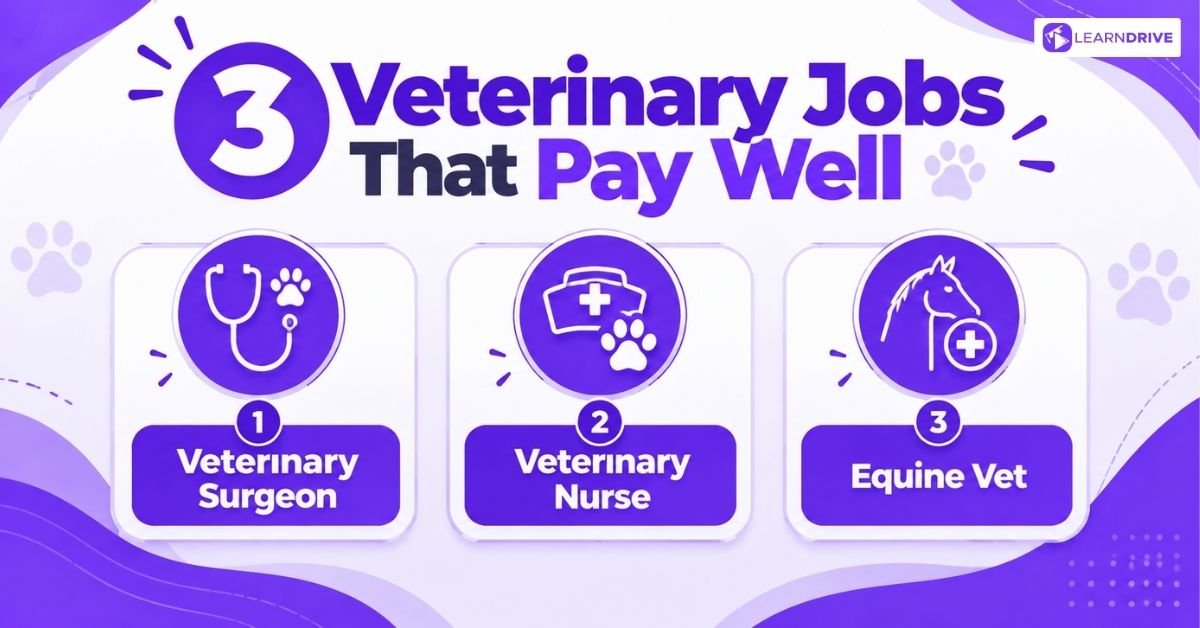
Veterinary work sits at the top of almost every list of well-paid jobs with animals, and for good reason. It combines medical responsibility with genuine demand, and the UK currently has a well-documented shortage of qualified vets, which keeps salaries competitive.
1. Veterinary Surgeon
Salary: £31,000 – £70,000+
Diagnoses and treats illness and injury in animals, performs surgery, prescribes medication, and advises owners on ongoing care. Requires a five-year veterinary science degree and registration with the Royal College of Veterinary Surgeons (RCVS). Senior vets in specialist or referral practices sit at the top of this range.
2. Veterinary Nurse
Salary: £23,000 – £40,000
Supports vets with treatment, anaesthesia monitoring, aftercare, and client education. Trains through a diploma or degree route that’s shorter than a full veterinary degree. Head nurse and referral hospital roles push pay towards the top of the range.
3. Equine Vet
Salary: £37,000 – £58,000+
A vet who specialises in horses, covering everything from routine health checks to emergency and performance-related treatment. Species specialism like this often lifts pay above general small-animal practice.
What ties these three roles together is the length of training required. Veterinary work isn’t a career you fall into; it’s one you study for, often for years. That barrier to entry is exactly why the pay sits above most other animal careers. If you’re serious about the highest-paying jobs involving animals, veterinary medicine is usually the ceiling.
Getting into veterinary medicine starts long before university. Most veterinary degree courses want strong grades in chemistry and biology, alongside a substantial amount of work experience in both a veterinary practice and a farm or animal-handling environment, sometimes several hundred hours’ worth.
This work experience requirement catches a lot of applicants off guard, and it’s worth arranging as early as possible, ideally through school holidays over several years rather than a single placement the summer before applying.
Once qualified, vets typically start in general small-animal practice before choosing whether to specialise. Specialising, whether in equine work, exotic animals, orthopaedic surgery, or emergency medicine, is usually where the bigger pay jumps happen, alongside moving into practice ownership or partnership later in a career.
Veterinary nursing is worth taking just as seriously as a career path in its own right, rather than as a fallback for people who don’t get onto a veterinary degree course. It’s a shorter route to a genuinely skilled, well-regarded role, and experienced nurses in referral or specialist hospitals can out-earn newly qualified vets in general practice.
3 Wildlife and Marine Jobs That Pay Well
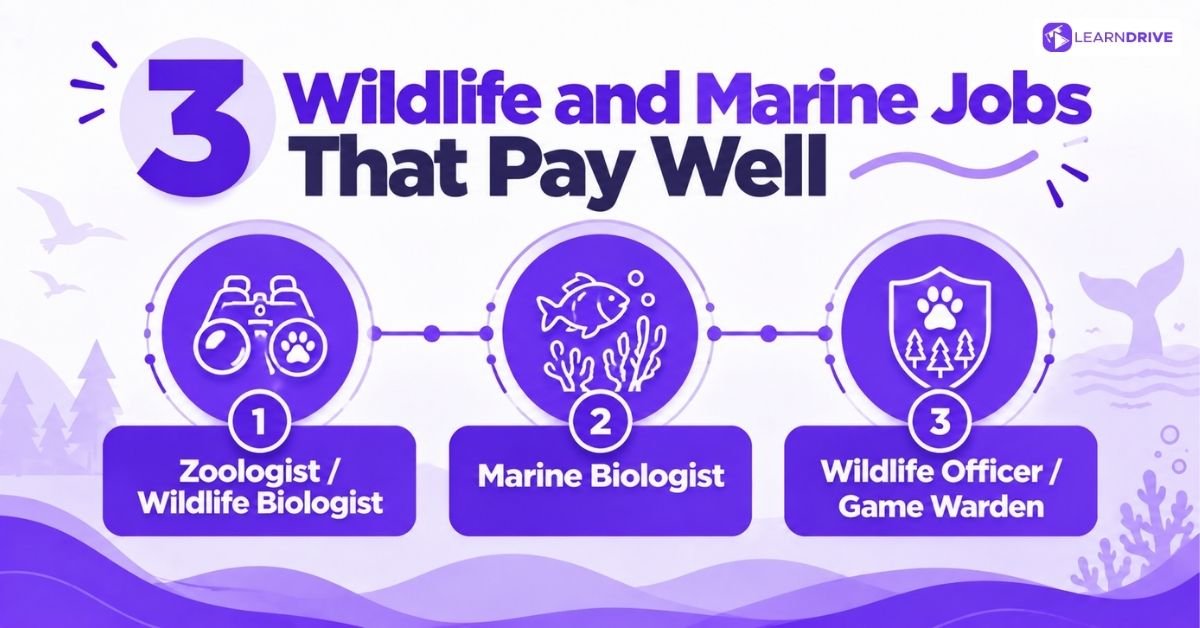
If hands-on pet care isn’t the draw and it’s wild animals, ecosystems, and conservation that interest you, wildlife and marine careers offer a different kind of well-paid path. These roles usually require a science degree, and often a postgraduate qualification, but they open doors to research, government, and international conservation work.
1. Zoologist / Wildlife Biologist
Salary: £18,000 – £25,000 entry, £75,000+ senior
Studies wild animal behaviour, populations, and habitats. Entry-level roles are modest, but senior research posts, government wildlife management roles, and university positions pay considerably more, especially with a PhD.
2. Marine Biologist
Salary: £25,000 entry, £65,000+ specialist
Studies ocean-dwelling species and ecosystems, often specialising in a specific group such as marine mammals, fish, or coral reef systems. Higher pay tends to follow postgraduate research qualifications and government or academic positions.
3. Wildlife Officer / Game Warden
Salary: £50,000 – £80,000 (benchmarked internationally)
Patrols and protects wildlife habitats, enforces conservation law, and manages population control. Often requires a background in conservation, ecology, or law enforcement, plus fieldwork experience.
These are some of the most competitive jobs working with animals to break into, simply because there are far fewer roles than there are qualified applicants. Volunteering, fieldwork placements, and postgraduate study all help build the experience needed to land a paid position in this space.
A typical route starts with an undergraduate degree in zoology, marine biology, ecology, or a related life science, followed by unpaid or low-paid fieldwork, often abroad, to build a track record. This early stage can feel financially unrewarding, which is exactly why the pay ranges above look modest at entry level.
The payoff comes later, once a PhD, published research, or specialist fieldwork experience opens the door to university lecturing posts, government conservation roles, or senior positions within international conservation organisations.
It’s also worth knowing that a meaningful chunk of well-paid wildlife and marine work happens away from direct animal contact. Many senior roles in this field involve data analysis, policy writing, grant applications, and stakeholder management, rather than daily fieldwork.
Anyone drawn to this category purely for the hands-on wildlife experience should go in aware that the more senior and better-paid the role, the more office and desk-based work tends to be involved.
4 Dog-Related Jobs That Pay Well
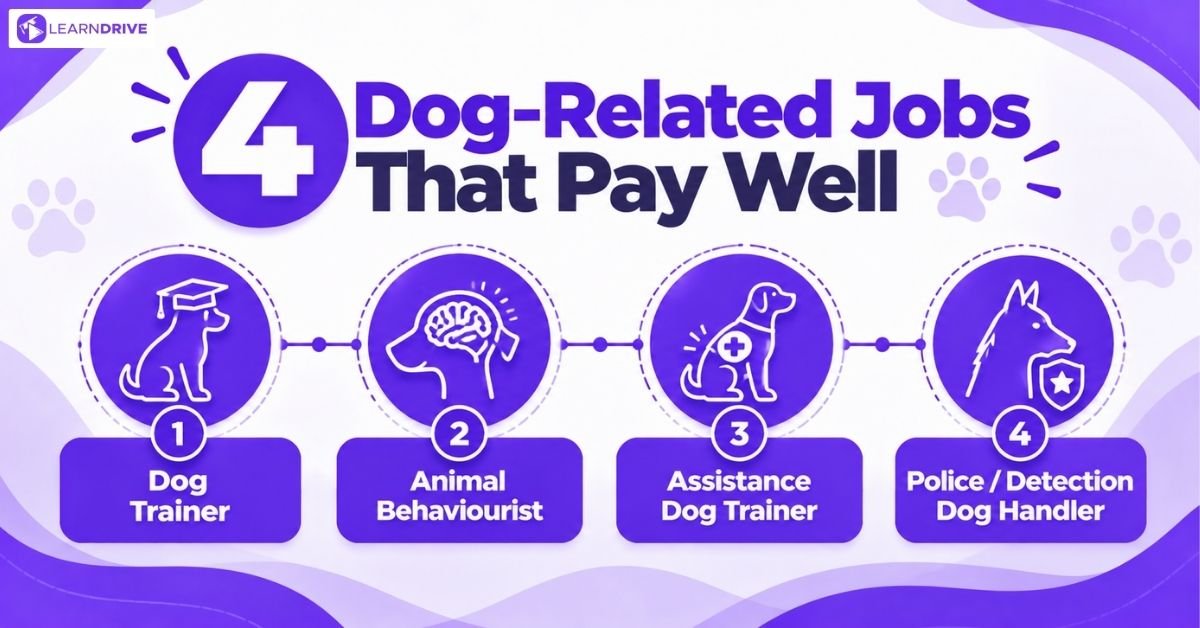
Dogs generate more paid career options than almost any other animal, from training and behaviour work through to specialist detection and law enforcement roles. This category also has some of the biggest gaps between employed and self-employed earnings on this entire list.
1. Dog Trainer
Salary: £24,000 – £30,000 employed, £50–£1,500 per session self-employed
Teaches obedience, agility, or specialist skills to dogs and their owners. Many dog trainers are self-employed, which means earnings scale with reputation and client base rather than a fixed salary.
2. Animal Behaviourist
Salary: £20,000 – £50,000 employed, £100,000+ possible self-employed
Assesses and corrects behavioural problems in pets, often working alongside vets on referral cases. Self-employed behaviourists who build a strong reputation and charge per consultation can significantly outearn employed roles.
3. Assistance Dog Trainer
Salary: £18,000 – £30,000+
Trains guide, hearing, or medical detection dogs for charities such as Guide Dogs, Hearing Dogs for Deaf People, or Medical Detection Dogs. Deeply skilled work with a strong sense of purpose attached.
4. Police / Detection Dog Handler
Salary: £23,000 – £42,000
Works a trained dog for law enforcement, security, or explosive and drug detection. Entry is usually via the police, military, or private security sector, with London and specialist units paying towards the top of the range.
Notice the pattern here: the more specialised the dog work, the higher the ceiling. General obedience training pays reasonably. Behaviour work, detection work, and assistance dog training all sit higher because they require deeper expertise and, often, years of hands-on experience before you’re trusted with the role.
Dog training itself isn’t a licensed profession in the UK, which means anyone can technically call themselves a trainer. In practice, this makes accredited qualifications and professional body membership essential for anyone hoping to charge premium rates or build a referral-based client list.
Vets and welfare charities tend to refer clients towards trainers and behaviourists who hold recognised qualifications, so credibility is often the real driver of income in this space, not just experience alone.
Police and detection dog handling follows a very different route. Entry is almost always through joining the police, the armed forces, or a private security firm first, with dog handling coming later as a specialist posting rather than a starting job.
Handlers typically spend a probationary period in a general role before being able to apply for a dog section, and training with an allocated dog can take several weeks once accepted.
Assistance dog training sits somewhere in between: it’s a paid, structured career with a recognised training pathway through organisations like Guide Dogs, but it also requires a genuine long-term commitment, since training a single assistance dog to the standard required can take well over a year of consistent, patient work.
2 Well Paid Equine Jobs

Horses support an entire industry of their own, and it’s one where skilled trades can genuinely rival degree-based careers on pay. This is a physically demanding sector, but it rewards specialism and reputation heavily.
1. Farrier
Salary: £20,000 – £60,000+
Shoes and treats horses’ hooves, usually working as a self-employed contractor across multiple yards. Entry is via a recognised apprenticeship, and experienced farriers with a strong client base can earn very well for a trade role.
2. Equine Yard and Stud Roles
Salary: £18,000 – £45,000+
Covers stable managers, stud yard supervisors, and performance grooms. Manages horse care, breeding operations, or competition preparation. Pay rises sharply as you move from general grooming into yard management or stud work at a prestigious yard.
Equine careers reward time served. Most people start as a groom, build hands-on experience, and progress into management, breeding, or a specialist trade like farriery. It’s rarely a fast track to a high salary, but the ceiling is higher than many people assume.
Farriery in particular is one of the more surprising entries on this list, because it’s a trade rather than a degree, yet an experienced, well-regarded farrier working across several busy yards can earn a genuinely strong income.
The trade-off is the physical demand: farriers typically work long days, often 47 to 49 hours a week, bent over or holding a horse’s leg for extended periods, in all weather. Entry is via a structured apprenticeship, usually four to five years long, registered with the Farriers Registration Council, which is a legal requirement to practise in the UK.
Stud and yard roles reward a different kind of progression. A performance groom working for a competition yard might start on relatively modest pay but travel internationally with top horses, which is part of the appeal for many people in the sport.
Stud yard supervisors, by contrast, manage breeding operations, which involves a mix of animal husbandry knowledge and business sense, particularly at studs producing high-value bloodstock.
The jump from groom to yard manager or stud supervisor is typically the single biggest pay increase available within the equine sector, and it comes from experience and reputation rather than formal qualifications alone.
4 Animal Charity Jobs Which Generates Healthy Income
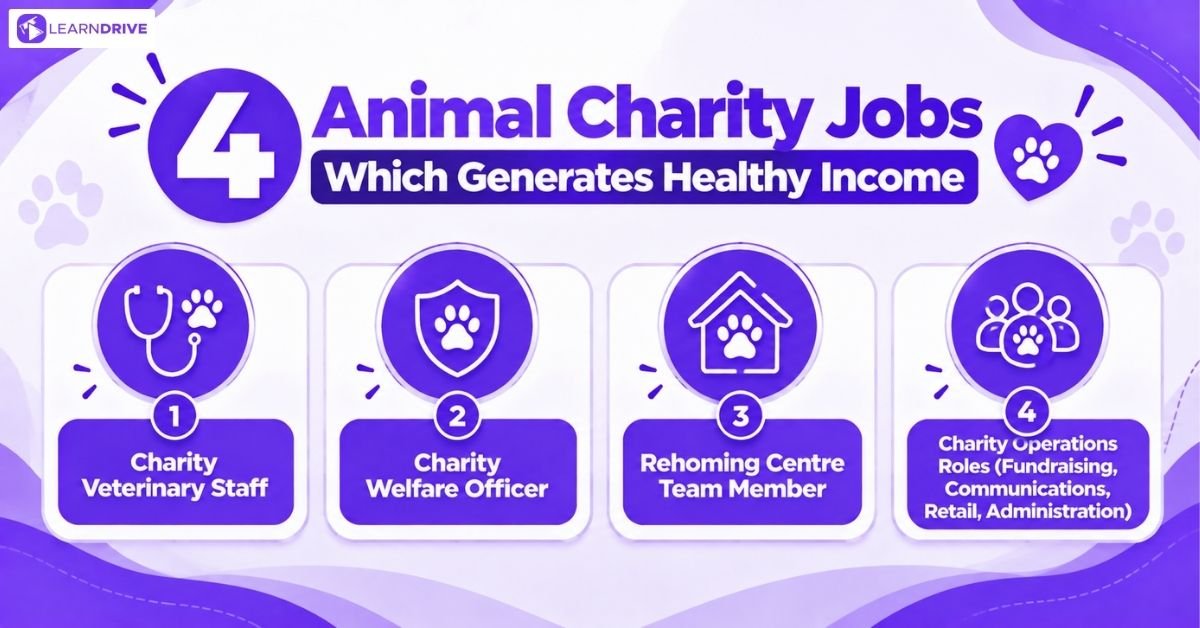
Animal charity jobs are often overlooked by people searching for well-paid careers with animals, because charity work is wrongly assumed to mean volunteering or low pay. In reality, organisations like the RSPCA, Blue Cross, Dogs Trust, and the PDSA employ thousands of people in properly salaried roles, and many of these roles pay in line with, or close to, their private-sector equivalents.
Charity-sector animal jobs split roughly into two groups: animal-facing roles and operational roles.
1. Charity Veterinary Staff
Salary: £23,000 – £70,000+
Animal-facing charity jobs include veterinary staff, who provide clinical care within a charity’s hospitals and clinics, paying similarly to their counterparts in private practice or independent rescues.
2. Charity Welfare Officer
Salary: £20,000 – £40,000
Works within a charity to assess animal welfare, support owners, and act on concerns, sitting alongside veterinary staff as one of the charity’s core animal-facing roles.
3. Rehoming Centre Team Member
Salary: £19,000 – £25,000
Cares for animals at a charity’s rehoming centre and helps match them with new owners, forming the third animal-facing role within larger charities.
4. Charity Operations Roles (Fundraising, Communications, Retail, Administration)
Salary: £22,000 – £45,000
Supports the charity’s animal work without being animal-facing itself. Covers fundraising, communications, retail management, and administration, and these roles often pay in line with equivalent commercial positions.
The appeal of animal charity jobs isn’t just the salary. It’s the sense of purpose that comes with working for an organisation whose entire reason for existing is animal welfare. For many people, that combination of decent pay and clear purpose makes charity work one of the most satisfying categories of jobs to do with animals available.
If you’re looking specifically for animal welfare jobs UK charities offer, the larger national organisations tend to have more structured pay scales, clearer progression paths, and better benefits than smaller independent rescues, which are often reliant on donations and grants.
It’s worth researching an individual charity’s financial position before applying, since pay and job security can vary considerably between a well-funded national charity and a small local rescue running on a handful of paid staff and a much larger team of volunteers.
Charities also tend to offer some of the clearest internal progression routes in the entire animal sector. Someone starting as an animal care assistant at a national charity, for example, can realistically move into a welfare officer, rehoming coordinator, or even a training and behaviour role over several years, all without leaving the same organisation.
That internal mobility is a genuine advantage over smaller independent employers, who often can’t offer the same breadth of roles to progress into.
It’s also worth knowing that competition for animal charity jobs, particularly at well-known national organisations, can be intense. A single advertised role at a major charity often attracts a large number of applicants, many of whom already have relevant experience from smaller rescues or private practice.
Building a track record at a smaller, less competitive organisation first is a common and sensible way to become a stronger candidate for a role at one of the bigger names later on.
3 Animal Welfare Jobs (UK) That Pay Well
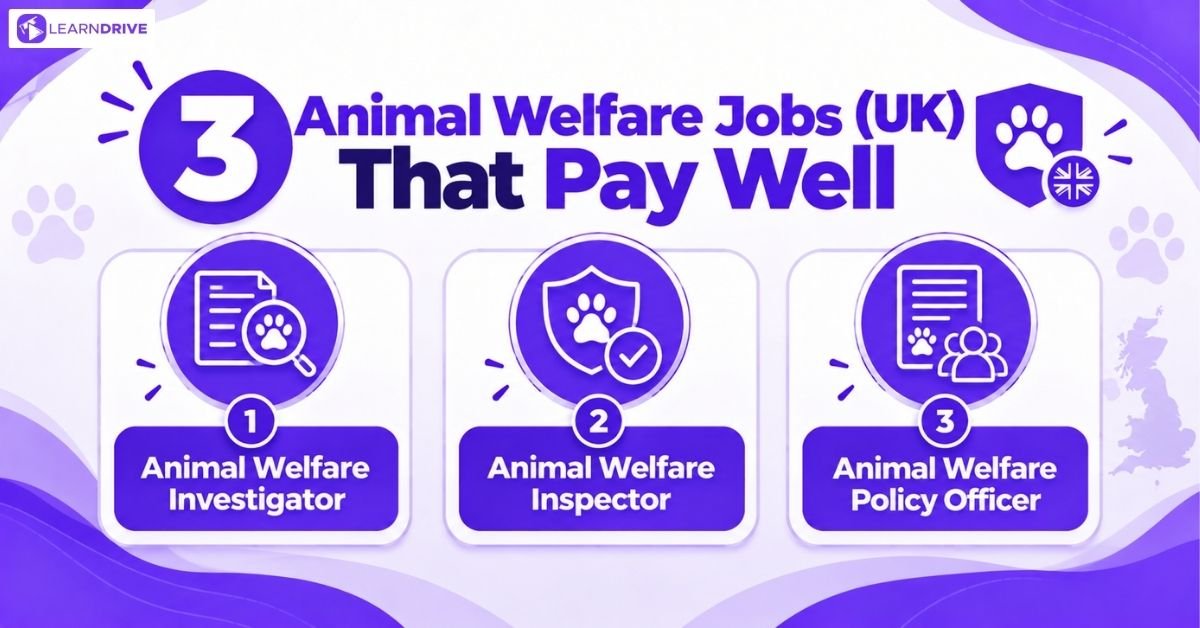
Animal welfare jobs cover a broader range of work than most people expect. It’s not just about hands-on care; it’s about protecting animals through investigation, inspection, and policy.
1. Animal Welfare Investigator
Salary: £24,700 – £29,000+ , more with experience
Investigates neglect, cruelty, and organised animal crime, working alongside police and welfare charities. Often involves difficult, emotionally demanding cases, balanced by the knowledge that the work directly protects animals from harm.
2. Animal Welfare Inspector
Salary: £24,000 – £38,000
Checks licensed premises like breeders, boarding kennels, and pet shops. Needs to assess an animal’s physical condition and living environment accurately, understand licensing law, and be comfortable delivering difficult findings to business owners or breeders, and in serious cases, provide evidence that can support a prosecution.
3. Animal Welfare Policy Officer
Salary: £22,000 – £40,000
Shapes welfare standards and lobbies for changes in the law at a national charity. The least hands-on part of the welfare sector but arguably has the widest impact, since a single piece of legislation shaped by a policy team can affect the treatment of animals nationally.
Beyond these three roles, many welfare officers move into the field after starting out in animal care assistant jobs or veterinary nursing, using that hands-on experience as the foundation for enforcement or policy work later on. These roles typically require a mix of animal knowledge and a strong understanding of legislation.
Welfare inspection work in particular sits at an interesting intersection between animal care and regulation. It’s a role that suits people who are comfortable with confrontation and paperwork in equal measure, alongside a genuine grounding in animal husbandry.
Policy roles typically sit within a charity’s head office and are usually filled by people with a background in animal welfare science, law, or public policy, rather than purely hands-on animal experience.
3 High-paying Animal Rescue Jobs
Animal rescue jobs sit close to charity work but deserve their own category, because rescue and rehoming is such a distinct day-to-day role. Rescue centre staff take in abandoned, neglected, or surrendered animals, assess their health and temperament, and prepare them for rehoming.
1. Rescue Centre Animal Care Staff
Salary: £20,000 – £24,000
Handles intake assessments for new arrivals, basic veterinary checks, behaviour observation, matching animals with prospective owners, and home visits or follow-up checks after adoption. Pay tends to mirror general animal care salaries at entry level.
2. Rescue Coordinator / Manager
Salary: £24,000 – £32,000
Oversees the entire intake-to-rehoming process and often manages a small team of animal care staff and volunteers. Pay rises for coordinator and manager positions compared with entry-level rescue roles.
3. Emergency Response Rescue Worker
Salary: £22,000 – £30,000
Attends cruelty call-outs or large-scale rescue operations, such as a puppy farm raid or a hoarding case involving dozens of animals. Can pay slightly more due to the unpredictable hours and higher-pressure nature of the work.
This is one of the more emotionally demanding categories of animal care jobs, since staff regularly deal with animals arriving in poor physical or mental condition. It’s also one of the most rewarding, particularly for anyone who wants to see the direct, visible impact of their work.
Rescue work also demands a specific skill set that isn’t always obvious from the outside. Staff need to be confident assessing an unfamiliar, sometimes frightened or aggressive animal safely, which takes considerable hands-on experience to do well.
They also need strong communication skills for dealing with the public, since rehoming involves interviewing prospective adopters, managing expectations, and occasionally turning down an application that isn’t right for a particular animal, which can be an uncomfortable conversation to have.
Large-scale rescue operations require rapid triage, close coordination with vets and police, and often weeks of follow-up care for animals that arrive in a poor state. Staff who prove reliable in these high-pressure situations are often the ones who progress fastest into coordinator and management roles.
Volunteering is worth a specific mention here, because it plays a bigger role in animal rescue jobs than in most other categories on this list. Many rescue centres run heavily on volunteer support alongside a smaller paid staff team, and a period of volunteering is one of the most common routes into a first paid role.
It gives centres a chance to see how someone handles the physical and emotional demands of the work before committing to employing them, and it gives the volunteer a realistic preview of the job before applying for it properly.
4 High Earning Animal Science Jobs
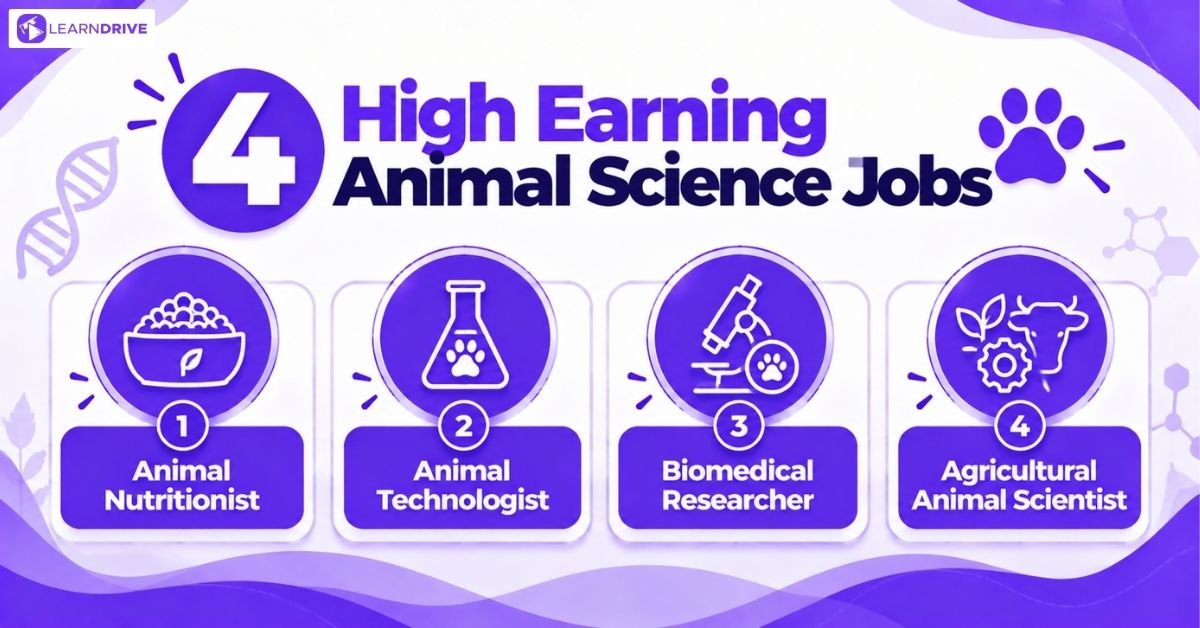
Animal science jobs move away from direct animal care and into research, laboratory work, and applied science. These roles are typically degree-led, and they’re often better paid than hands-on care work, because they require formal scientific training.
1. Animal Nutritionist
Salary: £23,000 – £48,000
Studies and formulates diets for animals, working for pet food companies, farms, or zoos to ensure animals receive the right balance of nutrients for their health and life stage. Pet food companies combine lab-based formulation work with practical feeding trials, a growing area as demand for specialised and premium pet food rises.
2. Animal Technologist
Salary: £20,000 – £40,000
Works in a laboratory setting, caring for animals used in scientific research while ensuring strict welfare and regulatory standards are met, within a strict ethical and legal framework in the UK.
3. Biomedical Researcher
Salary: £24,000 – £50,000+
Applies animal science to medical research, often within universities, pharmaceutical companies, or government research bodies. Roles tied to pharmaceutical research tend to sit towards the higher end, reflecting both qualification requirements and commercial value.
4. Agricultural Animal Scientist
Salary: £22,000 – £50,000+
Focuses on livestock nutrition, breeding programmes, and farm animal welfare research, typically within agricultural colleges, government departments, or large farming businesses. Combines strong scientific grounding with practical, farm-based livestock knowledge.
Animal science jobs tend to appeal to people who love animals but are equally drawn to biology, chemistry, or nutrition as academic subjects. A relevant science degree is usually the minimum entry requirement, with postgraduate study opening the door to more senior research positions.
It’s worth flagging that animal science jobs, particularly animal technologist and biomedical research roles, often involve working with animals used in regulated research settings.
Anyone considering this path should look closely into what the day-to-day work actually involves and how welfare standards are maintained, since this is a genuinely different working environment from a farm, clinic, or rescue centre, even though the underlying skill set, animal handling, health monitoring, and welfare knowledge, overlaps considerably.
4 Work From Home Animal Jobs That Pay Well
It’s a fair question: can you actually do work from home animal jobs, or is that a contradiction in terms? The honest answer is that most hands-on animal care jobs can’t be done remotely. You can’t feed a kennel of dogs or examine a horse’s hoof over a video call.
That said, a genuine subset of animal careers can be done from home, particularly once you’ve built expertise or a client base in a more traditional role first.
1. Online Pet Behaviour Consultant
Salary: £25,000 – £60,000
Allows experienced behaviourists to assess problems and advise owners via video call, particularly useful for simpler behavioural issues that don’t require in-person assessment.
2. Virtual Dog Trainer
Salary: £20,000 – £45,000
Runs structured video courses or live online classes for basic obedience work, a growing corner of the dog training world.
3. Animal Brand Content and Social Media Roles
Salary: £22,000 – £40,000
Covers content and education roles for animal brands, from writing product descriptions to running social media for a pet food company. Proper remote jobs that sit adjacent to the animal industry rather than inside it.
4. Freelance Animal Writer / Course Creator
Salary: £15,000 – £50,000+
Covers freelance writing and course creation focused on animal care, training, or welfare topics, particularly for people who’ve built credibility in the animal sector and want to package that knowledge into content.
The honest framing here matters: work from home animal jobs are almost always a second stage in someone’s career, built on top of hands-on experience, rather than a starting point.
Very few people go straight from no experience into a fully remote animal career. But for people already established in animal care, behaviour, or veterinary work, remote or hybrid options do exist and are growing, especially as more of the industry embraces video consultations and online education.
There’s also a growing tier of hybrid roles worth knowing about, where the bulk of the work is remote but occasional in-person contact is still required. A behaviourist might run most consultations by video but still visit a small number of clients for particularly severe cases.
A course creator or writer working in the animal education space might work entirely from home but attend occasional industry events or film content on location. These hybrid arrangements are often more realistic and more common than the fully remote roles people search for, and they’re usually the natural next step once someone has established credibility in a hands-on part of the industry.
36 Jobs That Work With Animals That Pay Well : At A Glance