About Course
[course_video id=”1134581341″]
Nitty Gritty
- 57 Minutes on-demand video
- Certificate of completion
- Access on mobile, tablet and TV
Learning Outcome
- Understand how allergies affect children differently and why early identification and continuous monitoring of triggers are essential.
- Learn how personalised healthcare plans improve safety by preparing staff for prevention, monitoring, and emergency response situations.
- Recognise early and severe anaphylaxis symptoms and take immediate actions that reduce harm and protect the child effectively.
- Learn how teamwork between staff, parents, and healthcare professionals ensures child safety.
- Gain confidence in emergency response, auto-injector use, and post-incident actions.
- Understand how school policies and systems ensure consistent allergy management.
Course Overview
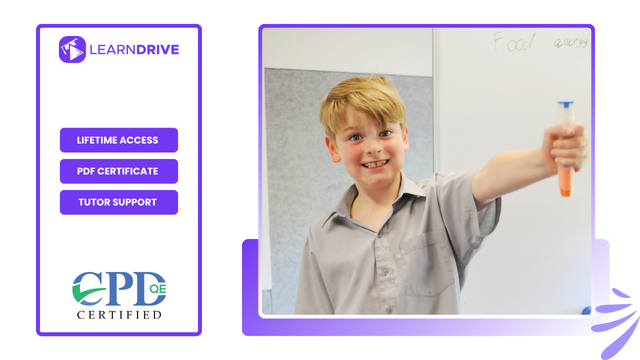
Spill Kit Training: Anaphylaxis & Allergy Training for Schools & Carers is designed to ensure every child with allergies receives safe, competent, and confident care in educational and childcare settings. Allergic reactions can escalate rapidly, and without proper preparation, a mild episode can progress into a life-threatening emergency. This course builds a strong understanding of allergy awareness, symptom recognition, prevention strategies, and emergency response procedures so that staff can protect vulnerable children and act without hesitation.
Learners explore how allergies affect children differently, why triggers must be monitored carefully, and how personalised care planning prevents incidents. The training highlights how schools and carers can work collaboratively with parents, healthcare professionals, and support staff to ensure children have safe environments, proper supervision, and clear communication strategies. It also explains how healthcare plans should be created, shared, and reviewed to support safe participation in daily activities, events, and school routines.
A key focus of this course is understanding anaphylaxis—what it looks like, how fast symptoms progress, and which immediate actions can save lives. Learners develop confidence in recognising severe reactions, contacting emergency services, administering auto-injectors, and following essential post-incident procedures. In addition, the course covers best practices for school allergy policies, staff responsibilities, record keeping, medication storage, and awareness across the full school community.
By the end of this training, learners will be able to support allergic children with knowledge, empathy, and professionalism. The course empowers schools and carers to reduce risk, reassure parents, and create safer environments where every child can learn, play, and thrive confidently.
Who This Course Is For:
- School teachers
- Classroom assistants
- Nursery staff
- Childminders
- School administrators
- After-school club leaders
- Teaching support staff
- Residential care workers
Requirements:
-
No requirements needed. Anyone working with children can enrol.
Course Instructor

Learndrive Courses
Learndrive is highly equipped to deliver specialised allergy and anaphylaxis training because its courses are designed with real-world practicality and learner confidence in mind. Allergy management can feel overwhelming for school and childcare staff, especially when they worry about making mistakes during emergencies. Learndrive eliminates that fear through clear explanations, step-by-step guidance, and simple techniques that anyone can apply.
The instructional designers behind this course have deep experience in childcare training, school compliance, safeguarding, and emergency response education. Instead of relying on complicated medical terminology, the course focuses on what non-medical staff must recognise, how they must act, and which actions can prevent escalation. Learndrive also emphasises communication—helping staff work effectively with parents, children, and healthcare professionals so every allergic child is supported consistently across the day.
By combining engaging visual learning with scenario-based demonstrations, learners do not just memorise protocols—they understand why each action matters and gain the confidence to respond under pressure. This practical, child-focused approach makes Learndrive the ideal instructor for schools, nurseries, and carers who must be prepared at all times.
Accreditation
This course is accredited by CPDQE. As the need for Continuing Professional Development grows across schools, childcare services, and community care settings, CPD accreditation ensures the training meets recognised professional standards. Completing CPDQE-approved training demonstrates a commitment to safe practice, legal awareness, and professional responsibility when supporting children with medical needs. Accreditation also helps schools and carers maintain compliance with safeguarding expectations, inspection requirements, and organisational duty of care. Earning CPD credit strengthens professional records and shows a proactive approach to child safety and emergency preparedness.

What Students say about us
Frequently Asked Questions
What is the difference between an allergic reaction and anaphylaxis?
A severe allergic reaction (i.e. anaphylaxis) involves a person’s breathing and/or circulation. Anaphylaxis is the most severe form of an allergic reaction and is life threatening. An important aspect of allergy and anaphylaxis management is prevention by avoiding the cause.
Anaphylaxis is a common medical emergency and a life-threatening acute hypersensitivity reaction.
Allergy testing may be recommended if the doctor suspects an allergy is the cause of anaphylaxis. This will usually include a blood test for allergen specific immunoglobulin E (IgE) or skin prick testing (SPT), to help confirm or rule out allergy triggers.
What are the four stages of anaphylaxis?
These stages include:
- Stage 1. Your symptoms are mild. You might not know yet if you’re having an anaphylactic reaction. .
- Stage 2. Your symptoms are now worse and on more of your body.
- Stage 3. As your symptoms get worse, you may have trouble breathing.
- Stage 4. Your symptoms are now life-threatening.
What is the ABC of anaphylaxis?
Treatment of anaphylaxis should be based on general life-support principles: • Call for help early. Use the Airway, Breathing, Circulation, Disability, Exposure (ABCDE) approach to recognise and treat problems. Treat the greatest threat to life first.
Course Content
Course Content
-
What You Will Gain from Our Healthcare Courses
Module 1 : Allergies and Anaphylaxis Management in Schools
Module 2: Child Allergy Management and Healthcare Planning
Module 3: Anaphylaxis Recognition and Emergency Protocol
Module 4: Allergy Management in School Policy and Practice
Module 5: Supporting Allergic Children in School- Roles and Awareness
Study Guide
Your Course Completion Certificate
Assignment
Order Your CPDQE Certificate
What You Will Gain from Our Healthcare Courses.
Module 6: Benedict’s Law
Student Ratings & Reviews